A non-TCS food is one that does not need time and temperature control for safety, because its chemistry (low pH, low water activity, or both) or its packaging prevents pathogens from growing or forming toxins. Breads, most cookies, hard candy, dry pasta, roasted coffee and whole fruit are typical examples. Whether a specific product qualifies depends on its recipe, not its category, and that is where most mistakes happen.
This guide explains the definition, lists common examples, covers the foods that only look non-TCS, and shows how pH and water activity decide the question. It also covers how to store and handle non-TCS foods, and where continuous temperature monitoring fits for the foods that are TCS.
TL;DR
- Non-TCS classification depends on the food’s acidity (pH), water activity, processing and packaging. Use the applicable FDA Food Code tables and product assessment where required; low pH means higher acidity.
- Common examples include non-cream-filled baked goods, candy, popcorn, granola, dry mixes, roasted coffee, whole produce and high-sugar jams.
- Classification is recipe-specific: buttercream, custard pies, cut melons, cut leafy greens, cut tomatoes and garlic in oil can all be TCS.
- The FDA Food Code uses pH and water activity tables to decide, and a result in a “Product Assessment” box means the food is treated as TCS until proven otherwise.
- Non-TCS does not mean hazard-free: contamination during handling can still make people ill.
Table of Contents
- What non-TCS food means
- Common examples of non-TCS foods
- Foods that look non-TCS but are not
- How to determine whether a food is non-TCS
- Storing and handling non-TCS foods
- Cottage food rules and local variation
- Where continuous monitoring fits
- FAQ
- Sources
What non-TCS food means
TCS stands for time/temperature control for safety. A TCS food needs to be kept cold or hot, or limited in how long it sits out, because it supports rapid growth of pathogenic bacteria or toxin formation. A non-TCS food does not need those controls to stay safe.
The FDA’s job aid on TCS foods treats a food as TCS if it consists of or contains any of the following:
- An animal food that is raw or heat-treated
- A plant food that is heat-treated
- Raw seed sprouts
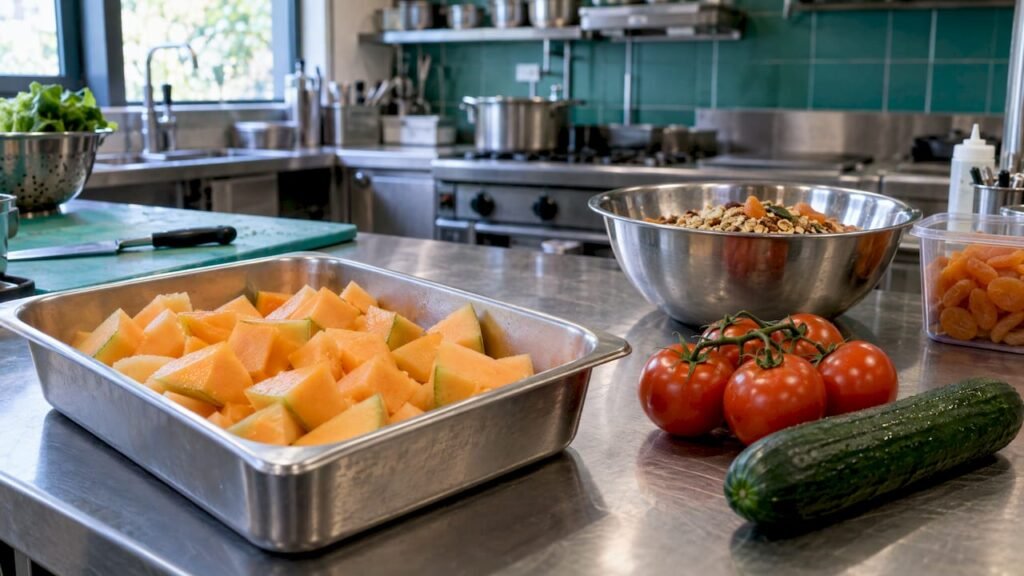
- Cut melon, cut leafy greens or cut tomatoes (including mixtures of cut tomatoes)
- Garlic-in-oil mixtures
Two exceptions apply to that list: food in an unopened hermetically sealed container that was commercially processed to achieve commercial sterility, and an air-cooled hard-boiled egg or a pasteurized egg, both with the shell intact.
The Wisconsin administrative code adds more detail. Its ATCP 75 appendix excludes from the TCS definition a food designated non-TCS in the pH and water activity tables, a food that passed a Product Assessment showing growth is precluded by its formulation or packaging, and a food that does not support pathogenic growth even if it carries a contaminant.
In short, a food is non-TCS because of a property you can point to: its acidity, its dryness, its processing or its packaging. It is not non-TCS because it feels dry, looks stable or has always been sold on a shelf.
Common examples of non-TCS foods
State and university guidance is consistent on the core list. The New Mexico Environment Department’s Homemade Food Act FAQ names non-cream-filled baked goods that do not require refrigeration, candy, popcorn, chocolate-covered pretzels, dehydrated fruits, granola and dry mixes, roasted coffee, whole fruits and vegetables, and standard high-sugar fruit jams and jellies.
Virginia’s low-risk food exemption FAQ adds cereals, coated and uncoated nuts, cotton candy, dried pasta and tea, herbs and seasonings, trail mixes and vinegars, provided the product does not require time or temperature control after preparation.
Purdue’s guidance on home-based vendors in Indiana lists cookies, cupcakes, cake pops, bread and muffins, chocolates, nougats and caramels, tree nuts, legumes, honey, molasses, maple syrup, and traditional jams and jellies made from high-acid fruits with full sugar recipes.
| Category | Typical non-TCS examples | What keeps them safe |
|---|---|---|
| Baked goods | Bread, most cookies, plain cakes, muffins, fruit pies with high-acid fruit | Low water activity or high acidity after baking |
| Candy and confections | Hard candy, caramels, chocolates, nougat, cotton candy | Very low water activity |
| Dry goods | Dry pasta, cereal, granola, dry baking mixes, trail mix, tea, herbs | Very low water activity |
| Preserves | Standard full-sugar jams and jellies, honey, maple syrup | High sugar and, for fruit spreads, low pH |
| Produce and coffee | Whole fruit and vegetables, dried fruit, roasted coffee | Intact surfaces, drying, low pH |
| Sealed commercial products | Shelf-stable canned goods, unopened | Commercial sterility |
Dried fruit deserves a note. The Idaho Department of Health and Welfare cottage foods fact sheet says dried fruits need a natural pH below 4.6, such as apples, apricots, berries, grapes, peaches and plums, and that finished products should be evaluated for pH and water activity. It also advises drying in a commercially produced unit rather than a homemade unit or in the sun.
Foods that look non-TCS but are not
The costly errors come from foods that sit near the boundary. Three patterns recur.
Fillings, frostings and toppings
Bread and most cookies come out non-TCS, but custard pies and cream cheese frostings do not. Virginia’s FAQ points out that buttercream frosting can be TCS or non-TCS depending on the recipe, and that laboratory testing may be needed to settle it. The University of Massachusetts EHS guidance for bake sales lists custards, whipped creams, cream fillings, cheese fillings, fruit pies, fruit fillings and buttercream among the items that are prohibited at bake sales and similar events, along with dairy, eggs and meats.
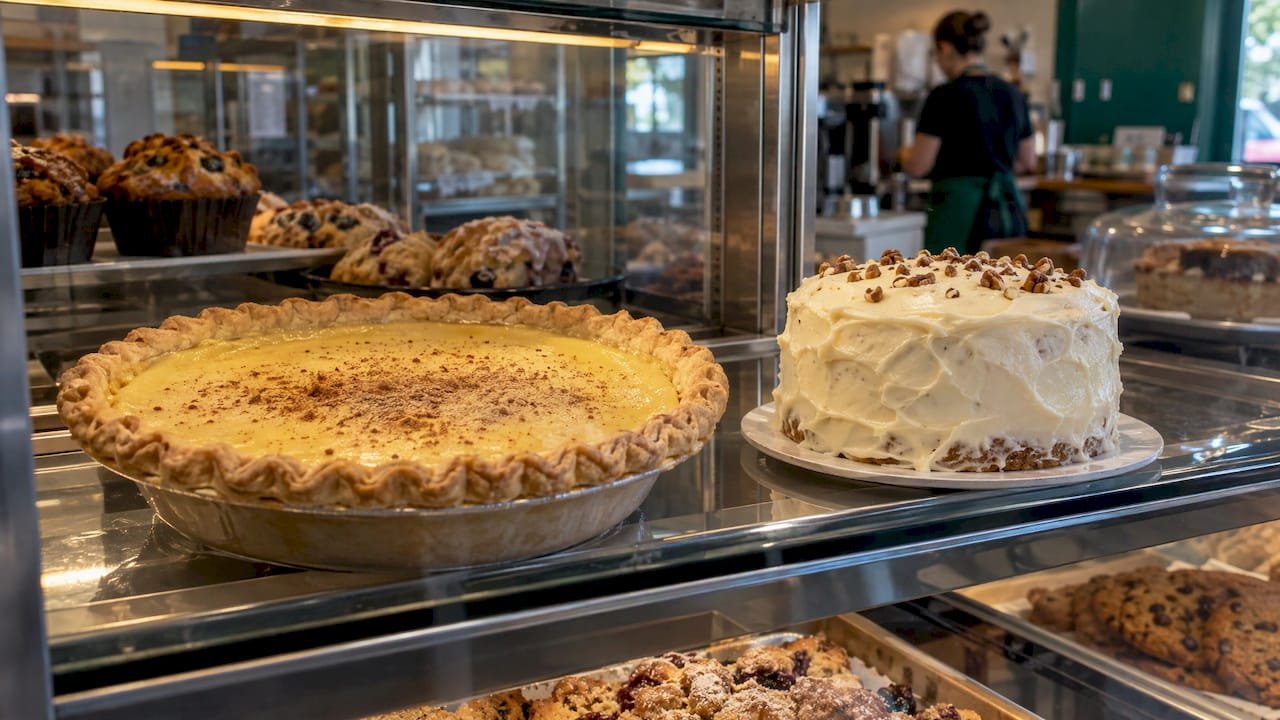
The practical rule: when a baked item carries a filling, topping or glaze, evaluate the filling as its own food.
Cut produce and infused oils
Whole produce is generally non-TCS. Cutting changes that. The University of Tennessee Extension guide, TCS or Not?, identifies cut melons, cut leafy greens and cut tomatoes as TCS, along with garlic-in-oil mixtures that are not acidified to a pH below 4.6. It also notes that properly canned foods become TCS once the hermetically sealed container is opened.
Combination foods
South Carolina’s TCS food guidance states that combination foods, those made of multiple TCS or non-TCS components, are assumed to be TCS unless the retail food establishment can prove otherwise. A focaccia topped with fresh tomatoes, a sandwich on shelf-stable bread, or a trail mix with a fresh component all fall under that assumption.
How to determine whether a food is non-TCS
The FDA Food Code gives operators a structured method. Texas DSHS summarizes it in its guidance on determining whether foods require time and temperature control: work through the evaluation steps, use the pH and water activity interaction tables, and use laboratory testing, challenge studies or predictive modeling when the tables do not settle it.
Step 1: Check the obvious categories
If the food is an animal product, heat-treated plant food, sprout, cut melon, cut leafy green, cut tomato or garlic-in-oil mixture, it is TCS unless an exception applies, such as commercial sterility in an unopened sealed container.
Step 2: Identify which table applies
The Food Code has two interaction tables. Table A applies to food that was heat-treated to destroy vegetative cells and then packaged. Table B applies to food that is not heat-treated, or is heat-treated but not packaged. Both are described in the FDA job aid.
Step 3: Read the pH and water activity values
For Table A, the FDA job aid and Texas guidance give these outcomes:
- Any food with a pH of 4.6 or lower is non-TCS regardless of water activity.
- Any food with a water activity (aw) of 0.92 or lower is non-TCS regardless of pH.
- Foods with a pH above 5.6 and an aw above 0.95 require Product Assessment.
The Texas guidance explains the reasoning: the limiting pH for Clostridium botulinum is 4.7, and the lowest aw that permits growth of C. botulinum, B. cereus and C. perfringens is 0.93.
Step 4: Treat a Product Assessment result as TCS
When pH and aw land in a “PA” box in either table, the food must be treated as TCS and held under time and temperature control until a product assessment or challenge study shows it does not need it.
Step 5: Decide when to test
Texas guidance says laboratory evidence is likely required when values land in a PA box, when a variance application is submitted, when preservatives such as nitrites are added, when new technologies such as ozonation are used without a manufacturer’s letter of guarantee, for multi-ingredient foods such as sushi rolls with raw fish or stuffed and topped bakery products, and when the intent is to store a food at ambient temperature.
Some cottage-food programs use simpler thresholds. Idaho’s fact sheet says foods with a pH below 4.6 and/or a water activity below 0.85 do not require refrigeration, and that pickled or acidified foods do not meet the definition of non-TCS. The University of Illinois Extension 2026 Cottage Food Guide says that to rely on water activity or pH alone, the water activity must be below 0.88 or the pH below 4.2, and a health department may ask for both tests when neither value is clearly below the threshold.
South Carolina frames the same logic as five factors: packaging, heat treatment, the interaction of acidity and moisture, moisture content, and acidity. In some foods neither acidity nor moisture alone is low enough, but together they create an environment where microorganisms cannot grow.
Storing and handling non-TCS foods
The temperature rules differ sharply between the two groups. The Tennessee guide says non-TCS items may be stored at room temperature, although refrigeration can maintain quality and delay spoilage. The FDA Food Code §§3-501.16 and 3-501.19 generally specify holding TCS food at 41°F or below or 135°F or above, with exceptions for preparation, cooking, cooling and other specified conditions. Using time instead of temperature control requires advance written procedures and compliance with the applicable time, temperature, marking and discard requirements; a universal 2-hour discard rule does not describe those provisions. Follow the requirements adopted by your jurisdiction.
A few handling practices keep non-TCS foods in the safe category:
- Protect water activity. Products that depend on low water activity should go into moisture-barrier packaging and be stored in dry conditions, per the Tennessee guide.
- Keep the recipe fixed. A change in sugar, moisture, filling or acidity can move a product across a threshold. Re-evaluate after any formulation change.
- Control contamination. South Carolina’s guidance is explicit that a food not defined as TCS is not guaranteed safe from all hazards. Biological, chemical and physical hazards still apply, so hygiene, cleaning and allergen controls remain in force.
- Keep non-TCS foods separate from TCS foods. Shared storage is where labeling and recipe errors turn into incidents. Our guide to storing food safely covers segregation and storage layout.
Cottage food rules and local variation
Non-TCS status often decides whether a home producer can sell a product at all, and the rules differ by state. Tennessee’s Homemade Food Act treats most shelf-stable foods preserved by lowering pH or water activity as non-TCS, including properly fermented or canned products, dried fruits and vegetables, and baked goods. Indiana, per Purdue, stopped regulating whole uncut produce under home-based vendor rules as of July 1, 2023. DC Health’s cottage food FAQ requires that cottage food be prepared and packaged in a kitchen within the owner’s primary residence and prohibits storing finished product in a shed or garage.
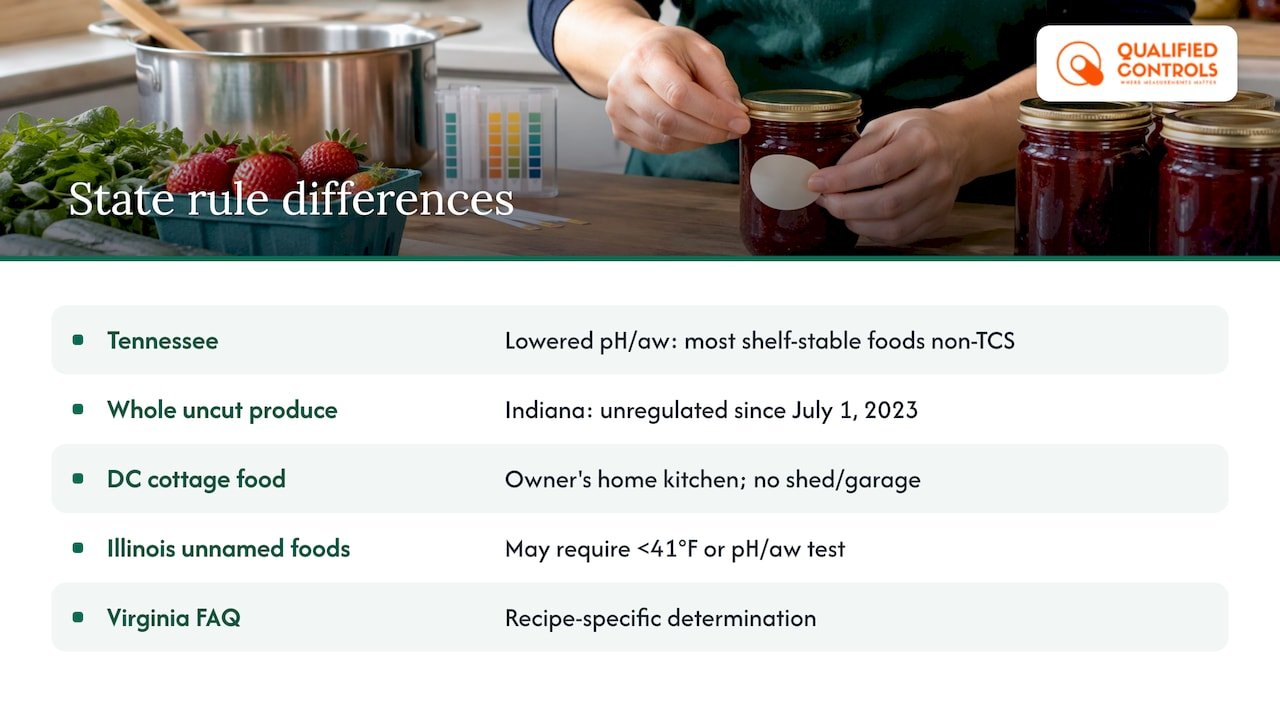
When a product is not named in the law, the local health department decides. Illinois guidance says the department may require the product to be stored, transported and sold under 41°F, or may allow the producer to supply a pH or water activity test showing refrigeration is unnecessary. Being listed as an example in a state FAQ does not settle the question either: Virginia’s FAQ stresses that the determination depends on the specific recipe.
Contact your state or county health department before you sell, and keep your test results on file.
Our perspective on non-TCS classification
In regulated environments, we see the same pattern repeatedly: classification is treated as a one-time label, when it is really a controlled condition. A product is non-TCS only while the pH, water activity, packaging and storage conditions that justified the classification remain in place.
That is why we design monitoring around the parameters, not the category. Our monitoring architecture is built for continuous coverage, real-time alarms, traceable records with electronic signatures and ALCOA+ data integrity, and audit-ready documentation. Facilities that handle both TCS and non-TCS foods benefit from one system that proves the TCS side stays within limits and documents the storage environment of the shelf-stable side.
Our approach is proactive: we aim to identify gaps before they become failures, so a drift in humidity in a dry-storage room is visible and documented rather than discovered at an inspection.
Brad Johnson
Where continuous monitoring fits
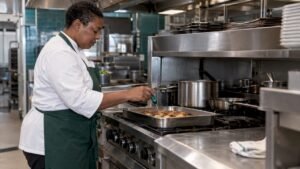
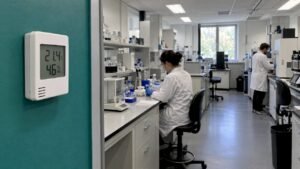
Most kitchens, cafeterias, labs and food operations hold both kinds of food. The non-TCS items tolerate room temperature, but the TCS items beside them do not, and the dry-storage environment of a non-TCS product, especially its humidity, is part of what keeps it non-TCS.
The supporting reading depends on your setting:
- For the cold and hot holding side, see time and temperature control for TCS foods.
- For HACCP and FSMA documentation, see our food safety temperature monitoring guide.
- For hospital kitchens and cafeterias, see food safety in hospital cafeterias.
- For the cost of a missed excursion, see automated monitoring to prevent recalls.
If you manage a food operation, hospital kitchen or lab and need records an inspector can rely on, our MySirius Monitoring system covers temperature and humidity sensing, real-time alarms and electronic audit trails. Published subscription plans are Initial at $4,500 per year, Serenity at $12,500 per year and Advanced at $22,500 per year, and Enterprise is quoted individually. Installation, validation, ISO 17025 calibration and audit support are available as services. You can compare plans on our pricing page or review our food and beverage monitoring solutions.
For sensor options, see our temperature and humidity sensors.
FAQ
Is bread a non-TCS food?
Plain bread is generally classed as non-TCS, and state guidance from Indiana and Virginia lists it among low-risk foods. Add a perishable filling or topping, such as cream cheese or fresh tomatoes, and the finished product may become TCS. Evaluate the whole item, not just the base.
Do non-TCS foods need refrigeration?
No, they can be stored at room temperature for safety. Refrigeration may help preserve quality and slow spoilage, according to the University of Tennessee Extension. Moisture-controlled products should stay in moisture-barrier packaging in a dry area.
Are cut fruits and vegetables non-TCS?
Whole fruits and vegetables are generally non-TCS, but cut melons, cut leafy greens and cut tomatoes are classified as TCS by the FDA. Cold-hold these foods at 41°F or below unless an applicable exception or a compliant time-as-a-public-health-control procedure applies. Follow the requirements adopted by your jurisdiction.
How do I prove a food is non-TCS?
Use the FDA Food Code interaction tables with measured pH and water activity values. If the result falls in a Product Assessment box, the food is treated as TCS until a laboratory assessment or challenge study shows otherwise. Your local health department can tell you which tests it accepts.
Can non-TCS food still make people sick?
Yes. A non-TCS food can still carry biological, chemical or physical hazards if it is contaminated during processing or handling. Sanitation, allergen labeling and good hygiene practices still apply.
Sources
- FDA: Job Aid, Time and Temperature Control for Safety Foods
- FDA: Job Aid, Time and Temperature Control for Safety Foods (Product Assessment)
- Wisconsin Legislature: Chapter ATCP 75 Appendix
- New Mexico Environment Department: Homemade Food Act FAQ
- Virginia: Home Food Processing Exemptions FAQ, July 2026
- Purdue University: Home-Based Vendors
- Idaho Department of Health and Welfare: Cottage Foods Fact Sheet
- University of Massachusetts EHS: Non-TCS Foods for Bake Sales and Concessions
- University of Tennessee Extension: TCS or Not?
- Texas DSHS: How to Determine if Foods Require Time and Temperature Control
- South Carolina DHEC: Time/Temperature Control for Safety (TCS) Food
- University of Illinois Extension: 2026 Cottage Food Guide
- DC Health: Cottage Food Regulations FAQ