Essential Insights on Vaccine Storage Temperature Monitoring
Vaccines save lives, but only when they're stored the right way. Healthcare providers across the U.S. rely on continuous temperature tracking systems to keep vaccines within CDC-recommended storage ranges—protecting against damage, loss, and non-compliance.
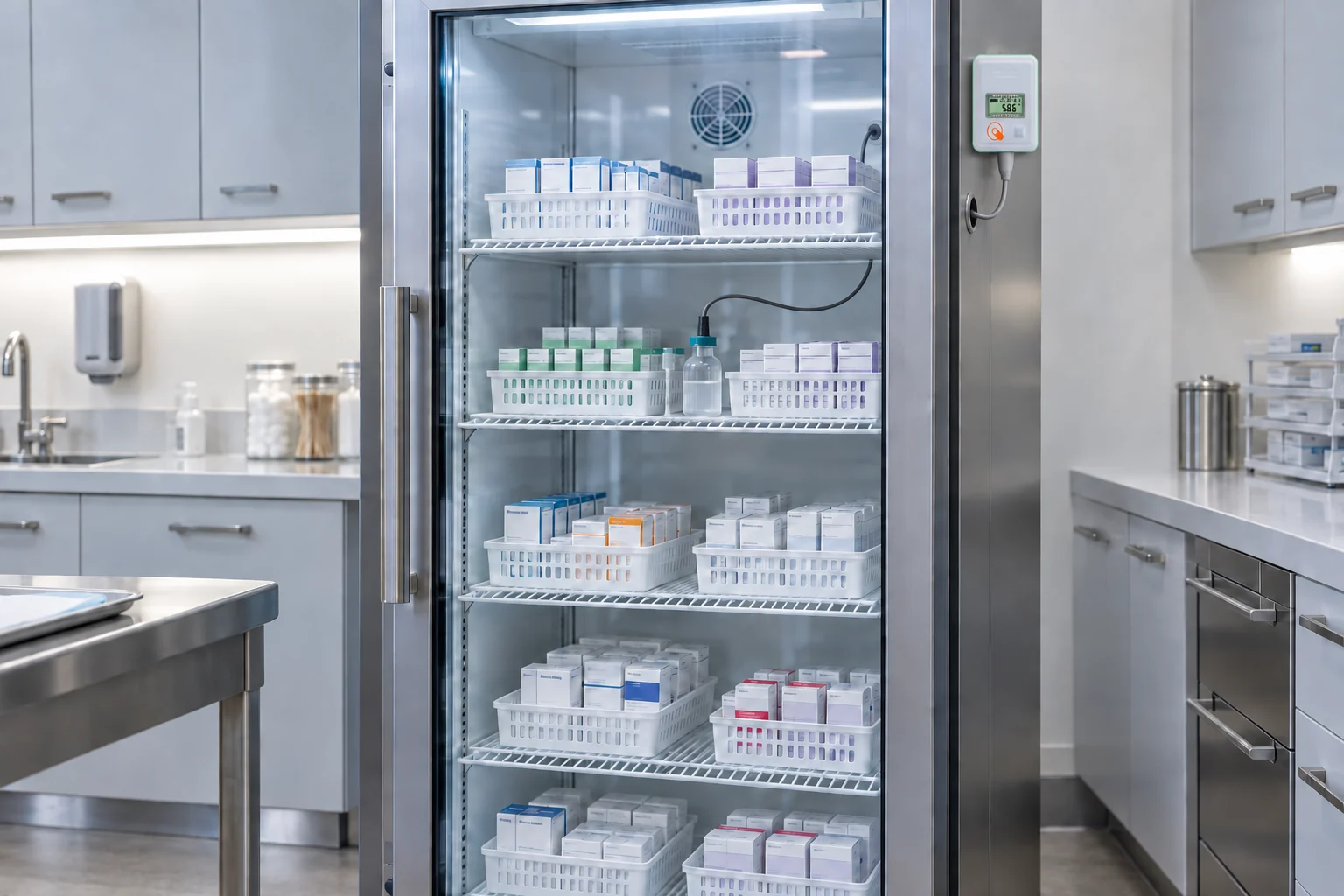
The Regulatory Requirement
The CDC requires regular temperature checks (twice daily at minimum, or continuous digital tracking), use of certified digital data loggers, written storage logs, immediate action when temperatures go out of range, and documented backup monitoring equipment. Facilities must maintain a written plan for responding to temperature excursions including after-hours notification procedures.
FDA storage requirements for vaccines and biologics mandate documented temperature control, full traceability, and electronic records that are attributable, legible, contemporaneous, original, and accurate (ALCOA) per 21 CFR Part 11. Each storage unit must be independently monitored with calibration certificates available on demand.
USP thermoregulation standards require validated equipment, continuous monitoring within defined temperature ranges, and documented corrective action for any excursion. Pharmacies and compounding facilities storing vaccines must demonstrate that storage conditions align with USP requirements for each product type throughout its storage period.
How Vaccine Storage Temperature Monitoring Works
Storage Range Coverage for All Vaccine Types
Different vaccines have different temperature requirements. Monitoring systems must cover refrigerated vaccines (2°C–8°C), frozen vaccines (-15°C to -50°C), and ultra-low vaccines (-60°C to -90°C). These tight ranges leave no room for error—validated sensors track each range continuously, without manual checks or gaps between readings.
Continuous 24/7 Monitoring Without Gaps
Continuous monitoring keeps watch like staff can't. Sensors inside storage equipment record temperature every few minutes with no gaps—capturing overnight failures, weekend compressor malfunctions, and door-ajar events that happen between manual rounds. The data flows into a system that is always on, always logging, and always ready to alert.
Instant Multi-Channel Notifications
Notifications go out by text, call, or email the moment temperatures shift out of range. You decide who gets alerted and under what conditions. Alerts are logged with timestamps, ensuring that when CDC inspectors ask for proof of notification and response, the documented trail is ready—not reconstructed after the fact.
Audit-Ready Compliance Logs
Logs are stored automatically for audits and reporting. CDC inspectors ask for temperature logs, evidence of checks and responses, proof of system calibration, and alerts tied to real-time actions. Missing or outdated records can cost you inventory or delay usage. Qualified Controls keeps data organized, secure, and instantly available.
Per-Unit Independent Monitoring
Each vaccine storage unit—whether a pharmacy fridge, a mobile unit, or an ultra-cold freezer—requires its own dedicated monitor with continuous data capture. The CDC recommends digital systems over once-daily checks. Qualified Controls matches each solution to the environment, ensuring independent monitoring per unit rather than aggregated readings across zones.
Sensor Calibration & System Validation
Successful vaccine monitoring requires proof of system calibration at regular intervals. Qualified Controls provides calibration certificates, sensor health alerts, and documentation to support your qualification process. Smart dashboards, long-term data storage, and sensor calibration alerts make compliance easier from day one—and through every subsequent inspection.
CDC Vaccine Storage Compliance Checklist
Check each item your facility currently meets. See where you stand against CDC requirements for vaccine storage monitoring.
Continuous Digital Temperature Tracking
Sensors record temperatures at least every 1–5 minutes with no manual gaps
Dedicated Monitor Per Storage Unit
Each fridge, freezer, and ultra-cold unit has its own independent sensor
After-Hours Alert Notifications
Multi-channel alerts (text, call, email) reach staff during nights and weekends
Written Excursion Response Plan
Documented procedures for handling temperature excursions at any time of day
NIST-Traceable Sensor Calibration
Current calibration certificates on file for every monitoring sensor
Audit-Ready Temperature Logs
Electronic logs with timestamps available for immediate CDC/FDA inspection
Backup Monitoring Equipment
Documented backup sensors or procedures in case primary equipment fails
Alert Acknowledgement Tracking
System logs who received each alert and when they responded
What Are the Required Storage Temperatures for Vaccines?
Each vaccine has a different temperature range, and storage equipment must align with that specific requirement. Guesswork doesn't cut it—accurate readings are the only way to avoid spoilage and meet CDC recommendations. Understanding the full scope of what a temperature monitoring system must do for vaccine storage begins with these storage categories:
- Refrigerated vaccines: 2°C to 8°C
- Frozen vaccines: -15°C to -50°C
- Ultra-low vaccines: -60°C to -90°C
These tight ranges leave no room for error. Facilities need validated equipment and sensors that offer continuous tracking. Qualified Controls makes it easier to maintain these temperature zones without constant manual checks.
Where Do You Need Vaccine Temperature Monitoring?
It's not just hospitals. Any facility that stores even one type of vaccine needs around-the-clock monitoring. That includes pharmacies, medical offices, schools with vaccine programs, health departments, long-term care facilities, and mobile immunization clinics. Smaller spaces can't always dedicate staff to constant checks—that's where automated monitoring fills the gap, fitting into compact environments and delivering alerts when things change.
How Different Healthcare Settings Use Vaccine Monitoring
Every healthcare setting has a slightly different storage challenge. Real-world implementations include hospitals with integrated monitoring across departments and mobile alerts, clinics with fridge tracking and simple visual dashboards, pharmacies monitoring back-room units loaded with flu shots and travel vaccines, and labs with advanced tracking for biologics in ultra-cold conditions.
For multi-location healthcare operations, centralized multi-site monitoring eliminates the need to manage separate systems at each location while maintaining independent alerts and records per unit. See also our guide to the best temperature monitoring systems for regulated industries for a broader system selection framework.
Technical Specifications
Part of the Complete REM Architecture
Vaccine storage monitoring integrates into Qualified Controls' REM platform—connecting sensor data directly to CDC-compliant documentation and multi-tier alert escalation.
Industries That Rely on Vaccine Storage Monitoring
Integrated monitoring across hospital pharmacy departments and clinical storage areas, with mobile alerts for immediate response to temperature excursions during any shift.
Monitoring back-room refrigeration units loaded with flu shots, travel vaccines, and specialty biologics under state pharmacy board and USP storage requirements.
Advanced ultra-cold tracking for biologics, mRNA vaccine candidates, and immunotherapy materials under FDA and GLP documentation requirements.
Monitoring vaccine storage in senior care and skilled nursing environments where staff bandwidth is limited and continuous automated alerts provide critical coverage.
Ultra-low and cryogenic monitoring for biologic vaccine candidates, cell therapy products, and immunological materials under FDA IND and BLA documentation requirements.
Compact monitoring solutions for health departments, mobile immunization programs, and outreach clinics where staff cannot dedicate time to constant manual temperature checks.
Common Questions About Vaccine Storage Monitoring
Act Now to Keep Every Vaccine Dose Protected
Every hour a vaccine sits outside its target range carries a risk you don't need to accept. Start improving your storage now with real-time monitoring that alerts you before problems grow—and keeps your storage conditions consistent, reliable, and audit-ready.