The right monitoring program.A clear commitment.
Choose the capacity, capabilities, and support your operation needs. Transparent platform pricing, with hardware and services scoped to your facility.







A clear commitment. Room to grow.
Select your committed sensor capacity and contract length. Then compare the level of monitoring, documentation, and support your operation needs.
Platform subscription · USD. Hardware and professional services are scoped separately. Your fee covers up to the committed capacity.
Initial
For straightforward temperature and humidity monitoring.
$4,500 / year · platform subscription
Effective rate at full committed capacity.
12-month commitment · billed annually
- Frequency sensingTemp + humidity · 5 min interval
- Real-time alertsEmail · 5 escalation tiers
- MySirius Cloud60-day rolling retention
- Standard reportsWeekly PDF summaries
Serenity
For traceable records and food-safety workflows.
$12,500 / year · platform subscription
Effective rate at full committed capacity.
12-month commitment · billed annually
- ALCOA+ audit trailTamper-evident · 2-year retention
- HACCP / FSMA 204 moduleCCP logging · traceability
- Configurable escalationsMulti-tier · on-call rotations
- MKT analyticsMean kinetic temperature reporting
Advanced
For validation, integration, and multi-site oversight.
$22,500 / year · platform subscription
Effective rate at full committed capacity.
12-month commitment · billed annually
- Validation templatesIQ / OQ / PQ included
- Multi-site architectureGlobal compliance supervision
- API + webhooksLIMS · CMMS · BMS integrations
- SAML SSO · SCIM provisioning
Enterprise
For complex deployments and tailored service scope.
Scoped to your architecture
Custom capacity and contract
- Unlimited sites · multi-regionData residency US · EU · APAC
- Custom validation protocolsSite-specific IQ/OQ/PQ + lifecycle
- Dedicated tenantSingle-tenant deployment available
- Audit defense supportInspection support included
The right capabilities, in clear view.
Start with the key differences. Expand any category when you need the complete specification.
Key differences8 capabilities
Final deployment scope, service inclusions, and configuration are confirmed during your architecture review.
Put your investment in context.
Adjust the operating assumptions to explore a modeled scenario for your selected plan. Estimates are not guaranteed results.
Model assumptions & limitations
The existing model assumes 68% of reported excursion cost avoided. Audit hours use a 72% baseline reduction adjusted for the number of sites, capped at six. Product-risk reduction is modeled at up to $1,200 per sensor annually, scaled by reported excursion cost.
Product risk may overlap with excursion costs; review the components before relying on the total. These are planning assumptions, not independently validated savings. Hardware and service costs must be added to assess total ownership cost.
Before platform, hardware, and service costs.
Year 5: $2,169,000 gross savings less $112,500 platform fees. Linear projection; excludes hardware, implementation, services, and discounting.
From manual preparation to connected records.
This view isolates audit-preparation labor from the broader model.
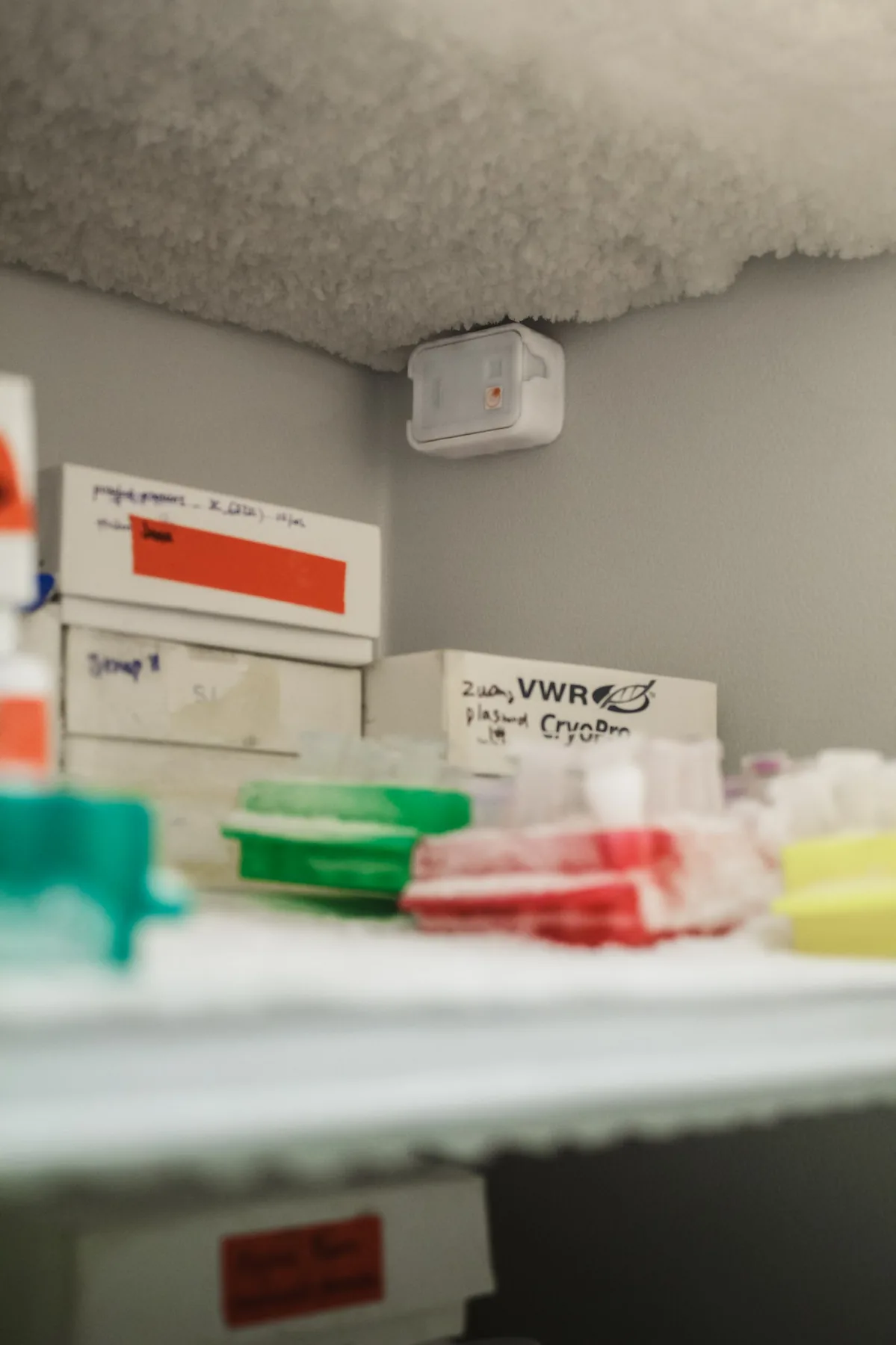
Confidence in the system behind the data.
“We replaced our previous ‘top-tier’ monitoring system with Qualified Controls as the previous system failed us, costing us countless hours of rework. We’ve been very impressed with this solution and I’ve even recommended it to others.”
Heath B.Associate Director · BridgeBio
Read the BridgeBio story →A considered path. A supported handover.
Timing is confirmed after assessment and depends on the facility, procurement, validation requirements, and service scope.

Understand the environment
Your team and ours identify critical assets, current monitoring gaps, and the scope of the proposed deployment.
Typical deliverablesRisk assessment · facility requirementsExplore installation services →The right expertise, when you need it.
Build the installation, validation, calibration, and support scope around your chosen plan.
Running your own mapping study? Rent mapping equipment with an included protocol. Available to new and existing QC customers; rental scope is quoted separately from the platform rates shown above.
Install & commission
A deployment designed around your facility.
Explore installation →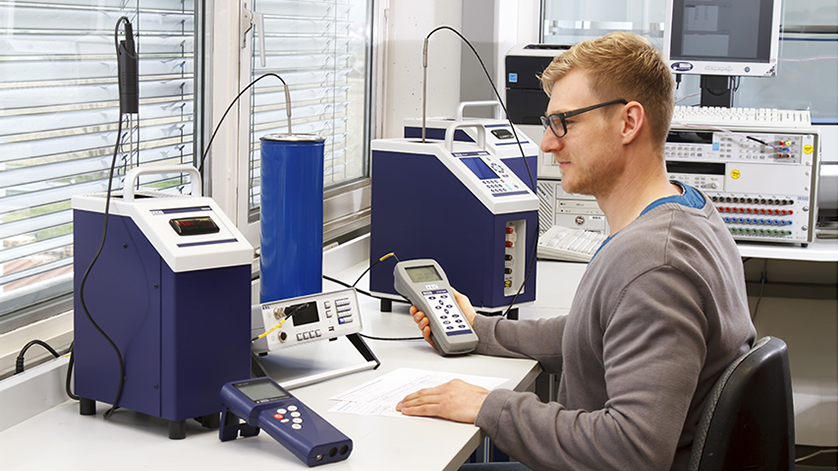
Validate & calibrate
Evidence for the measurement and its intended use.
Explore validation →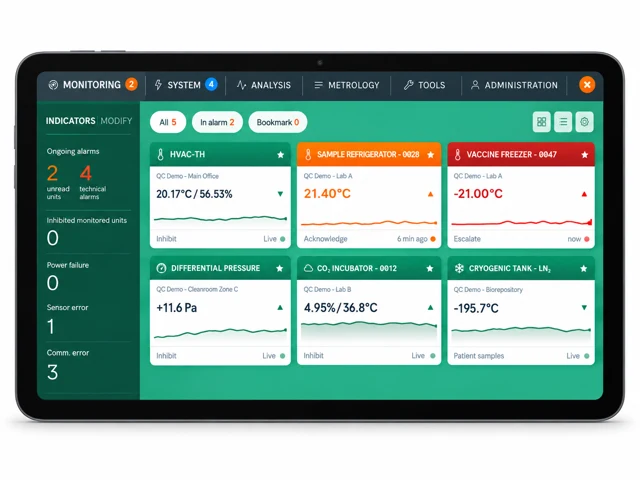
Support & maintain
Keep the monitoring program working for your team.
Explore support →Confidence at every layer.
Your QC monitoring solution brings together quality-managed processes, secure cloud infrastructure, and independent security testing.
ISO 9001
Quality-managed development and service processes supported by ISO 9001:2015 certification within the solution ecosystem.
ISO 27001
Cloud infrastructure supported by ISO 27001 information-security controls, with layered physical and administrative safeguards.
SOC 2
Hosting controls supported by SOC assurance, providing a foundation for your supplier-security and cloud-risk review.
Penetration tested
Independent penetration testing evaluates the cloud solution against established security frameworks. No critical vulnerabilities were reported in the October 2025 test.
Protection beyond the credentials.
HTTPS access, customer data isolation, administrator multifactor authentication, recorded activity, continuous backups, and round-the-clock infrastructure monitoring support the operating environment.
Explore security review topics
- Access & accountability: customer-domain separation, controlled administrator access, and recorded user and support activity.
- Hosting & continuity: North American cloud hosting, a disaster-recovery environment, continuous backups, and infrastructure monitoring.
- Validation & records: review audit trails, retention, electronic-record controls, and validation scope for your selected plan.
- Independent assurance: review applicable certificates, hosting assurance, and penetration-test evidence against your supplier requirements.
Based on the cloud security policy (June 2024) and penetration-test declaration. Applicable scope and current evidence are confirmed during review.
Before you decide.
Practical answers about pricing, deployment and the support behind your monitoring program.
Pricing
What should our monitoring quote include beyond the platform fee?
Confirm the monitoring endpoint count, committed platform capacity, software tier, contract length, and renewal terms. Then itemize sensors and probes, buffers, gateways, installation, training, connectivity, calibration, mapping or validation, replacement coverage, and support hours. Each line should say whether it is included, optional, customer-provided, or excluded.
For a fair comparison, use the same facility and service scope for every supplier. Our first-year and five-year cost guide helps separate deployment costs from recurring costs.
What is the price per sensor, per month?
At the selected 250-sensor plan and 12-month commitment: Initial $1.50 per sensor per month; Serenity $4.17 per sensor per month; Advanced $7.50 per sensor per month. Enterprise is custom-scoped.
These are approximate effective platform rates at full committed capacity, billed annually. Rates depend on your tier, committed capacity and contract length. Hardware, equipment services and calibration are separate unless included in your agreed scope. Use the controls above to compare your configuration.
How does capacity-commitment pricing work?
Choose a capacity plan of 10, 100, 250, or 500 sensors and an annual platform fee for your selected tier. The displayed per-sensor monthly figure is an approximate effective rate at full committed capacity; the annual fee is the contract amount. Additional sensors within the committed capacity do not change the platform fee. Larger deployments are scoped separately.
What counts as a sensor?
A sensor is a measuring endpoint reporting to MySirius, such as a LoRa SPY, Nano SPY, or Nova SPY recorder. Gateways and repeaters provide connectivity and do not count as measuring endpoints. Your deployment scope confirms the number of chargeable endpoints.
What if I exceed my committed capacity?
You can deploy additional sensors up to your committed plan at no additional fee — that is the point of the commitment. If your deployment grows past the cap, you upgrade to the next capacity plan (10 → 100 → 250 → 500) at prorated billing on the day you cross the threshold. We notify you in advance so you are never out of SLA.
How do multi-year discounts work?
Commit for 2 years to save 5% annually, or 3 years for 8% off. The discount applies to your full annual fee at your chosen capacity plan, billed annually — not paid upfront. Custom terms available on Enterprise.
Is hardware included in the subscription?
No — hardware (sensors, gateways, repeaters) is billed separately at list price or under a hardware-as-a-service subscription. Your capacity plan covers the MySirius cloud platform, data pipeline, compliance tooling, predictive service analytics, and the support channels of your tier.
Can we switch tiers or capacity mid-contract?
Yes. Upgrades to a higher tier or larger capacity plan take effect immediately with prorated billing. Downgrades take effect at the next annual renewal to preserve continuity of compliance records, retention policies, and escalation configurations.
Deployment
Can we rent mapping equipment to run our own study?
Yes. Qualified Controls offers mapping equipment rental with an included QC-provided protocol to guide your team through mapping activities following applicable ISPE guidance. Rentals are available to new and existing customers and are quoted separately from the platform rates on this page. Explore mapping equipment rental.
How long does a typical deployment take?
A typical first deployment covers 40–100 monitoring points and is installed in 1–2 weeks. An executed IQ/OQ package typically follows 2 weeks after installation. Lifetime PQ support and continuous upgrade validations are included with the Advanced subscription. Timing is confirmed against your facility, procurement and agreed service scope.
Can a small laboratory install its own system?
A 20–50-point starter deployment is available with a self-installation option. Hardware and installation scope are quoted separately from the platform subscription and its committed sensor capacity. For teams that want a supported handover, Qualified Controls can provide installation, training and validation services. Monitoring-as-a-Service combines equipment, calibration, deployment, software, support, validation and training in a scoped monthly fee.
Can we use physical buffers or simulate product conditions?
Qualified Controls can provide glycol or glass-bead probe buffers, as appropriate for the application. QC and MySirius also offer a proprietary option to simulate product conditions using validated glycol simulations. The simulated effect can be switched on or off to suit the monitoring application.
Can MySirius run in the cloud or on premises?
Cloud and on-premises deployment options are available; cloud is recommended. Hosting, connectivity and validation requirements are confirmed as part of your architecture review. The displayed platform rates and plan inclusions should be reviewed against that agreed deployment scope.
What validation support comes with each tier?
Initial and Serenity can purchase IQ/OQ/PQ validation templates and on-site commissioning as professional-services add-ons. Advanced includes the validation templates and annual requalification at no additional cost. Real-time Mapping & Qualification — live environmental mapping during validation events — is an add-on on Initial/Serenity/Advanced and included in Enterprise, alongside custom-authored site-specific protocols.
Do you support multi-region deployments?
Advanced supports up to 5 sites under one tenant with data residency in US or EU. Enterprise adds APAC residency, single-tenant deployments, and regulatory data-isolation for sovereign operations.
Maintenance & support
What makes Qualified Controls a strong long-term value?
Qualified Controls is built to offer one of the industry’s best values in ongoing maintenance, equipment services and support. Annual Hot Swap calibration exchange, installation and validation expertise, and tier-specific support options bring the recurring work of maintaining a monitoring program into a coordinated service relationship. Review the comparison above for inclusions and add-ons; your quote confirms the calibration, equipment-service and support scope.
What is included in calibration services?
NIST-traceable calibration certificates are an add-on on Initial/Serenity/Advanced and included in Enterprise. ISO 17025 accredited calibration is available as an add-on across every tier. Hot-swap calibration — a pre-calibrated duplicate sensor set ships on your recertification cycle for zero-downtime swaps — is an add-on on Serenity/Advanced and included in Enterprise. Calibration cadence is configurable on Initial/Serenity, annual on Advanced, custom on Enterprise.
How long is sensor data retained?
Live sensor data retention: 60 days (Initial) · 2 years (Serenity) · 10+ years on cold-archive (Advanced) · configurable (Enterprise). Activity audit logs — who changed what, when — are retained independently: 90 days / 2 years / 7 years / configurable. Full data export at contract end in your format of choice.
What happens during an FDA or GxP audit?
Export and audit-trail capabilities depend on your tier; Initial does not include the full ALCOA+ audit trail listed for higher tiers. Serenity and Advanced can add inspection support as a paid service. Enterprise includes the inspection support and audit-defense scope listed in the comparison, subject to the agreed deployment scope.
What is Predictive Service Analytics?
Predictive Service Analytics is our AI-driven proactive maintenance engine. It flags sensor drift, connectivity degradation, and equipment end-of-life before they cause an excursion. Included at every tier — Initial through Enterprise — at no additional cost.
Start with the assessment.Commit when the fit is clear.
Understand the gaps in your current monitoring program and the architecture your operation needs.