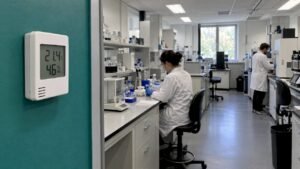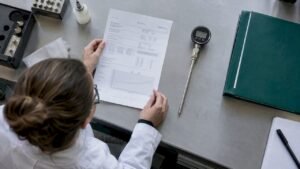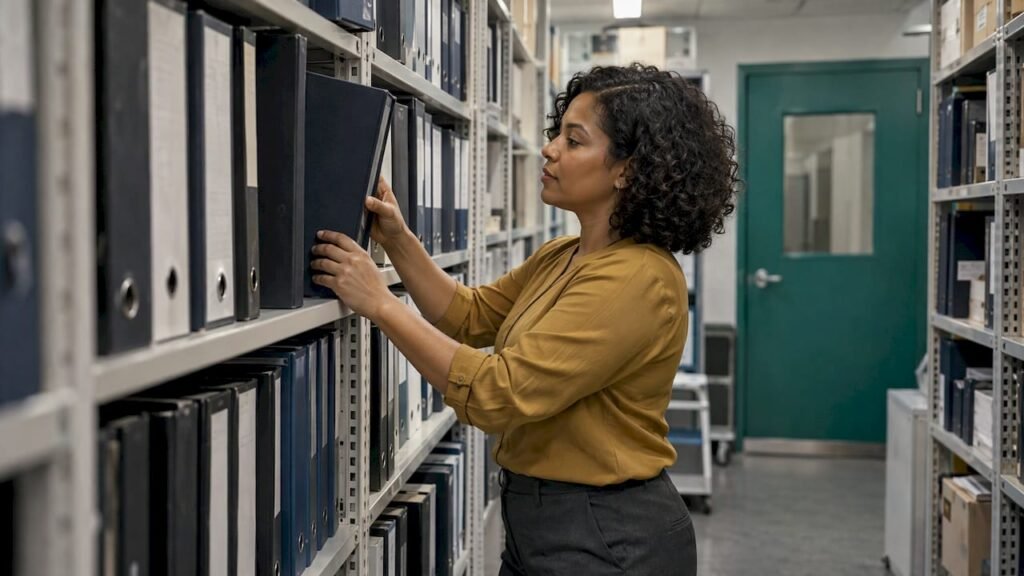
FDA inspection readiness is your ability to show, on any day and with little warning, that your operations and quality systems meet the applicable requirements and work in practice. It is not a project you start when a notice arrives. It is the result of controlled processes, trained people and records you can retrieve quickly. The sections below cover what readiness means, what happens during an inspection, how to build a standing program, and how continuous environmental monitoring data supports it.
TL;DR
- Readiness means demonstrating that procedures work, not only that they exist. Build it into daily operations rather than a pre-inspection push.
- The FDA selects facilities on a risk basis, and it is expanding unannounced inspections abroad, so notice periods cannot be relied on.
- A standing program needs governance, a defined evidence set, regular mock inspections and CAPAs that are verified as effective.
- Temperature, humidity, pressure and similar monitoring records are among the evidence an investigator may ask to see, so they should be complete, traceable and quick to retrieve.
- Plan for the close of the inspection: Form 483 observations call for a written response, and the FDA’s food-safety guidance gives 15 working days.
Table of Contents
- What FDA inspection readiness actually means
- How the FDA decides who to inspect
- What happens during an inspection
- Build an ongoing readiness program
- Running mock inspections that find real gaps
- Records and controls to review before an inspection
- Where environmental monitoring fits
- Perspective
- How we support inspection-ready monitoring
- FAQ
- Sources
What FDA inspection readiness actually means
Readiness is often described as being “audit ready,” but the working definition is narrower and more demanding. An organization is ready when it can demonstrate that its quality systems comply with requirements and function effectively in everyday practice. That covers documentation, employee knowledge, operational behavior, risk management, governance and accurate answers to investigator requests, as NSF describes it.
The useful test is the one NSF frames for quality leaders: the question is not whether you have the procedure, but whether you can show that the procedure is working. An inspection support room, designated escorts and a document-retrieval routine help, but they do not compensate for unreliable data or a gap between written procedures and actual practice.
This is why readiness has to be continuous. Industry commentary increasingly points the same way: EMMA International notes that regulators rely more on risk-based strategies that analyze operational data, compliance histories and manufacturing trends, which makes periodic preparation exercises a weak fit.
How the FDA decides who to inspect
You cannot predict the timing of an inspection, but you can understand the logic behind it. The FDA uses a risk-based approach to select medical product manufacturing facilities, prioritizing by facility type, compliance history (including whether the site was inspected in the last four years), hazard signals such as recalls, and the inherent risk of the product, including dosage form, route of administration and sterility.
Frequency differs by sector:
- Food: under the Food Safety Modernization Act, domestic high-risk food facilities must be inspected at least once every three years and non-high-risk facilities at least once every five years. The Food and Drug Omnibus Reform Act of 2022 added annual inspections of infant formula manufacturers on a risk-based approach (FDA).
- Drugs, biologics and devices: registered establishments are generally inspected on a risk-based schedule under section 510(h) of the FD&C Act, and approximately 8,600 mammography facilities must be inspected annually under the Mammography Quality Standards Act (FDA Resiliency Roadmap).
- Outside the United States: products made abroad must meet the same standards as those made in the U.S., and the FDA inspects foreign sites as well as imported products at the border. In May 2025 the agency announced expanded unannounced inspections at foreign facilities, building on its pilot in India and China. It reports roughly 12,000 domestic and 3,000 foreign inspections a year in more than 90 countries.
Inspections are also triggered by events. The FDA’s Investigations Operations Manual lists recall follow-up, consumer complaint follow-up, whistleblower complaints and follow-up to compliance actions such as warning letters as common reasons, and the purpose often shapes the investigator’s focus. If you have had a recall or complaint, assume your records for that area will be examined first.
What happens during an inspection
Knowing the sequence removes much of the stress for your team. According to the FDA’s guidance on what to expect:
- The investigator presents credentials and Form FDA 482, the Notice of Inspection.
- A knowledgeable firm representative, preferably designated beforehand, accompanies the investigator.
- The investigator examines operations, reviews records and may collect samples.
- At the close, the investigator discusses significant findings and leaves Form FDA 483 where observations were made.
The FDA also states that corrective actions taken immediately in the investigator’s presence are viewed positively. For clinical investigator inspections, the FDA’s readiness guidance says pre-announcement is generally made up to 5 days before the start. For the food side, the FDA’s inspection guidance asks that management submit a written response addressing corrective actions within 15 working days of the close, and says employees should be trained consistent with their duties and required records organized and available in a timely manner.
How inspections are classified
Each drug manufacturing inspection ends in one of three classifications: No Action Indicated (NAI), Voluntary Action Indicated (VAI) or Official Action Indicated (OAI). Infodesk notes that OAI findings can escalate to warning letters, import alerts or shutdowns. Your goal is to make every observation answerable with evidence, so that your written response shows both correction and prevention.
Build an ongoing readiness program
A standing program has four parts: governance, an evidence map, rehearsal and follow-through.
Governance
ISPE recommends planning to be inspection-ready at all times, supported by an inspection steering committee. That group coordinates the overview of systems in scope, communication setup, gap analysis, the technical setup for inspections and mock inspections. Name an owner for each area, including facilities and environmental monitoring, so that questions do not stall at the door.
An evidence map
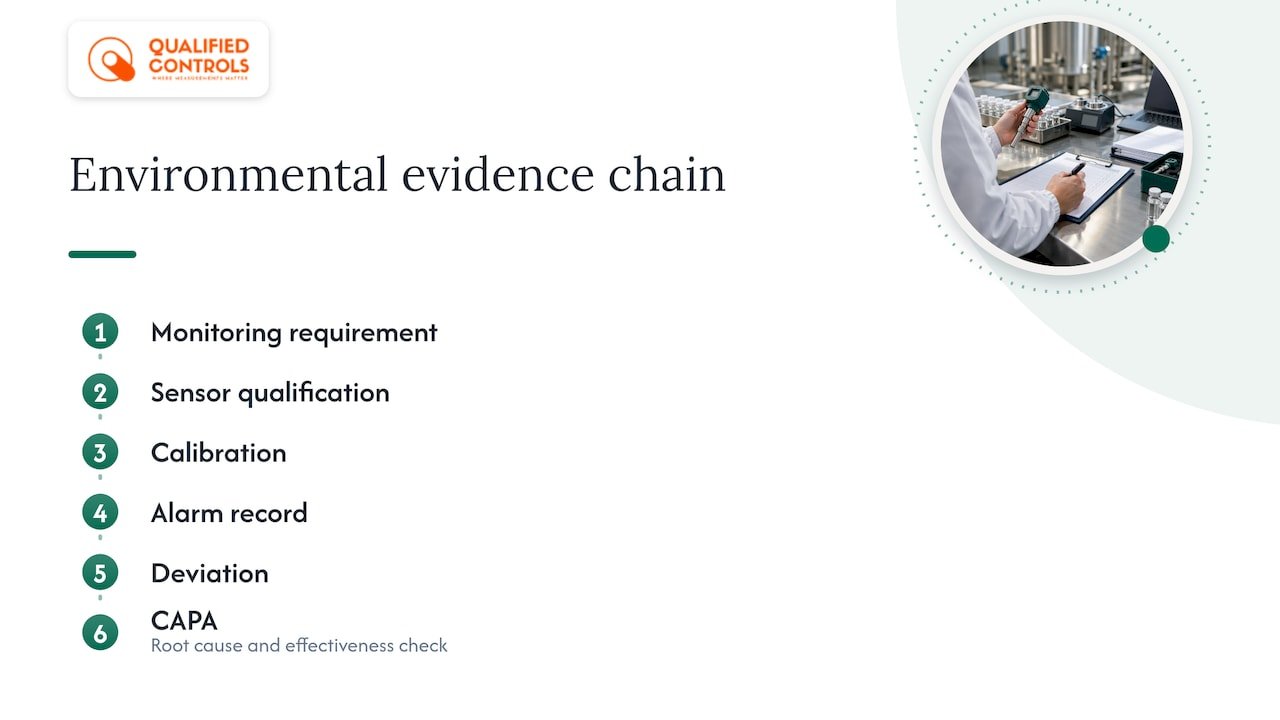
Eversana describes readiness as a continuous loop: understand the requirement, define the evidence that demonstrates compliance, then connect records so that a procedure links to training, training to execution, execution to deviations, and deviations to root cause, CAPA and effectiveness checks. Build that map for each critical process. For environmental conditions, the chain runs from the monitoring requirement to sensor qualification, calibration, the alarm record, the deviation and the CAPA.
Rehearsal
Strong organizations rehearse retrieval. Drug Development and Delivery describes testing how quickly teams can produce complete files, confirming version control, and checking that a change order connects to risk review and a CAPA to evidence of closure. Time your own drills. If pulling twelve months of storage-temperature records takes an afternoon, that is a finding worth fixing now.
Follow-through
CAPAs are judged on proof, not paperwork. Infodesk makes the point that a CAPA program is only as strong as its follow-through: timely closure, a clear root cause method and verification that the action worked.
Running mock inspections that find real gaps
For an anticipated NDA- or BLA-related pre-approval inspection, NSF recommends a comprehensive mock inspection about three to six months beforehand. It should test hosting, front-room and back-room coordination, document requests, interviews, walkthroughs and escalation, followed by remediation and verification of corrective actions.
A practical mock inspection covers:
- Planning and team selection: assign mock investigators who do not own the area being reviewed.
- Document review and walkthroughs: follow one product or process end to end, from the storage area to the batch record.
- Interviews: ask operators to explain what they do and why, then compare it with the written procedure.
- Reporting: classify findings by severity, run root cause analysis and open CAPAs with owners and due dates.
- Verification: confirm that each CAPA changed the outcome, and retest the area.
Records and controls to review before an inspection
The right list depends on your sector. For clinical investigator inspections, the FDA lists protocols and amendments, investigational product accountability records, IRB correspondence, Form FDA 1572, financial disclosure forms, informed consent documents, source records, case report forms and adverse event reports (FDA). For a pharmaceutical site, requirements may arise from Parts 210, 211 and 11 of Title 21 CFR, approved applications and written procedures.
Across sectors, a sound review set includes:
- Current approved procedures and evidence that staff are trained on them.
- Equipment and facility qualification records, including calibration status.
- Deviation, CAPA and change control records, with closure evidence.
- Electronic records with audit trails, electronic signatures and access controls.
- Environmental and storage monitoring data, alarm histories and excursion investigations.
- Supplier and distribution records, including cold chain data for shipments.
Where environmental monitoring fits
Temperature, humidity, pressure and particulate records are some of the most frequently requested evidence in regulated storage, laboratories and clean rooms, because they show whether product and samples stayed within defined conditions. They are also where readiness gaps hide: a calibration event that creates an unexplained gap, an alarm without a documented response, or a spreadsheet that cannot show who changed what.
A monitoring program that supports inspections generally has these properties:
- Continuous coverage of the parameters that matter for each area, with no manual-logging gaps.
- Validated performance, documented through IQ, OQ and PQ. Our FDA validation guide for IQ OQ PQ walks through the sequence.
- Traceable records with electronic signatures and audit trails aligned with Part 11 expectations. See our overview of 21 CFR Part 11 audit trails for temperature monitoring.
- Calibration continuity, so sensors are swapped or calibrated without losing data. We compare approaches in hot-swap vs. on-site ISO 17025 calibration.
- Linked deviations, so an alarm leads into the quality system. Read how to connect monitoring data to QMS deviation workflows.
- Mapping evidence for rooms, freezers and chambers. Our GMP temperature mapping guide covers study design.
If your operation includes shipments, the regulatory background is in our guide to FDA and ICH cold chain regulations. For the wider case for continuous data, see continuous temperature monitoring for compliance gains.
Perspective
In our experience, inspection readiness fails at the seams between systems, not inside any one of them. The procedure is approved, the sensor is installed, the alarm exists, but nobody can show in one sitting that the three belong together and that each worked on the day it mattered.
That is why we built our approach around a proactive architecture rather than a reporting tool: continuous parameter coverage, real-time alarms, electronic signatures and ALCOA+ record integrity, and audit-ready documentation delivered as a managed service with installation, validation and ongoing support. The design goal is to identify gaps before they become findings.
Our advice is to treat environmental data as evidence from the first day of deployment. Qualify the system, keep calibration continuous, link every alarm to a deviation record, and rehearse retrieval. When an investigator asks for a year of storage conditions, the answer should take minutes, not a scramble.
Brad
How we support inspection-ready monitoring
Our MySirius monitoring platform, sensors and services are designed for regulated environments in pharmaceutical, healthcare, laboratory, research and food safety operations. The service scope includes installation and deployment, IQ/OQ/PQ validation, mapping and qualification, ISO 17025 calibration, 24/7 monitoring response and audit support.
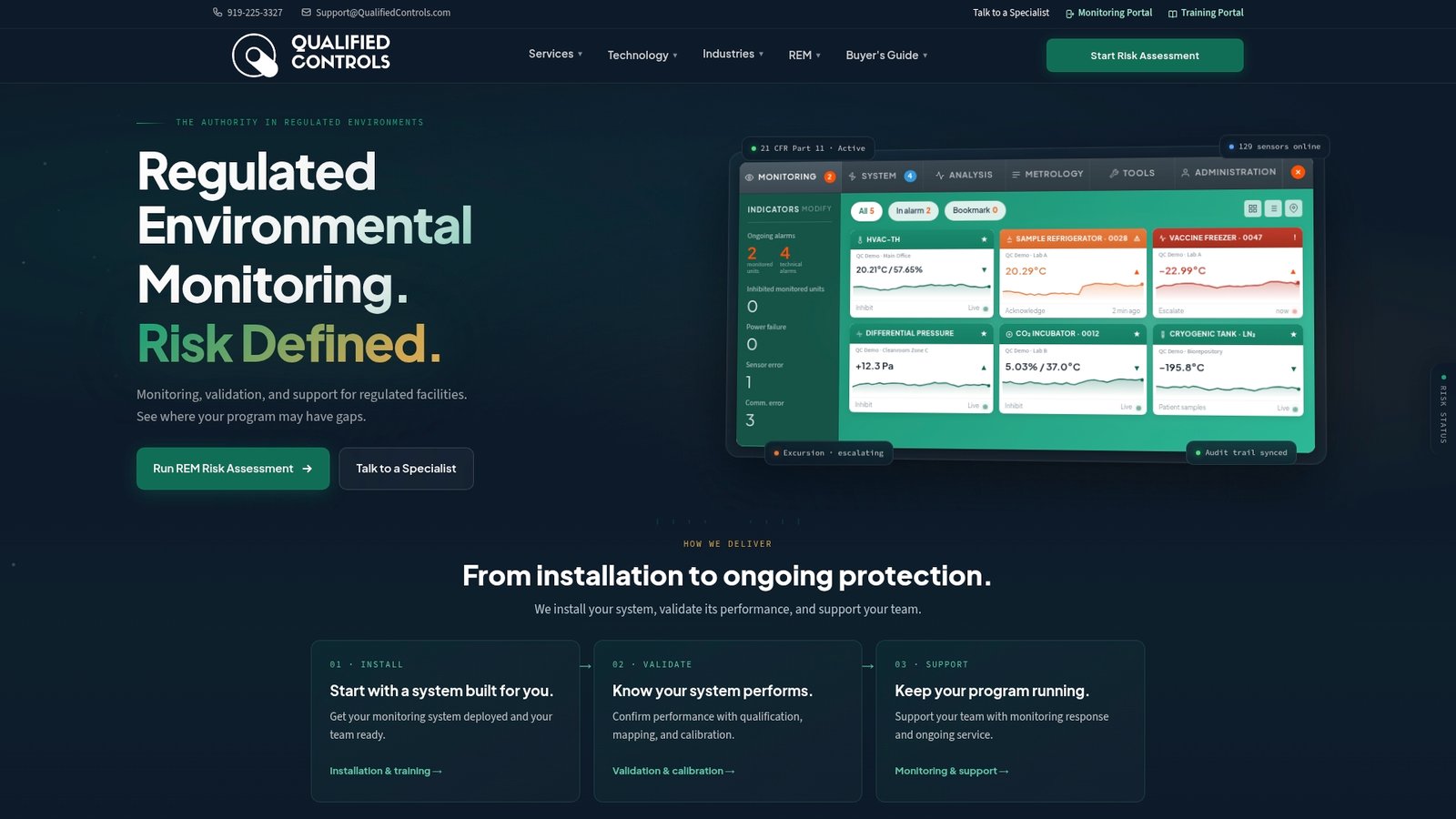
Published subscription plans are on our pricing page: Initial at $4,500 per year, Serenity at $12,500 per year and Advanced at $22,500 per year, with Enterprise available on request. For clean room and cold chain needs, see the clean room monitoring module and the cold chain logistics module. To see how a pharmaceutical customer approached it, read the Novonesis case study, or contact us to scope your sites.
FAQ
How much notice does the FDA give before an inspection?
It varies by program. For clinical investigator inspections, the FDA says pre-announcement is generally made up to 5 days before the start. The agency has also announced expanded unannounced inspections at foreign facilities, so plan on little or no notice.
What is a Form FDA 483?
It is the written list of significant inspectional observations the investigator leaves at the end of an inspection. For food inspections, the FDA asks management to submit a written response on corrective actions within 15 working days of the close.
How often should we run a mock inspection?
For a pre-approval inspection tied to an NDA or BLA, NSF suggests a comprehensive mock about three to six months ahead. Beyond that, ISPE recommends mock inspections to familiarize everyone with the process, and many sites repeat them on a recurring schedule set by the steering committee.
Who should accompany the investigator?
The FDA says a knowledgeable firm representative, preferably designated in advance, should accompany the investigator. Prepare that person and a backup, and make sure subject matter experts can be reached quickly for records and questions.
Sources
- FDA: What should I expect during an inspection?
- FDA: Clinical Investigator Inspection Readiness
- FDA: How to help an FDA food-safety inspection run smoothly
- FDA: FDA’s risk-based approach to inspections
- FDA: Inspections to protect the food supply
- FDA: Resiliency Roadmap for FDA Inspectional Oversight
- FDA: Inspection Basics
- FDA: Expanded use of unannounced inspections at foreign facilities
- FDA: 2026 IOM Chapter 5, Inspections
- ISPE: A Beginner’s Guide to IT System Inspection Readiness
- NSF: FDA Inspection Readiness
- EMMA International: What Is FDA Inspection Readiness?
- Eversana: Inspection Readiness Is Not an Event
- Drug Development and Delivery: Navigating FDA QMSR in 2026
- Infodesk: Inspection readiness best practices