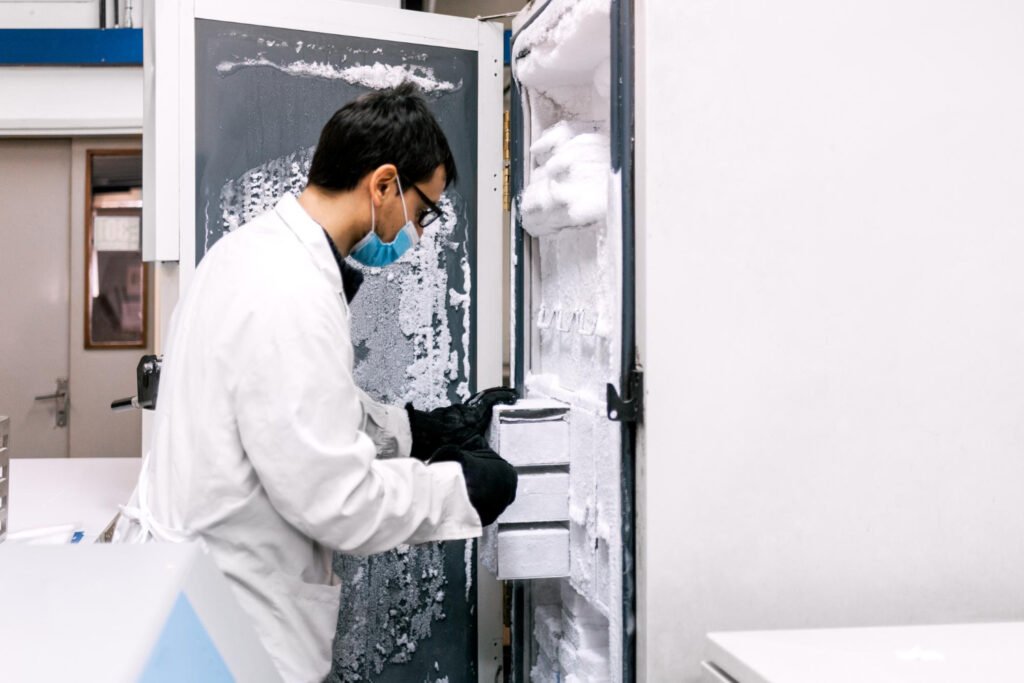
A freezer failure can put years of research, rare specimens, and carefully maintained chain-of-custody records at risk. The problem is not always obvious at first. A unit may drift out of range for hours overnight, during a weekend, or while a facility is dealing with a power or access disruption.
We view biorepository temperature monitoring as a preventive control, not just a way to create logs. Continuous, time-stamped data and timely alerts help your team detect drift early, act before samples are lost, and document what happened if an excursion occurs.
Detect Drift Before It Becomes Sample Loss
ULT freezers, mechanical freezers, vapor-phase liquid nitrogen storage, and cold rooms can fail for many reasons. Compressor wear, damaged door seals, condenser issues, power disruptions, blocked airflow, and human error can all affect storage conditions. A short event may be enough to raise questions about specimen suitability, research continuity, and sponsor confidence.
Rather than waiting for a freezer to cross a final high-temperature limit, we recommend watching how it behaves over time. A freezer that is slowly becoming unstable often gives warning signs before it stops maintaining temperature.
Common indicators include:
- More frequent or longer compressor cycles
- Slow recovery after door openings
- Repeated high-temperature alarms or near-alarms
- Temperature readings that steadily trend toward alarm thresholds
Continuous biorepository temperature monitoring makes those patterns visible. Predictive alerts can flag equipment that is drifting outside expected behavior, giving facilities and laboratory teams an opportunity to investigate before a small decline turns into a sample-loss event.
Measurement quality matters just as much as early warning. A probe placed near a door opening or evaporator may reflect changing air conditions rather than the environment experienced by stored samples. We help teams consider sensor placement that better represents sample conditions, along with calibrated sensors and documented calibration records. Those records can matter during internal review, sponsor discussions, and audits.
Monitor Every Environment That Supports the Collection
A single sensor in each ULT freezer is not a complete protection plan. Biorepositories depend on several storage environments and supporting spaces, each with different recovery times, alarm limits, and response needs.
Your monitoring plan may need to include:
- Minus 80 degree Celsius and minus 20 degree Celsius freezers
- Refrigerated units, cold rooms, and stability storage
- Incubators and controlled laboratory spaces
- Cryogenic storage and liquid nitrogen levels
- Room temperature, humidity, differential pressure, and power status
Room conditions can affect freezer performance and sample handling. Humidity or temperature changes may affect a cold room, while power status can provide early warning during a facility outage. Differential pressure may also matter in controlled areas where environmental conditions support regulated workflows.
Transfer points deserve the same attention as long-term storage. Samples may be exposed during accessioning, aliquoting, inventory work, defrosting, maintenance, or emergency relocation. When monitoring records cover the environments around the collection, your team can reconstruct conditions before, during, and after a deviation instead of trying to piece together isolated records from separate units.
Build Alarm Workflows People Can Use at Any Hour
An alarm only protects samples when the right person sees it, understands it, and has authority to act. Daytime coverage is one thing. Overnight, weekend, and holiday events require a clear escalation path that does not depend on one person noticing a message.
We recommend assigning primary and secondary contacts and configuring alerts through appropriate channels. Escalation should continue until someone acknowledges the alarm and begins the documented response. That response should be simple enough to follow under pressure, but detailed enough to protect the collection.
Preplanned actions often include:
- Verifying the condition with an independent check
- Confirming that doors are closed and seals appear intact
- Moving samples to qualified backup capacity when needed
- Contacting facilities personnel or freezer service providers
- Recording the event and response in the quality system
Alarm fatigue can weaken even a well-designed program. Thresholds, delays, repeat notifications, and escalation timing should distinguish between normal short-term recovery and a true equipment problem. We also recommend periodic alarm testing so you can confirm that contact lists, backup units, instructions, and notification paths still work as intended.
Preserve Evidence for Investigations and Quality Reviews
After an excursion, recollection is rarely enough. Quality teams need a clear record of what happened, when it began, how long it lasted, who received the alarm, and what actions were taken. That information supports deviation investigations, corrective and preventive action activities, sponsor conversations, and decisions about whether samples remain suitable for use.
A complete event record may include continuous temperature data, alarm notifications, acknowledgment times, user actions, maintenance history, calibration documentation, and sample relocation details. Together, these records help your organization assess actual conditions rather than relying on assumptions.
For regulated records, electronic controls may also be needed. Depending on your operations, this can include secure user access, audit trails, electronic signatures, and documented system validation aligned with applicable requirements, including 21 CFR Part 11 where relevant.
Our API-enabled MySirius software can connect monitoring data with LIMS, QMS, and ERP workflows. That connection can reduce manual reconciliation by linking environmental records to assets, investigations, work orders, and sample inventory activities. Instead of searching across disconnected systems, teams can have a more complete view of the event and its response.
Test Recovery Plans Before Weather or Equipment Creates a Crisis
Late-season storms, power interruptions, and limited facility access can make a freezer event harder to manage. Before an emergency occurs, we recommend reviewing backup capacity, generator coverage, service agreements, contact lists, and sample-transfer procedures. Backup units should be qualified and able to accommodate the highest-risk collections, not just a portion of the inventory.
Calibration planning deserves the same attention. Sensors should be calibrated through ISO 17025 accredited laboratories, with schedules that avoid monitoring gaps. Hot-swap, pre-calibrated sensor replacement can maintain continuous coverage while a sensor is exchanged, without waiting for an on-site calibration visit.
No biorepository can prevent every equipment failure. Still, early warning, reliable monitoring, clear response ownership, complete records, and tested recovery plans can greatly reduce the chance that a freezer problem becomes an unrecoverable sample-loss event.
Strengthen Your Freezer Monitoring Strategy
Qualified Controls helps biorepositories build continuous monitoring programs that support timely intervention, defensible records, and reliable escalation. See how biorepository temperature monitoring can provide the alerting, audit trails, and data visibility your team needs to protect critical collections. Our team can also support validated monitoring workflows that align with your quality and operational requirements.