
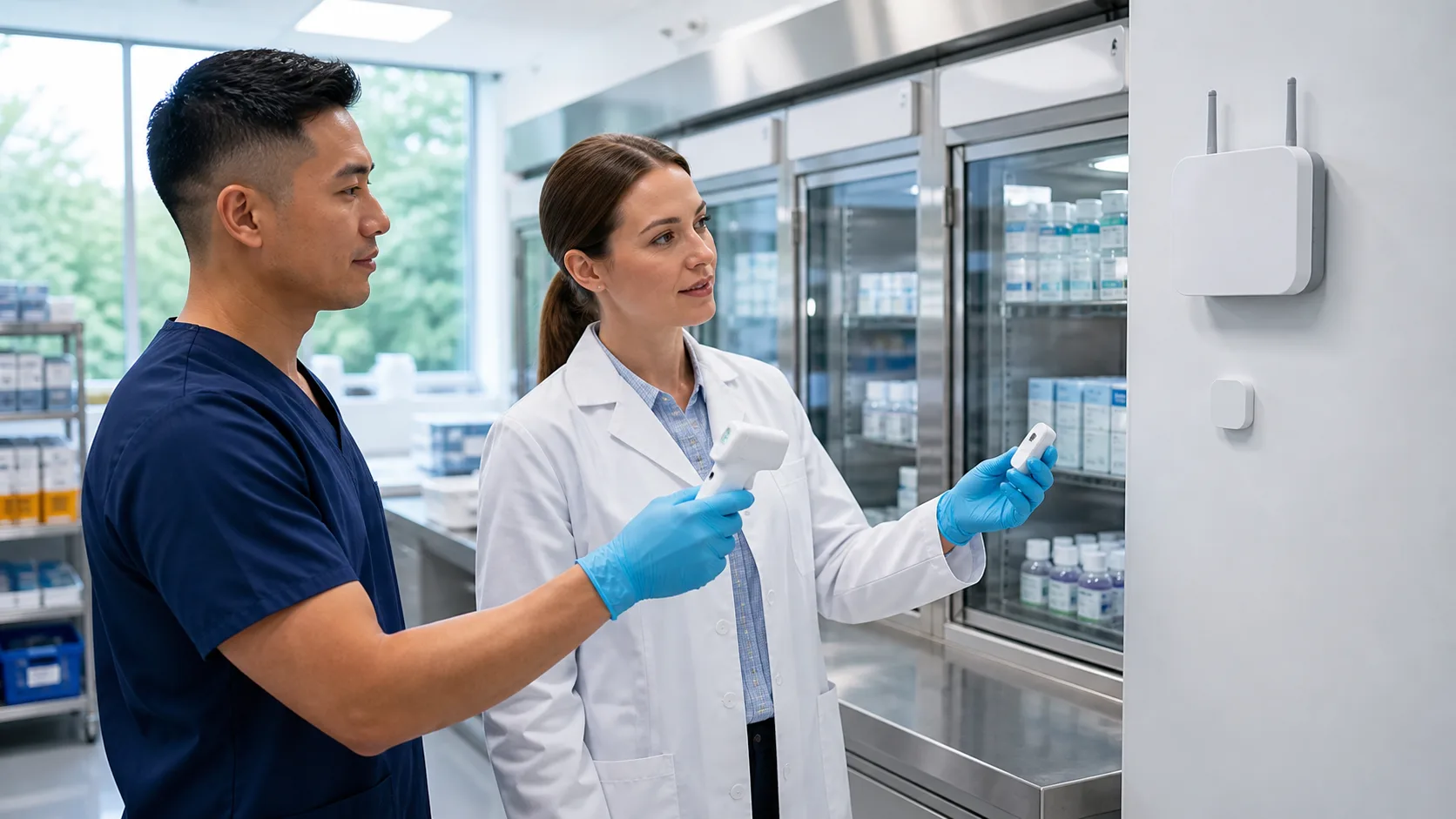
Hospitals depend on stable temperatures to keep vaccines, blood, and medications safe. When storage goes wrong, patient care is at risk, even if the equipment looks fine at a glance. As flu and respiratory virus season approaches, it is a good time to look closely at how temperature monitoring systems for hospitals really work day to day, not just on paper.
Many teams feel comfortable because they passed their last inspection and the logs look clean. But a unit can pass an audit one week and then come close to losing an entire vaccine fridge over a long weekend heat wave the next. That near miss rarely shows up in a binder. In this article, we question what “good enough” really means and share what a modern, automated, real-time approach should deliver for safer, more reliable hospital operations.
Rethinking "Good Enough" in Hospital Temperature Control
For years, hospitals have leaned on the same tools and habits, and for a while, that worked. But regulations are tighter now, storage rules are stricter, and patients expect more transparency and safety. A system that only checks boxes, without true real-time control, may not keep up.
A lot of monitoring is still:
- Built around clipboards and quick visual checks
- Split across different brands, models, and software
- Dependent on people remembering tasks during very busy shifts
On paper, everything can look fine. In daily practice, it can be fragile. Our goal is to help teams step back, question old assumptions, and plan for a higher, more realistic standard before the winter surge hits.
Hidden Vulnerabilities in Legacy Monitoring
Old tools hide risk. They feel familiar, but they leave big gaps that usually appear at the worst times.
Outdated devices and manual logs
Many hospital areas still use:
- Simple fridge thermometers taped to a door
- Chart recorders that print squiggly lines no one reviews
- Paper log sheets filled out once or twice a day
If staff are busy, those sheets can be missed or filled in later from memory. Manual checks only capture a moment in time. Nights, weekends, and holidays can pass with no one seeing a slow drift out of range until it has gone on for hours.
Single points of failure in infrastructure
Older systems can go quiet without anyone knowing. A single power supply, one gateway, or one network switch can fail and take down a whole set of sensors. If there is no:
- Redundant sensing in key units
- Automatic failover paths
- Independent alert paths when the main network is down
then medications, blood products, lab samples, and nutrition items may sit in trouble without a single alarm reaching staff.
False sense of compliance
Passing an audit does not prove every day is under control. Surveys often sample a few records. They may not catch that alarms were muted or that no one saw a long excursion last month. Written SOPs can sound perfect, but if no one gets real-time data, no one can carry out those steps when it actually matters.
What Regulators Now Expect From Hospital Monitoring
Regulators are asking tougher questions about how hospitals keep products within range all the time, not just during rounds.
Beyond minimum temperature checks
Groups like the Joint Commission, CMS, CDC, USP <797>/<800>, AABB, and state boards of pharmacy are moving away from simple minimum checks. They are looking for:
- Continuous monitoring in high-risk areas
- Trend views that show patterns, not just single readings
- Proof that alerts are acted on, not just received
Data integrity and audit readiness
Electronic, time-stamped records help show that data is complete and trustworthy. Regulators want to see:
- Who acknowledged each alarm
- What action was taken and when
- How calibrations, setpoint changes, and overrides are tracked
Secure, tamper-evident logs with role-based access support tough questions during surveys, complaint reviews, or product investigations.
Policy alignment with clinical reality
Many hospitals have detailed policies around vaccine storage, blood banking, and sterile compounding. The hard question is, do current temperature monitoring systems for hospitals actually support those policies? It helps to match monitoring features to specific clauses like:
- Allowed excursion ranges
- Maximum duration out of range
- Required documentation for product release or discard
Evaluating Your Current System Before Winter Surge
Colder weather often brings higher admissions, more vaccines, and more strain on equipment and staff. This is the right moment to stress-test your current setup.
Stress-testing alerts and escalation paths
Try controlled simulations, such as slightly adjusting a unit to cross a limit under close supervision. Then check:
- How long it takes for an alert to fire
- Who receives it and by which channel
- What happens if the first person does not respond
Also look at alarm fatigue. If staff get flooded with non-urgent alerts, they may start to ignore them, which makes a real emergency easier to miss.
Closing seasonal risk gaps
Winter can bring storms, short power blips, and supply delays. Ask yourself:
- Could your team safely manage a multi-hour outage?
- Are backup generators and monitoring systems linked?
- Do you know which units are highest risk if replacement products are slow to arrive?
Integrating monitoring across departments
Pharmacy, lab, blood bank, dietary, perioperative, and cleanrooms often run their own tools. That can lead to:
- Different alarm limits for similar products
- Multiple dashboards and call lists
- Gaps when items move between areas
Centralized oversight helps identify weak spots and align standards across the hospital.
Defining a Modern Temperature Monitoring Standard
A modern system is more than a thermometer with a screen. It ties people, sensors, and data together in a simple, reliable way.
Continuous, wireless, real-time visibility
Wireless sensors sending readings to secure cloud software provide:
- Up-to-the-minute data, not yesterday’s snapshot
- Dashboards that show risk at a glance
- Trend graphs that reveal slow drifts before they become excursions
Smart alerts and automated documentation
Well-designed rules-based alerts cut down noise and surface what matters most. Good systems can:
- Trigger alarms based on both temperature and duration
- Route alerts to the right role, not just the nearest phone
- Auto-generate logs, reports, and audit trails without extra handwriting
Scalability, validation, and security
Hospitals grow and change. Your monitoring should be able to grow too:
- Easy expansion from a few units to many locations
- Support for validation and documented performance checks
- Strong data security and regular firmware and software updates
It should also be simple to add sensors for humidity, differential pressure, or CO2 when cleanrooms, isolation rooms, or new services come online.
How Qualified Controls Raises the Bar for Hospitals
At Qualified Controls, we focus on automated, real-time environmental monitoring for regulated facilities, including hospitals. Our wireless sensors and cloud software are built to support areas like pharmacy, lab, blood bank, and cleanrooms, with configurable ranges and validated performance to match your standards.
We design alerting to fit real clinical life. The platform delivers real-time alerts through multiple channels like text, email, and phone, with escalation paths that follow your on-call structure. Automated reports and audit trails capture excursions, responses, and preventive actions so teams do not have to juggle manual spreadsheets or clipboards.
We also help hospitals review their current temperature monitoring systems for hospitals, map pain points, and design a rollout that works with existing workflows. Training, SOP alignment, and ongoing support help staff use the system the same way across units and locations, so monitoring becomes a quiet, dependable part of safe patient care, even when conditions are most demanding.
Protect Patient Safety With Reliable Temperature Monitoring Today
When you are ready to strengthen compliance and safeguard critical medications and samples, we are here to help you design and deploy the right solution. Our experts can configure temperature monitoring systems for hospitals that match your facility layout, workflows, and regulatory requirements. Reach out to Qualified Controls so we can review your current setup, identify risks, and outline clear next steps for a more reliable monitoring strategy. Together, we can put a robust, data-driven temperature control program in place for your hospital.