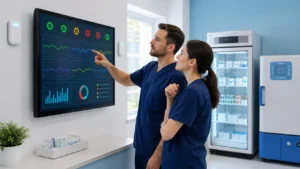
Protecting Every Dose with Continuous Temperature Insight
Safe medicine starts with safe storage. In a busy hospital pharmacy, every dose of vaccine, biologic, and chemotherapy agent depends on tight temperature control. When the heat outside climbs and the workday gets hectic, it only takes one missed spike in a fridge or freezer to put patient care at risk.
Many teams still rely on clipboards, quick checks, or small data loggers that no one has time to download until later. By then, the damage may already be done. A true pharmacy temperature monitoring solution gives you a single, live view of what is happening in every cooler, freezer, and workroom so you are not guessing or hoping everything is fine.
On a hot late summer afternoon, refrigerators are opening and closing nonstop, medication carts sit in warmer hallways, and staff are pulled in many directions. In that moment, you need more than scattered alarms and paper logs. You need a centralized system watching quietly in the background, ready to alert you before a small issue becomes a big loss. At Qualified Controls, we build monitoring systems for regulated and quality-focused spaces, so we understand how much pressure hospital pharmacies carry and how much trust sits inside each fridge door.
Hidden Risks in Hospital Pharmacy Cold Storage
Hospital pharmacies work hard to follow storage rules, but risk still hides in day-to-day habits. The problem is that most issues do not start with a dramatic failure. They creep in slowly, often in the background, until someone notices too late.
Common cold storage weak spots include:
- Overloaded refrigerators that block airflow
- Aging or poorly maintained equipment
- Frequent door openings during peak hours
- Medication carts parked in warm corridors
- Storage near windows, external walls, or vents
Human factors matter just as much. Manual checks can be missed when the ER is busy or when staffing is thin. Night and weekend shifts may have fewer people watching temperatures. Someone might silence a local alarm, plan to come back, then get pulled to a new task.
Summer adds even more strain. High outdoor heat can push HVAC systems and refrigeration equipment to their limits. Condenser coils run hotter, rooms near the roof or outside walls warm up, and older units struggle to hold setpoints. Without a centralized pharmacy temperature monitoring solution, those slow drifts and short spikes can slip right past the team, quietly weakening sensitive medications and vaccines.
Why Centralized Monitoring Is Now a Safety Imperative
When monitoring is scattered, so is your attention. A clipboard on one unit, a data logger on another, and a local alarm in a back room all compete for time. Staff must remember where to look, when to check, and how to pull records together when surveyors arrive. This patchwork approach also makes it hard to see patterns across the whole pharmacy.
A centralized pharmacy temperature monitoring solution changes that by pulling every sensor into one compliant platform. Instead of hopping from fridge to fridge, you see a single dashboard for:
- Refrigerators and freezers
- Cleanrooms and buffer areas
- Compounding spaces
- Medication rooms and satellite locations
With continuous data capture, the system does not depend on someone walking by at the right moment. Automated alerts help teams stay ahead of problems, so you can respond quickly when a unit starts to drift. Audit-ready reports mean you are not piecing together old logs when an inspection is on the calendar.
For pharmacy directors, quality leaders, and facilities teams, this kind of view brings clear benefits: faster incident response, fewer product losses, and easier root-cause work when something does go wrong. It also supports stronger documentation for Joint Commission surveys and state board visits, since temperature records are complete, consistent, and easy to review.
Key Features of a High-Performing Pharmacy Monitoring Solution
Not all monitoring tools are built for regulated hospital spaces. A high-performing system for pharmacy use needs solid technical parts, strong data controls, and workflows that match how your team actually works.
On the technical side:
- High-accuracy temperature and humidity sensors
- Differential pressure sensors for cleanrooms and compounding areas
- Redundant data storage so records are not lost
- Secure cloud access for authorized users
For compliance and quality, a strong pharmacy temperature monitoring solution will support:
- 21 CFR Part 11-ready electronic records
- Validated performance to confirm the system does what it is supposed to do
- Detailed audit trails that show who did what and when
- Change control tools so updates follow hospital policy
Daily use should feel natural, not like a burden. Workflow-friendly features can include:
- Role-based dashboards so pharmacists, facilities, and quality see what they need
- Automated excursion reports that capture what happened and when
- Mobile notifications for on-call staff, so they can act fast from anywhere
When these pieces come together, the monitoring system becomes part of your safety net, quietly supporting storage rules and helping everyone stay aligned.
Integrating Real-Time Monitoring Into Daily Pharmacy Practice
Even the best system only works if it fits into real life. Rolling out centralized, real-time monitoring is not just about installing sensors. It is about building a smarter routine around them.
Strong implementation usually starts with:
- Mapping every critical storage and work location
- Assigning sensor points based on risk, product type, and regulations
- Setting and validating alarm setpoints and delay times
- Piloting the system with a focused area before full go-live
Change management is where the long-term value shows up. Training should help pharmacists, technicians, and nursing partners:
- Understand the different alert types
- Know who is responsible for each kind of response
- Document corrective actions in a clear, consistent way
- Use trends and reports to improve storage practices over time
Over weeks and months, continuous data starts to tell a story. You may find that one refrigerator struggles on hot afternoons, or that a certain cart warms up when parked near a window. Those insights support smarter choices about equipment replacement, loading patterns, and preventative maintenance. During high-demand summer months, this can help keep distribution smooth, even when the heat outside keeps climbing.
Take Control of Temperature Safety Before the Next Heat Wave
As temperatures rise each year, hospital and pharmacy leaders are looking more closely at how well their current approach protects medications outside of normal weekday hours. Gaps often show up in three places: overnight and weekend visibility, the quality and completeness of documentation, and how quickly staff can respond when something drifts out of range.
A centralized pharmacy temperature monitoring solution brings those pieces together into a single, clearer picture. With Qualified Controls as your monitoring partner, you can move from scattered checks to steady, automated oversight across refrigerators, freezers, cleanrooms, and compounding spaces. That shift supports fewer product losses, smoother surveys, and stronger confidence that every dose you dispense has been stored the way it should be, no matter how high the temperature climbs outside.
Protect Every Dose With Reliable Temperature Monitoring
If you are ready to safeguard your inventory and support compliance with confidence, our team can help design a tailored pharmacy temperature monitoring solution for your operation. At Qualified Controls, we work with you to understand your workflow, facility layout, and regulatory requirements before recommending any technology. We then support implementation, validation, and ongoing optimization so your staff can focus on patient care instead of equipment worries. Reach out to our experts today to discuss your project and next steps.