Turning Dark Kitchens Into Food Safety Powerhouses
Food temperature monitoring is the quiet work that keeps delivered food safe. If cold food gets too warm or hot food sits too long, the risk goes up fast, no matter how good the recipes are. For dark kitchens that live on speed and volume, this can be the difference between smooth service and a stressful mess.
Ghost kitchens, virtual brands, and delivery-only lines have changed how food gets made and sold. Orders stack up across multiple platforms, riders crowd the pickup area, and staff bounce between brands and prep stations. When summer hits, and the kitchen is already running hot, keeping every cooler, freezer, and hot-holding unit in the safe range gets much harder. That’s why many operators are rethinking how they track temperatures, moving away from clipboards and hoping for the best, and toward automated, real-time monitoring that runs in the background while the team focuses on food.
At Qualified Controls, we see dark kitchens as perfect places for smarter monitoring. With wireless sensors and cloud software, these high-output spaces can be both fast and safe, without slowing down the line or adding more paper to the stack.
Why Traditional Temperature Checks Fall Short in Dark Kitchens
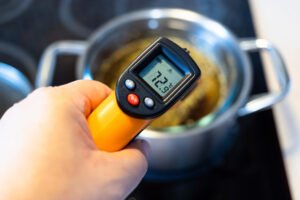
Old-school temperature checks were built for slower, dine-in kitchens, not for delivery operations that run long hours with tight timing. In a traditional setting, someone walks around with a probe thermometer, checks a few units, writes numbers on a clipboard, and moves on. In a dark kitchen with waves of orders and shared equipment, that process does not keep up.
Common weak spots show up right away:
- Checks are skipped during rush periods
- Logs get filled in after the fact, from memory
- Staff training is uneven across shifts and brands
- Nobody has a clear view of all the units at once
When orders surge, people focus on tickets and drivers, not on writing down cooler temps every couple of hours. In shared or off-site facilities, managers may not even be on-site the whole day, which makes it harder to know what is happening with food holding conditions in real time.
Seasonal stress adds another layer. In warmer months, outside heat pushes indoor temperatures up, doors get propped open longer for frequent deliveries and pickups, and equipment has to work harder. A walk-in that held steady in cooler weather may start to drift, and without constant tracking, the first sign of trouble might be spoiled product or a failed inspection.
Real-Time Food Temperature Monitoring for Modern Operations
Automated, real-time food temperature monitoring changes the setup from “check sometimes” to “know all the time.” Wireless sensors sit inside coolers, freezers, prep fridges, and hot-holding units, constantly measuring and sending data to a gateway. That gateway sends the readings to cloud software, so you see what is happening across your kitchen, or multiple kitchens, from one place.
This always-on view works like an early warning system. When a unit starts to drift out of range, doors stay open too long, or equipment begins to fail, alerts can go out by text or email before food is at risk. That gives staff time to move product, close a door, or call for service, instead of discovering the problem hours later.
Continuous logs also make food safety checks much easier. Instead of stacks of clipboards with hard-to-read notes, every temperature point is stored and time-stamped inside the system. For operators running more than one virtual brand or working in multiple dark kitchen locations, this helps show consistent standards and makes it simpler to prove that food temperature monitoring is part of daily operations.
Unlocking Efficiency, Compliance, and Cost Savings
Real-time monitoring is not only about catching problems, it is also about making the whole operation run smoother. When temperatures are tracked automatically, staff spend less time walking around with thermometers and more time on prep, packing, and quality checks.
Some key benefits show up quickly:
- Fewer manual logs and clipboards to manage
- Less disruption during peak order times
- Clearer roles, since alerts tell staff exactly where to focus
There is also a direct impact on waste and equipment stress. When temperature excursions are caught early, food does not sit in the danger zone as long, which helps cut down on product loss. Seeing trends over time can reveal a cooler that struggles during hot afternoons or a freezer that fails often, so you can plan service before it breaks in the middle of a weekend rush.
From a compliance point of view, automated records reduce the chances of missed checks or messy paperwork. Digital logs support HACCP plans, show due diligence to health inspectors, and help protect brands working with third-party delivery platforms that expect strong food safety controls. For dark kitchens that may host several brands under one roof, this shared, reliable record is especially helpful.
Designing a Smart Monitoring Strategy for Dark Kitchens
A strong monitoring setup starts with a clear look at where the risk really is. Before placing a single sensor, it helps to map out your kitchen and ask some basic questions:
- Where is the highest-value inventory stored?
- Which units have caused trouble in the past?
- Are there known hot spots near doors or heat sources?
- When do surges hit hardest, such as summer evenings or holiday weekends?
From there, a phased approach usually works best. Many operators start with walk-ins, freezers, and units holding high-value or high-risk ingredients. Once those are covered, monitoring can expand to prep lines, undercounter units, cold storage racks, and even delivery staging areas where orders wait for drivers.
When planning technology for dark kitchens, there are a few must-have features:
- Wireless sensors designed for busy commercial kitchens
- Cloud dashboards that can show multiple locations in one view
- Automated alerts via text or email so the right people see issues fast
- Simple fit with existing food safety workflows, not a whole new system to learn
At Qualified Controls, we focus on automated, compliant real-time monitoring that works with the way teams already move in modern kitchens, including shared and delivery-only spaces.
Taking Control of Food Safety Before the Next Rush
Dark kitchens move fast, and they are not slowing down. As delivery orders climb in warmer seasons and new virtual brands get added to the mix, food temperature monitoring needs to be just as modern as the rest of the operation. Waiting until after a failed inspection, a bad review, or a big batch of spoiled product is a hard way to learn where the gaps are.
A better path is to get ahead of the next surge. One simple step is to walk the kitchen with food safety in mind, list your highest-risk units, and consider where automated monitoring would have the biggest impact on safety and workflow. From there, pairing that view with a real-time monitoring system from a partner like Qualified Controls turns dark kitchens into food safety powerhouses that can grow with confidence, keep food safer, and stay ready for whatever the next rush brings.
Improve Food Safety With Reliable Temperature Monitoring Today
If you are ready to tighten control over every step of your operation, we can help you build a smarter approach to food temperature monitoring. At Qualified Controls, we design systems that give you accurate real-time data, clear records, and fewer manual checks. Our team will work with you to align monitoring solutions with your existing processes so adoption is straightforward. Reach out to discuss your goals and we will help you move from reactive fixes to proactive food safety control.