Summer Heat Turns Minor Temperature Swings Into Major Food Risks
Food safety and temperature control matter more in summer than at any other time of year. Hot days, packed dining rooms, patio service, outdoor events, and long delivery routes all make it harder to keep food at safe temperatures. When things get busy, it is easy for food to sit a little too long in a warm truck, on a cart, or on a prep table.
Even short slips outside safe temperatures can speed up bacterial growth. Food that would be fine in cooler weather can move into a danger zone much faster when the thermometer climbs. That can mean spoilage you can see and smell, but it can also mean hidden risk that no one notices until someone gets sick.
For restaurants, caterers, food processors, and healthcare foodservice teams, temperature control is one of the strongest safety tools you have, but it is also one of the most underestimated. Summer turns small gaps into big problems. That is why many operations are turning to automated, continuous monitoring to stay ahead of risk, protect people, and keep trust in their brand.
How Summer Conditions Supercharge Bacterial Growth
Most food operators know about the temperature danger zone. This is the range between 40°F and 140°F where bacteria grow faster. In summer, food can slip into this range at almost any step, from receiving to serving.
Common warm-weather trouble spots include:
- Loading docks that sit in direct sun
- Kitchen doors that stay open for airflow
- Outdoor tents, patios, and food trucks
- Overloaded coolers and freezers
- Equipment stressed by power blips during storms
When the air is hot and humid, refrigeration equipment has to work harder. Doors that used to be safe to open for a minute or two can now cause long recovery times. Condensation builds up on packages, shelves, and walls. That moisture, mixed with heat, can help bacteria spread between surfaces, foods, and packaging.
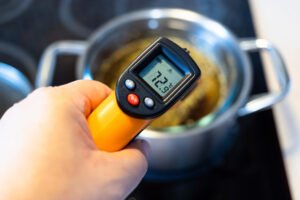
On top of that, our senses are not good thermometers. Feeling the side of a container or waving a hand in a cooler does not tell you if the center of the product is in the safe range. In summer, when compressors are running nonstop and airflow is uneven, temperatures can swing quickly. Visual checks and guesses are not enough.
Hidden Summer Temperature Risks Across the Cold Chain
To really understand summer risk, it helps to follow food through the whole cold chain. At each step, heat makes small problems more serious.
From supplier to receiving, food may sit in:
- Trucks waiting at a warm dock
- Pallets staged outside or by open doors
- Carts parked in hallways or service elevators
In storage, risks often come from:
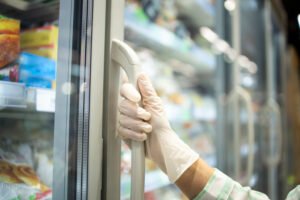
- Propped-open cooler doors during deliveries
- Overfilled units that block airflow
- Aging or poorly placed thermometers that do not show true product temperature
During prep, holding, and service, trouble can appear when:
- Cold items sit on counters waiting for plating
- Hot foods cool too slowly before going into the cooler
- Outdoor lines and mobile units do not hold temp in direct sun
Even short, repeated temperature swings can quietly damage quality and safety. Food may still look and smell fine, but shelf life drops and the margin for error gets smaller. Regulators and auditors expect food businesses to control these steps, follow the FDA Food Code, and keep solid records as part of their HACCP plans. Warmer months often expose weak spots in those plans.
Why Manual Temperature Checks Fail in Summer Stress
Many operations still lean on manual checks. Someone walks the line with a clipboard, opens units, takes a few readings, and writes them down. At the end of a shift, logs are filled out, sometimes from memory during a rush.
In summer, this approach breaks down even faster because:
- Volume is higher and staff have less time to slow down
- New or seasonal employees may not follow the same habits
- Patios, catering, and mobile units add more equipment to watch
The gaps are easy to miss:
- No one sees what happens between checks
- There is no clear pattern of how units behave in hot weather
- If a door is left open or a compressor fails, you find out hours later
When this happens, the impact hits both safety and the business side:
- Product loss from spoiled or questionable food
- Emergency product pulls before inspections
- Missed temperature logs during audits
- Damage to reputation if guests or patients experience issues tied to food
Manual checks alone simply cannot keep up with fast summer swings.
Smarter Food Safety and Temperature Control with Automation
A smarter approach is to let technology watch temperatures for you, all day and all night. Modern wireless sensors and cloud-based monitoring platforms track conditions across your operation, from walk-ins and line coolers to loading docks and transport units.
Key advantages include:
- Continuous readings for temperature, humidity, and other conditions
- Real-time alerts by text or email when limits are exceeded
- Automatic logs and reports ready for audits and reviews
- Trend views that highlight units or times of day that need attention
Instead of chasing paper logs, teams can spend time fixing real problems. Automated monitoring supports HACCP and food safety plans by showing that you are controlling hazards and keeping proper records. It also reduces the risk that a missed reading or a guessed number will come back to haunt you.
At Qualified Controls, we focus on automated, compliant remote monitoring systems for regulated and high-stakes environments like healthcare, life sciences, food, and manufacturing. The same tools that protect vaccine storage or lab samples can help keep food safe and high quality during the hottest months, too.
Turn Summer Into a Food Safety Advantage
Summer does not have to be the season of constant food safety stress. It can be the time you strengthen your process and use temperature control as a real advantage. When you can see what is happening inside your equipment at all times, you can move from reacting to problems to preventing them.
Good next steps for many operations include:
- Reviewing where and how temperatures are checked today
- Listing equipment and locations that run warmer in summer
- Flagging outdoor areas, loading zones, and mobile units as higher risk
- Testing automated remote monitoring on a few key coolers or freezers before the next busy stretch
At Qualified Controls, our cloud software, wireless sensors, and managed services are built to help teams stay ready, not just hopeful. With the right monitoring in place, you can cut back on product loss, lower the chance of temperature-related safety issues, and feel more confident when inspectors arrive, even on the hottest days of the year.
Strengthen Your Compliance With Reliable Monitoring Solutions
Protect your products, customers, and reputation with precise, automated monitoring tailored to your facility’s needs. At Qualified Controls, we design and support systems that help you maintain consistent food safety and temperature control across every critical point in your operation. Partner with us to streamline recordkeeping, simplify audits, and reduce the risk of costly spoilage or recalls. Let us help you turn regulatory requirements into a dependable, efficient process.