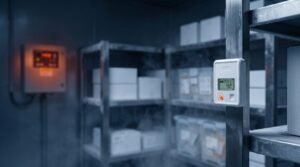
Incomplete or unreliable temperature records can become an FDA Form 483 observation during an inspection. For pharmaceutical manufacturers, biotech labs, and medical device facilities, those records support decisions about whether materials, samples, and products stayed within approved conditions. A Form 483 is not a final agency determination, but it does document inspectional observations that need a timely, well-supported response.
We often see added exposure in November and through the winter months. HVAC changes, loading dock traffic, cold weather, backup power concerns, and holiday staffing schedules can all reveal weak spots in temperature monitoring practices. The issue is not only whether a room, freezer, or warehouse stayed in range. Inspectors also need to see reliable proof of what happened.
How Temperature Records Become FDA 483 Risks
Temperature data supports product quality decisions across warehouses, cold rooms, stability chambers, cleanrooms, freezers, and controlled storage areas. When a record has a missing period, an unexplained excursion, or a manual entry that appears altered, an inspector may question whether materials remained within approved storage conditions.
A once-daily paper log may show an acceptable reading at the time of the check, yet miss an overnight rise in a cold room or a brief freezer failure. That gap matters when the facility cannot show the full condition history or explain the quality impact.
Common record issues inspectors may notice include:
- Incomplete logs, missing initials, dates, or required reviews
- Entries written after the fact or corrections without an explanation
- Illegible handwritten values or unclear units of measure
- Missing data caused by a failed sensor, depleted battery, or disconnected logger
- Calibration records that are overdue or unavailable during review
Even if the actual temperature remained acceptable, weak documentation can undermine confidence in the record. We recommend treating missing data as an event that requires review, not as a minor paperwork problem to find later.
Records Need to Show More Than a Temperature Reading
An unexplained alarm is only the beginning of the question. Inspectors may expect your team to show when an excursion began, who received the alarm, what materials could have been affected, what containment actions occurred, and how Quality reached its final decision.
A defensible excursion record typically includes:
- The monitored location, approved limits, and affected equipment
- The highest or lowest recorded value and total time out of range
- Alarm notifications, escalation history, and personnel response
- Materials or samples placed on hold, moved, or assessed
- Root cause findings, corrective actions, and documented Quality review
Continuous monitoring provides a fuller timeline than once- or twice-daily manual checks. It can show whether the condition recovered before personnel arrived, how quickly the room or unit drifted, and whether similar events occurred before the documented alarm. That context helps Quality determine whether a single event was isolated or part of a repeating equipment issue.
Root cause matters as well. A freezer may be drifting toward failure, a cold room door may have been left open, warehouse HVAC controls may not be responding properly, or sensor placement may not represent the actual storage condition. Predictive alerts can give teams notice of a developing drift before it becomes a deviation or a larger product-risk investigation.
GMP and Electronic Record Expectations
Temperature controls are part of the broader GMP quality system. For drug manufacturing operations, relevant expectations can include written procedures under 21 CFR 211.100, warehousing controls under 21 CFR 211.142, laboratory controls under 21 CFR 211.160, stability testing under 21 CFR 211.166, and record retention under 21 CFR 211.180.
When required records are created, changed, maintained, archived, retrieved, or transmitted electronically, 21 CFR Part 11 may apply. In practical terms, your temperature compliance monitoring system should support controls such as unique user access, secure audit trails, accurate timestamps, retained records, and retrieval in a human-readable format.
Still, software alone does not create compliance. A validated system supports your quality process, but it does not replace written procedures, trained personnel, deviation handling, Quality review, or documented change control. We encourage teams to think of monitoring technology as evidence infrastructure. It should make the right actions easier to document and the wrong actions harder to hide.
Maintaining Inspection-Ready Electronic Monitoring
A temperature compliance monitoring system used for GMP records needs a controlled implementation. Validation should be risk-based and may include installation qualification, operational qualification, and performance qualification before the system supports regulated decisions. That validated state also needs attention after software updates, workflow changes, sensor replacements, or new integrations.
At Qualified Controls, we support managed validation documentation through software upgrades so customers can maintain a clear validation record as their monitoring environment changes. Our MySirius software can also connect through an API with LIMS, QMS, and ERP platforms, helping reduce transcription risk and improve traceability between systems.
Calibration records deserve the same level of attention. Sensors should have current calibration documentation through ISO 17025 accredited laboratories, defined acceptance criteria, and a documented response when results fall outside tolerance. Pre-calibrated sensor replacement can help avoid the monitoring gap and site-visit delay that may occur during scheduled calibration work.
During an inspection, Quality and Validation teams should be able to retrieve records without a long search. Useful records include trend reports, alarm histories, audit trails, calibration certificates, validation documents, and excursion investigations. If retrieval depends on one person, an old spreadsheet, or a folder no one can locate, that is a process risk worth addressing before an inspector asks.
Prepare Before Winter Tests Your Controls
Before winter weather and holiday schedules put added pressure on your facility, review alarm routing, escalation contacts, backup power procedures, calibration due dates, open deviations, and monitoring coverage. Focus first on critical GMP areas such as cold rooms, stability chambers, warehouses, cleanrooms, and freezers.
Your team should be able to retrieve complete records, explain every exception, and demonstrate that electronic data remains attributable, legible, contemporaneous, original, accurate, complete, consistent, enduring, and available. A complete temperature record is not just a line on a report. It is the evidence behind a quality decision when conditions are challenged.
Strengthen Your Temperature Record Controls
See how a temperature compliance monitoring system can support complete electronic records, documented exception handling, and inspection-ready audit trails. Qualified Controls helps regulated facilities implement continuous monitoring with validation support and reliable data access. Our team can help you identify gaps in current monitoring workflows before they become inspection findings.