HVAC Changes Can Undermine a Qualified Cold Room
Cold room validation should be reviewed whenever HVAC conditions change, even if the room still appears to hold its normal setpoint. A single display can look acceptable while airflow, recovery after door openings, humidity, pressure relationships, or temperature uniformity have shifted. For GMP storage, prechange qualification data may no longer show that the room remains fit for its approved use.
HVAC changes are not limited to replacing an air handling unit. New supply or return locations, damper adjustments, filter changes, ductwork work, revised control sequences, building automation updates, and temperature setpoint changes can all affect cold room performance. As winter approaches, heating operation, lower outdoor humidity, and changing building loads may reveal issues that were not visible during a short postconstruction check.
Start Cold Room Validation in Change Control
We recommend starting with the approved change control record, not with a temperature map. The record should define what changed, why it changed, which systems may be affected, and which quality attributes could be at risk.
The impact assessment should look beyond the HVAC equipment itself. Include the cold room, building automation system, environmental monitoring system, alarms, sensors, and any connected quality systems. If electronic records support GMP decisions, the assessment should also consider applicable Part 11 controls.
A well-built validation plan turns that assessment into clear work. It should identify:
- Approved acceptance criteria and test protocols
- Responsible engineering, quality, and validation personnel
- Calibration status for instruments used during testing
- Deviation handling and approval requirements
- Required records before the change can be closed
For GMP operations, written procedures should align with 21 CFR 211.100. The assessment should also consider whether the HVAC modification affects facility controls addressed in 21 CFR 211.42 and 21 CFR 211.46, including ventilation, air filtration, heating, and cooling. These regulations do not tell you that every change needs the same test package. They do require you to show control over the change and its effect on the facility.
Set the Scope From HVAC Risk
Not every HVAC adjustment requires a full repeat of every qualification activity. A documented, like-for-like replacement with no change to airflow, controls, capacity, or sensor locations may call for limited verification. On the other hand, changes to air distribution, control logic, pressure relationships, equipment location, or temperature setpoints often justify broader cold room validation.
We set the scope based on what could change in the room and what could affect stored material. Depending on the risk, the protocol may need to reassess:
- Temperature uniformity and likely hot or cold locations
- Recovery after routine door openings
- Airflow patterns around shelving, pallets, and evaporators
- Humidity where it affects the intended storage condition
- Differential pressure where the cold room interfaces with classified areas
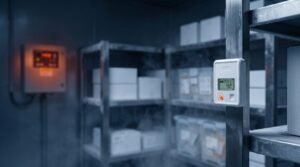
Storage layout matters more than many teams expect. A room mapped while empty may behave differently once it holds pallets, shelves, product, and active personnel traffic. Door opening frequency, product loading patterns, and evaporator placement can all change how air moves through the space. We recommend testing representative operating conditions, including credible worst-case conditions, rather than relying on a clean, empty-room result that does not reflect GMP storage operations.
Execute IQ, OQ, and PQ for the Changed System
Installation qualification begins with confirming that the installed system matches the approved design. This can include HVAC components, transmitters, sensors, control panels, damper positions, equipment labels, drawings, and calibration records. Temperature sensors and other instruments should be calibrated through ISO 17025 accredited laboratories when required by your site quality procedures.
Operational qualification then verifies that the controls work as intended. We look for evidence that temperature setpoints, control sequences, alarm thresholds, alarm notification paths, sensor failure handling, and power or communication loss behavior perform correctly. A room that returns to setpoint after a disruption may still need review if recovery is slow or if alarms fail to reach the right people.
When HVAC or environmental monitoring software changes, the testing should also address electronic record controls. For closed systems, applicable 21 CFR 11.10 requirements may include role-based access, audit trails, record retention, and system controls that protect records from unauthorized change.
Performance qualification is where the cold room proves itself under normal operations. Temperature mapping should use a risk-based sensor layout that captures representative storage zones and likely extremes. We recommend including normal loading, routine door activity, and enough time to show stable performance. Seasonal conditions belong in the decision as well. Winter operating loads can be different from the conditions present when HVAC work was first completed.
Protect Data Integrity and Ongoing Control
Requalification is not complete until continuous monitoring reflects the changed room. Mapping results may show that a monitoring sensor should be moved, added, or removed because the airflow pattern has changed. The ongoing monitoring plan should match the postchange risk, not simply repeat the prior sensor layout.
After the HVAC work, we recommend verifying that monitoring and alerting functions continue to support quality decisions. Confirm that continuous data is captured, alerts go to the correct escalation contacts, acknowledgments are documented, and alarm records remain available. If environmental information or quality events are shared with a building automation system, LIMS, QMS, or ERP, those integration points should be included in the review.
Our validated continuous monitoring approach can support this work through managed validation documentation, predictive alerts, and API-enabled MySirius software integrations. Pre-calibrated replacement sensors can also help maintain calibration continuity by allowing a sensor swap without a prolonged monitoring gap or an on-site calibration visit.
Close the Change Before Winter Exposes Gaps
A cold room that appears operational is not automatically qualified for GMP storage after an HVAC change. Before closing the change, confirm that protocols are approved, acceptance criteria are met, deviations are resolved, mapping supports the intended use, monitoring locations are updated, alarms are tested, and quality approval is documented.
Winter conditions can place new demands on heating, cooling, airflow, and control sequences. Reviewing the validation package before those conditions arrive helps you confirm that calibrated sensors, continuous monitoring, alarm documentation, and controlled records still support inspection readiness.
Maintain Confidence Through Change Control
Qualified Controls helps regulated facilities assess whether HVAC modifications require updated qualification evidence, sensor placement review, or revised acceptance criteria. Request cold room validation support to address sensor equivalency and maintain defensible monitoring records. Our team can provide documentation that supports your quality system and ongoing inspection readiness.