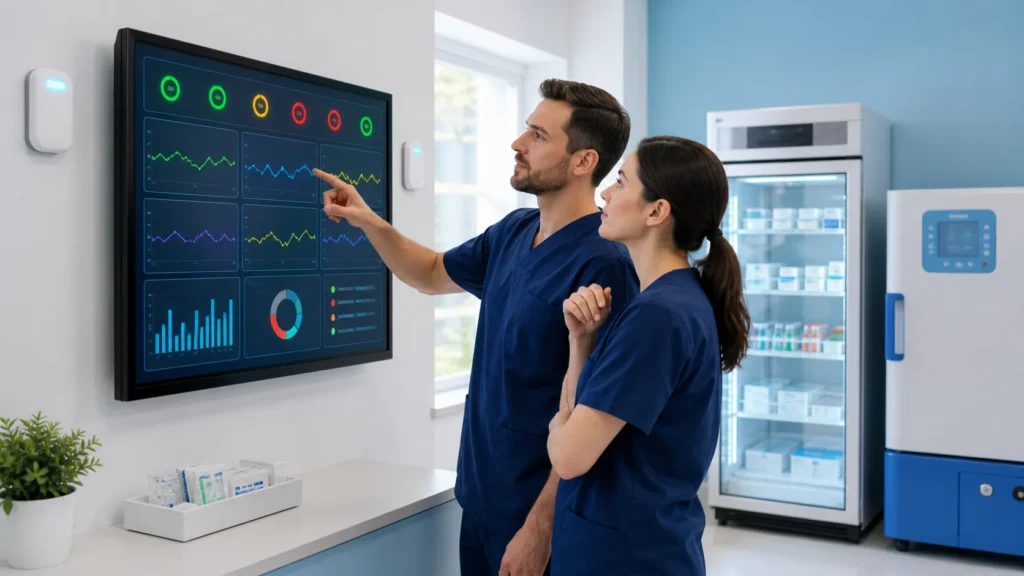
Hospitals depend on cold storage staying within range all day and all night. A well-planned temperature alert system keeps blood products, vaccines, chemo drugs, and lab samples safe even when most of the building is dark and quiet. When equipment fails in the middle of the night, the right alert can be the difference between a quick save and a full loss.
In this article, we walk through what makes a dependable temperature alert system for hospitals, how to design alerts people actually trust, and how to grow from a small pilot to full coverage. We will also touch on why fall weather and HVAC shifts can stress your equipment, and how environmental monitoring beyond temperature supports safer care.
Protecting Patients with Smarter 24/7 Temperature Alerts
A lab refrigerator can fail at 3 a.m., not just at 3 p.m. If no one sees the local alarm or hears the beeping, blood, vaccines, or high-cost medications can warm past limits before morning rounds. By then, staff may have to discard everything, postpone care, and search for backup supply.
Hospitals cannot depend on:
- Clipboards and manual checks
- Standalone fridge buzzers that no one hears outside the room
- Informal workflows like “whoever is close will check it”
A modern temperature alert system runs all the time, sends alerts to the right people, and records what happened. It can support pharmacy, blood bank, OR core, NICU, lab, vaccine storage, and other critical areas without adding more paperwork to staff. The goal is simple, catch problems early, protect patients, and support compliance expectations from regulators and surveyors.
Hospital Risks That Demand Reliable Temperature Alerts
When temperature control fails, the impact reaches far beyond one fridge. Some of the risks include:
- Product spoilage and waste for blood, tissue, vaccines, and drugs
- Loss of sterility in stored supplies or devices
- Lab samples that no longer reflect the true patient condition
- Medications that lose strength or act differently than expected
These problems roll downhill into patient care. Care teams may have to delay surgeries, redraw labs, switch to backup medications, or repeat tests. That can hurt trust, slow down care, and strain your teams.
There is also a clear financial and reputational side. Temperature failures can lead to:
- High-dollar product loss and rush replacement orders
- Repeat work and overtime when tests or procedures must be redone
- Findings during Joint Commission or state inspections
- Extra internal reviews and corrective action reports
Late September can be a risky time. As days get cooler but afternoons can still be warm, HVAC systems switch between cooling and heating modes. Refrigerators and freezers work harder as spaces fluctuate. In many places, including where we work, at Qualified Controls, this shoulder season means more stress on older units and higher chance of failure right before winter and holiday staffing challenges.
Core Requirements of a Hospital-Grade Temperature Alert System
Not every monitoring setup is ready for hospital use. A hospital-grade temperature alert system should cover a few core technical needs:
- Continuous monitoring with frequent readings
- Calibrated sensors appropriate for the range and use
- Battery backup so alerts keep working during power issues
- Wireless coverage that reaches basements, shielded rooms, and remote corners
- Secure cloud or on-premise data storage with user control
Alerting features also matter. You want to control how and when alerts fire so they are helpful, not just noisy. Key functions include:
- Different thresholds per asset or product type
- Rate-of-change alerts when a temperature starts drifting fast
- Logic to handle quiet hours and staffing patterns
- Multiple channels like SMS, phone, email, and app alerts
- Clear, plain language messages that tell staff exactly what to check
From a compliance and data integrity view, the system should support audit trails and long-term records. Hospitals often need:
- Automatic time stamps and event history
- Role-based access so people only see what they need
- 21 CFR Part 11 ready features for electronic records and signatures
- Retention of data to support surveys, investigations, and quality projects
Designing Alerts Clinicians Will Trust and Act On
If every small temperature bump sets off alarms, staff will start to ignore them. To build trust, alert design needs to reduce alarm fatigue while still catching early trouble.
Helpful patterns include:
- Tiered alerts, for example informational, warning, and critical
- Delay windows so a short door opening does not trigger a frantic call
- Smart escalation rules so only the right team gets the message
Hospitals also need clear workflows. For each unit or asset, it helps to define:
- Who responds during nights and weekends
- Backup roles when the primary person does not answer
- How to document what was found and what action was taken
Training and change management are just as important as the devices. Nursing, pharmacy, lab, and facilities teams should all understand:
- What the alerts mean
- What is expected when their phone buzzes at 2 a.m.
- How to log actions so data is ready for surveys and internal reviews
Regular reviews of alert history and response times help leaders tune thresholds and workflows so the system stays useful, not annoying.
From Pilot to Enterprise-Wide Coverage Without Gaps
Many hospitals start with a pilot. A smart path is to begin with the highest risk areas, then grow out once you know the system fits your culture and staffing.
Common first-wave areas include:
- Central pharmacy and satellite pharmacies
- Blood bank and tissue storage
- NICU and key patient care units with high risk medications
- OR core and central sterile storage
- Main clinical labs and critical specimen fridges
From there, coverage can expand to dietary services, procedural areas, and off-site clinics or ambulatory sites. The goal is to avoid blind spots where products or samples sit outside the main campus or in older equipment.
Integration is another step. A good temperature alert system can connect with existing facility platforms, building automation, and quality software so alerts and data are not stuck in a separate silo. That makes it easier for teams to see trends and act before failures happen.
Hospitals that plan for validation from day one save time later. Helpful practices include:
- Documented installation and operational checks
- Clear mapping of each sensor to a specific piece of equipment or room
- Defined alarm setpoints agreed on by pharmacy, lab, or infection prevention
- Qualification records that are ready to show to inspectors or surveyors
Leveraging Environmental Monitoring Beyond Temperature
Once a hospital has reliable temperature alerts in place, it often makes sense to extend to a broader environmental monitoring platform. Temperature is one piece. Other conditions can be just as important for safety and quality.
Key examples include:
- Humidity in sterile storage and instrument reprocessing areas
- Differential pressure to maintain positive pressure in ORs
- Negative pressure in isolation rooms to contain airborne risks
- Conditions for tissue, cell, and other advanced therapy storage
By bringing these points together, a central dashboard can show the health of cold storage and room conditions across the facility. Trends and analytics can help teams spot equipment that is drifting, plan preventive maintenance, or make a case for replacement funds before a failure turns into a crisis.
At Qualified Controls, we see how a thoughtful temperature alert system can grow into a full environmental monitoring program that supports patient safety, quality operations, and survey readiness across the hospital, all year long.
Protect Your Facility With Reliable Temperature Monitoring Today
If you are ready to reduce product loss and stay compliant around the clock, our team at Qualified Controls can help you deploy a scalable temperature alert system tailored to your operation. We work with you to identify critical points, set meaningful thresholds, and configure alerts that reach the right people at the right time. Take the next step toward safer, more predictable operations by talking with us about your monitoring requirements today.