
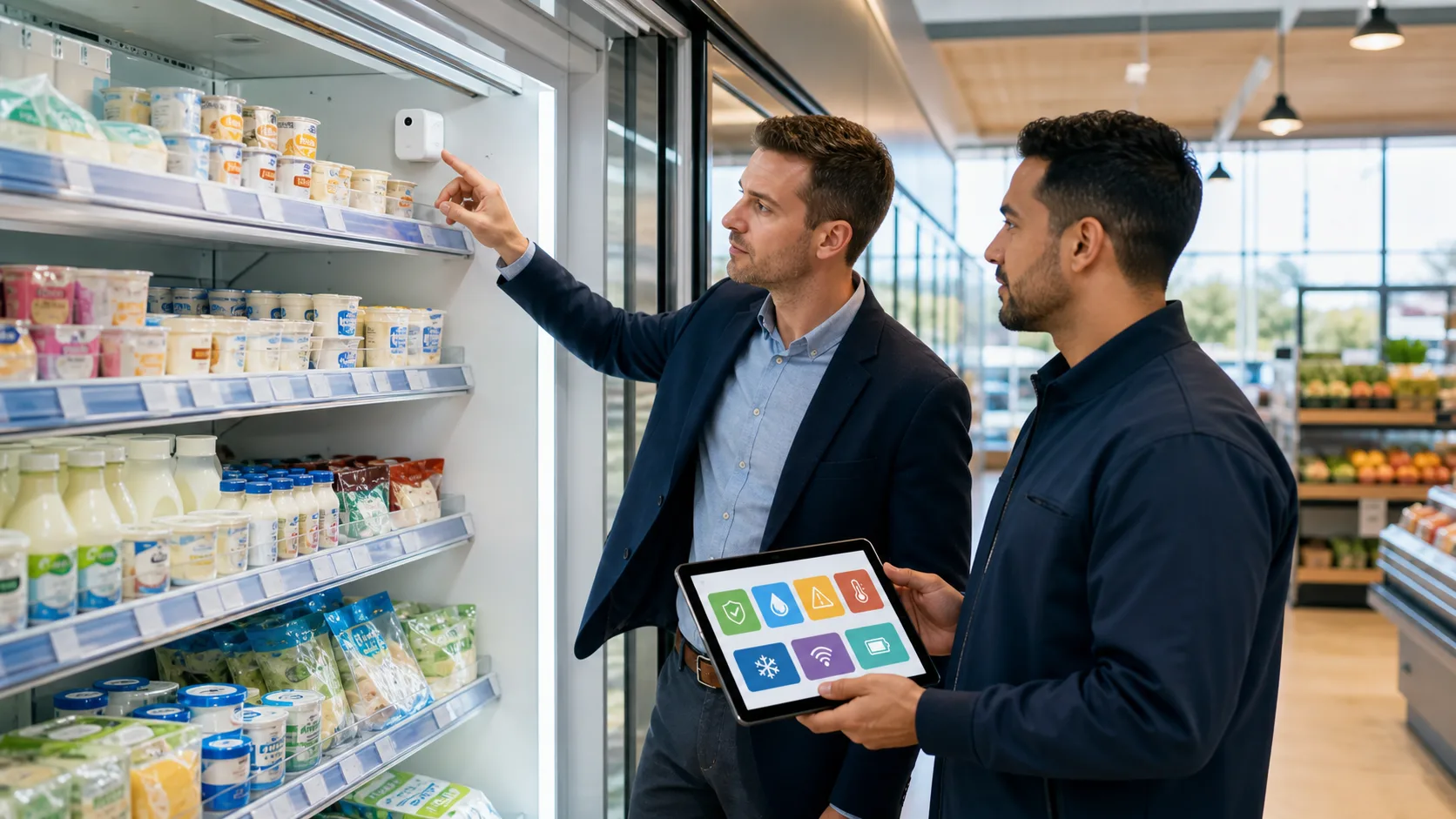
Grocery store refrigeration is the line between safe food and lost profit. When cold equipment slips out of range, product quality, safety, and your bottom line are all at risk, often before anyone notices. Real-time temperature monitoring gives your team a clear view of what is happening inside every case and cooler, so you are not guessing or reacting too late.
In this article, we will look at why real-time monitoring matters for your grocery store refrigeration system, the hidden risks in everyday operations, how monitoring protects both food and margins, and what it looks like to bring this kind of system into your stores as seasons change.
Stop Spoilage Before It Starts With Real-Time Data
On a busy late-summer weekend, stores often run full: meat cases packed, produce coolers loaded, and walk-ins stuffed for the rush. Overnight, a walk-in compressor fails. By morning, the temperature has crept well past safe limits, and you are throwing away meat, dairy, and produce. Now add the worry about food safety questions and the scramble to restock.
With real-time monitoring, that story plays out differently. Wireless sensors in each case and walk-in send temperature data to the cloud all day and all night. If a cooler drifts out of range, the system sends a text, email, or app alert to the right people, often while there is still time to move product or call for service.
Early fall can be tricky for a grocery store refrigeration system. Heat waves still pop up, stores are gearing up for back-to-school and early holiday sales, and margins feel tight. Real-time monitoring helps you:
- Watch every refrigerated case, display, and walk-in around the clock
- Catch small problems before they become product loss
- Keep staff focused on customers, not constant temperature checks
We will walk through how this supports food safety, compliance, ROI, and day-to-day operations.
Hidden Risks Lurking in Your Refrigeration Lineup
Most grocery teams know their obvious problem spots, but many risks stay out of sight. Common blind spots include:
- Older cases along the store perimeter that fight outside heat
- Deli, dairy, and grab-and-go cases that are opened all day long
- Overloaded walk-ins and backroom coolers right before fall promotions
Manual checks with clipboards and logbooks only capture one moment. A worker takes a reading, writes it down, and moves on. What they do not see is the slow drift that happens between checks, or the short cycling that only shows up when the store is packed in the afternoon, or the failure that hits at 2 a.m.
Those gaps can lead to serious trouble: foodborne illness risk, failed inspections, questions from suppliers, and even negative online reviews when shoppers notice poor product quality. Small warning signs often show up long before food is clearly unsafe, such as:
- Ice buildup around coils or fans
- Wide swings in temperature from hour to hour
- Miscalibrated built-in sensors that do not match actual product temps
A real-time monitoring system records these patterns over time, so you see issues early instead of waiting for spoiled product or a surprise inspection.
How Real Time Monitoring Protects Food and Margins
A wireless, automated monitoring system uses small sensors placed in key spots across your grocery store refrigeration system. These sensors track temperature, humidity, and sometimes door activity, then send that data to a secure cloud platform where it is stored around the clock.
From there, you can set custom alert rules that match your operation. For example:
- Different temperature ranges for meat, dairy, and frozen
- Time delays so brief door openings do not trigger alarms
- Separate alert paths for store managers, maintenance, and regional leaders
When a cooler drifts out of range, the right people get notified quickly. That gives your team a chance to move product, adjust settings, or call service before food reaches unsafe temperatures. The result is less spoilage and fewer write-offs.
The financial impact shows up in many places:
- Lower product loss from missed failures
- Fewer emergency calls when you spot problems early
- Better energy use by keeping systems within steady, efficient ranges
- Clear data that supports smarter inventory planning
Heading into fall, stores often carry more backstock for school lunches, tailgating, and early holiday promotions. That means more product at risk if a single case or walk-in fails. Real-time monitoring helps protect that extra inventory while giving your team peace of mind.
Meeting Food Safety and Compliance Standards Automatically
Health departments, auditors, and major suppliers expect consistent temperature control and proof that you are watching it. They also expect good records: clear logs, accurate readings, and notes on what your team did when something went wrong.
Without automation, that record-keeping falls on staff with clipboards, who are already juggling customer service and stocking. It is easy for readings to be missed, written down wrong, or lost.
Automated monitoring systems like the ones we provide at Qualified Controls collect data 24/7 and store it in the cloud. That makes it simpler to:
- Maintain continuous temperature history for all cases and walk-ins
- Generate audit-ready reports by date, area, or product type
- Show alarm events and document how your team responded
This kind of record supports HACCP and other food safety programs, because it shows not only what temperatures were, but also how long any excursion lasted and what actions were taken. When questions come up about product quality, potential recalls, or a liability claim tied to temperature control, accurate historical data can protect your store and your brand.
Integrating Real Time Monitoring Into Store Operations
Adding real-time monitoring to an existing grocery store refrigeration system does not have to disrupt daily work. With a wireless, cloud-based setup, sensors are placed inside cases, coolers, and freezers, then a gateway device sends data to the cloud. After that, software is configured to match your store layout and alert plans.
Different roles in your business use the data in different ways:
- Store managers see alerts and dashboards so they can act quickly on issues
- Facilities teams watch trends across equipment to plan maintenance
- Corporate or regional leaders compare locations and spot recurring problems
Training is an important piece. Staff need to know which alerts matter most, who should respond, and how to avoid alarm fatigue. Smart thresholds and time delays help cut down on noisy, low-value alarms so your team only hears from the system when it really matters.
As weather starts to cool, it can actually be a great time to roll out monitoring. Equipment is under a bit less heat strain than in peak summer, and teams may have a little more room for training before the winter holiday rush. Getting a system in place and tuned now means you go into the next busy season with stronger protection for both food and profit.
Make Every Degree Count Before the Next Season Rush
A modern grocery store refrigeration system carries a lot of responsibility. It protects your customers, your product, and your margins. Real-time temperature monitoring turns that system from a black box into something you can see, understand, and manage in the moment, instead of after loss has already happened.
As you think about your own stores, it may help to review where you stand right now: how often temperatures are checked, where the blind spots are, how many near-misses you have had lately, and how ready your records are if an inspector or supplier asks questions. Real-time, automated monitoring like the wireless systems and cloud-based alerts we provide at Qualified Controls can be tailored to fit a single store or a full chain. Starting with a focused pilot in a few high-risk areas can help your team get comfortable and prove the value before the next season rush hits full speed.
Get Started With Your Project Today
If you are looking to design or upgrade a reliable grocery store refrigeration system, we are ready to help you plan the entire solution from day one. At Qualified Controls, we focus on efficiency, product integrity, and long-term maintainability so your store can operate without costly interruptions. Reach out to our team to discuss your goals, current challenges, and project timeline so we can recommend the right controls and components for your needs.