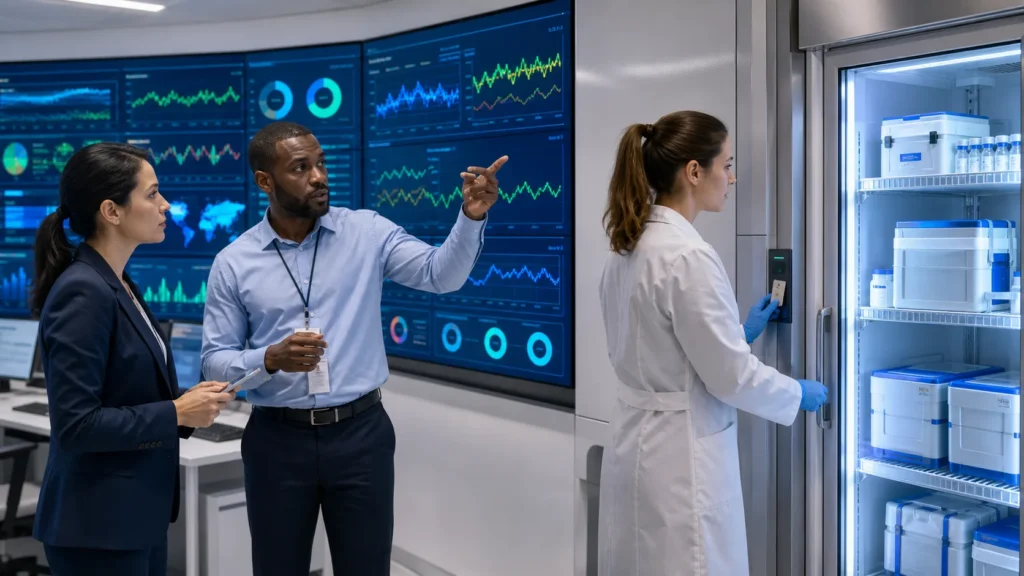
Vaccines only work if they are stored the right way, every single day, at every single site. When you run a health system, a pharmacy chain, or a public health program, that can be a big ask, especially when flu, COVID, and RSV vaccines all ramp up at the same time. A strong vaccine storage monitoring system gives you a safety net that does not rely on sticky notes, overworked staff, or aging equipment.
In this article, we will walk through how to build a multi-site monitoring program that actually holds up in the real world. We will look at standardized SOPs, role-based access, and centralized alerts and reports, and how they fit together into one clear, repeatable process across all of your locations.
Building a Consistent Safety Net Across Every Vaccine Site
Multi-site organizations often grow fast. New clinics open, weekend vaccine events pop up, and storage equipment is not always the same from one place to another. That is how small differences turn into big problems.
Common trouble spots include:
- Different SOPs written at different times
- Mixed levels of training between day, night, and float staff
- Local spreadsheets and paper logs that never reach central teams
When each site runs its own process, you get slow responses to temperature issues and a lot of scrambling right before surveys or inspections. It is harder to know which fridges are risky, which teams need support, and where product loss is most likely.
A unified vaccine storage monitoring system pulls these pieces together. Standardized SOPs give everyone the same playbook. Role-based access keeps tasks and approvals clear. Centralized alerting and reporting give leaders a simple way to watch all sites at once and react before small issues grow.
Designing Standardized SOPs That Actually Work in the Field
SOPs only help if people can follow them in the middle of a busy shift. The goal is one core framework that can be tuned to each site type without losing the core rules.
A simple starting structure looks like this:
- Scope and equipment covered, such as fridges, freezers, and cold rooms
- Sensor placement rules and validation steps
- Approved temperature and humidity ranges for each storage type
- Daily checks and backup checks when network or power is down
- Excursion response, who does what and in what order
- Escalation paths with time limits
- Documentation steps for inspections and surveys
From there, you can adjust details for a hospital pharmacy, a retail clinic, or mobile vaccine events, while keeping the same backbone across the entire system. For example, mobile units may have tighter power checks, but the same basic response to an out-of-range reading.
To keep everyone aligned across seasons and staffing changes, it helps to:
- Keep SOPs version controlled so staff always see the current steps
- Store SOPs inside the monitoring platform where alerts and logs live
- Run a fall “flu season” refresher focused on excursions and after-hours alerts
- Review monitoring data and audit findings to spot gaps and update SOPs
When people do not have to guess, they move faster and make fewer mistakes.
Role-Based Access That Protects Data and Speeds Decisions
In a good monitoring system, not everyone needs to see and do everything. Role-based access ties the SOPs to clear permissions. This way, each person knows where their work starts and ends.
Here are some common permission tiers:
- Read-only: Can view temperatures, alerts, and reports, but cannot change settings
- Frontline staff: Can acknowledge alerts, document actions, and close simple events
- Site leads and pharmacy managers: Can adjust local schedules, verify responses, and approve corrective actions
- Quality, pharmacy, and facilities teams: Can review trends, change alarm thresholds within policy, and manage site configuration
- Executive and public health leadership: Can see dashboards, high-level KPIs, and system-wide reports
This structure keeps configuration changes in the hands of trained staff, which cuts down on accidental changes that could weaken your safety limits. It also speeds up response: when an alert hits, everyone knows who is on the hook to act, who reviews, and who signs off.
Role-based access also helps during busy periods like fall vaccine season. As you bring in temporary staff or open new clinics, you can assign the right level of access without giving broad control to people who are still learning the system.
Centralized Alerts, Dashboards, and Audit-Ready Reporting
A cloud-based vaccine storage monitoring system brings every monitored fridge, freezer, and cold room into one view, no matter where the sites are. That is especially helpful in areas with wide weather swings, where some locations may see storms, power dips, or heat waves more often than others.
A strong central dashboard usually includes:
- Real-time status by site, device, and vaccine type
- Excursion trends over time so you can see patterns instead of one-off issues
- Sensor health, battery status, and communication signal strength
- Maintenance needs based on performance rather than guesswork
- Alert performance, including response times and recurring hot spots
For audits and inspections, centralized reporting is a relief. Quality and pharmacy teams can pull:
- Standardized temperature logs across all sites for a set time period
- Excursion reports with who responded, what steps were taken, and final outcomes
- Site-by-site comparisons to show how controls are working as you expand
- Documentation that supports CDC, VFC, state health department, or accreditation reviews
When everything lives in one place, you spend less time chasing local records and more time preparing staff for real questions from surveyors.
Implementing a Scalable Multi-Site Monitoring Program
Building a system like this works best in phases, not all at once. A simple path looks like:
- Start with a few pilot sites that have different needs, for example a main hospital pharmacy, a retail location, and a public health clinic
- Define standard configuration rules, such as alarm limits, check intervals, and naming rules
- Map and validate sensors so you know readings match real storage conditions
- Train staff using live screens and real alerts instead of only printed slides
- Roll out to more locations using lessons learned from the first group
As you grow, it helps to connect the monitoring system with tools you already use. That can include pharmacy inventory tools, EHR workflows, facilities work order systems, and IT security standards. When vaccine storage data does not sit in a silo, both vaccines and data stay safer.
Ongoing optimization is where the program really starts to pay off. Teams can:
- Run seasonal risk reviews, like checking power reliability before winter storms
- Compare performance across sites to spot best practices and weak spots
- Use trend analytics to support requests for equipment upgrades or process changes
Over time, this turns monitoring into a habit instead of a scramble.
Turning Vaccine Monitoring Into a Strategic Advantage
When vaccine monitoring is handled site by site, every new fridge or new clinic adds stress. When it becomes a coordinated, enterprise-wide vaccine storage monitoring system, it supports your whole vaccination effort, especially during heavy fall respiratory virus seasons.
A well-planned program leads to fewer product losses, fewer last-minute chart hunts, smoother inspections, better patient protection, and more predictable pharmacy and clinic operations. It also gives leaders clearer insight into where to invest, how to support front-line teams, and when to adjust policies.
At Qualified Controls, we focus on automated, compliant environmental monitoring using wireless sensors and cloud software built for temperature-critical spaces. With the right mix of standardized SOPs, role-based access, and centralized reporting, multi-site organizations can turn vaccine storage monitoring from a pain point into a steady, reliable strength.
Protect Your Vaccines With Reliable Monitoring Today
With Qualified Controls, you get a compliance-ready solution that helps safeguard every dose across your cold chain. Our intuitive vaccine storage monitoring system provides continuous visibility so you can quickly address issues before they become losses. We configure and support each deployment to match your facility’s workflows and regulatory requirements. Reach out to our team to discuss your needs and take the next step toward stronger vaccine protection.