Temperature data can be worth a lot more to your business than a checked box on a compliance form. When we treat it as live, trusted information instead of background noise, it starts to shape smarter decisions about product, people, and equipment. This matters even more as we head into peak production and storage seasons, when heat, humidity, and heavy loads push systems to their limits.
Many regulated facilities already collect huge amounts of environmental data. Labs, pharma sites, biotech sites, hospitals, food plants, warehouses, and logistics hubs are full of sensors and charts. But too often that data sits in silos, on clipboards, local PCs, or stand-alone recorders. Enterprise temperature monitoring, when automated and integrated, can shift from a pure compliance cost to a real source of value. At Qualified Controls, we focus on automated, real-time environmental monitoring with compliant data logging, built to support that shift.
Turning Temperature Data Into Enterprise Value
Temperature affects almost every part of a regulated operation: quality, safety, throughput, and even energy use. When monitoring is manual or scattered, leaders only see part of the picture and usually only after something goes wrong.
A better way is to treat temperature data like any other key business signal. That means:
- Collecting it automatically, in real time
- Storing it in a trusted, compliant system
- Making it easy for people across teams to understand and act on it
When that happens, the same readings that once felt like a burden begin to help with planning, risk decisions, and long-term improvements.
The Hidden Costs of Siloed Temperature Monitoring
Manual logs and isolated sensors can seem fine on a quiet day. But when production rises, outdoor heat spikes, or a regulator visits, gaps show fast.
Compliance risk and data gaps often come from:
- Paper logs that are late, incomplete, or hard to read
- Stand-alone sensors that are not time-synced or centrally tracked
- Missing or unverifiable audit trails for FDA, GMP, GxP, CAPA, and similar standards
Late summer and early fall tend to stress coolers, freezers, and HVAC systems. If your data is scattered, you may not see small drifts in temperature or humidity until they turn into deviations.
Operational inefficiencies show up in everyday habits. Teams walk from unit to unit writing down readings, then type them again into spreadsheets. When an excursion happens, people hunt through binders and files to piece together what really happened. That time could go into higher-value work like root cause analysis, method improvement, or supporting new product lines.
Poor visibility also hits the bottom line. Undetected or late-detected excursions can mean:
- Product loss or holds
- Rework and extra testing
- Long investigations and quality reviews
- Damage to trust with customers and inspectors
Without unified data, capacity planning often becomes guesswork. Emergency maintenance during hot spells, rush moves to backup storage, and last-minute rentals become more common.
Building an Enterprise Temperature Monitoring Strategy
To unlock value, monitoring needs to move from ad hoc tools to a planned enterprise strategy.
Standardizing sensors, software, and data models is a key first step. That includes:
- Moving to a single platform that can track temperature, humidity, pressure, differential pressure, CO2, and similar factors
- Using consistent calibration and device qualification across facilities
- Agreeing on clear naming for buildings, rooms, units, and points
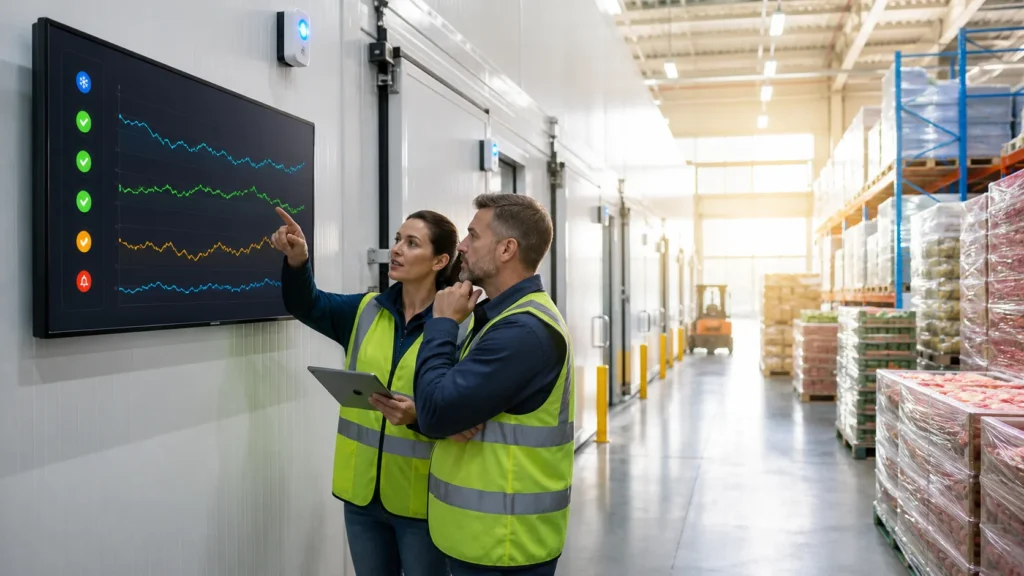
Centralizing real-time monitoring and alerts creates one source of truth. Data from cleanrooms, warehouses, cold rooms, and transport can feed into a single view across sites and regions. Intelligent alerts help people act fast without alarm fatigue, with:
- Role-based notifications
- Escalation paths when alerts are not acknowledged
- Seasonal setpoint strategies to match warmer or cooler months
Embedding compliance into system design means 21 CFR Part 11-style features are built in, not bolted on. That includes secure audit trails, electronic signatures, and validated workflows. Automated reporting and excursion documentation make audits and inspections smoother, even when regulators focus more closely during busy seasons.
From Raw Readings to Business Intelligence
Temperature and environmental data are time-series information, and they tell a story if you let them. With the right tools, patterns start to stand out, such as:
- Recurring excursions on certain days or shifts
- Seasonal drift as outside conditions change
- Units, rooms, or zones that seem to underperform
Trend analysis helps validate storage conditions, fine-tune alarm limits, and support changes to procedures or equipment. Instead of reacting to one-off events, teams can adjust based on true long-term behavior.
Data across multiple units and locations also supports predictive and preventive actions. For example, if similar freezers show the same warm-up pattern before failure, maintenance can act early. Historical excursion data can guide better backup plans for summer heat, regional storms, or planned HVAC shutdowns.
When monitoring connects with LIMS, MES, CMMS, and quality systems, the loop finally closes. Environmental conditions link directly to:
- Deviations and investigations
- CAPAs and follow-up checks
- Continuous improvement metrics across quality and operations
Now temperature monitoring supports the same improvement cycles as production and lab data.
Monetizing Temperature Monitoring Across the Enterprise
So how does all this turn into real enterprise value?
First, it protects product and revenue. Real-time alerts and reliable, validated records reduce:
- Lost batches
- Product holds and quarantine time
- Inventory write-offs in high-value products like biologics, tissue, or specialty foods
Second, it drives efficiency and lowers total cost of ownership. Automated logging, reporting, and audit prep free people from repetitive tasks, especially when inspections and internal reviews pick up. A centralized enterprise system also means less overlap in hardware, software, validation work, and training.
Third, it strengthens brand and stakeholder trust. When customers, partners, and regulators see consistent control and defensible records, confidence grows. This can support smoother inspections, stronger contracts, and easier expansion into new markets or regions.
Designing a Future-Ready Monitoring Architecture
A future-ready monitoring setup has to scale from a single site to a global network without constant redesign. That means planning for:
- Multiple facilities and time zones
- Different regulatory expectations across regions
- New labs, cleanrooms, warehouses, and seasonal overflow spaces coming online quickly
Cybersecurity and data integrity need to be there from day one. Role-based access, encryption, backups, and disaster recovery plans help keep monitoring running during planned outages, storms, or other events. Continuous data custody, even during network or power issues, protects both product and records.
Cloud, edge, and hybrid deployments each bring benefits. Local edge systems help keep monitoring live if connections drop. Cloud tools help central teams see trends and compare performance across sites. Many regulated enterprises find that a hybrid model balances performance, regulatory expectations, and internal IT standards.
As a partner focused on automated, real-time environmental monitoring for regulated facilities, we at Qualified Controls design systems and software to support this type of enterprise approach. From assessment and system design to implementation, validation, integration, and training, our goal is simple: turn your temperature monitoring from a narrow compliance task into a trusted source of enterprise value.
Protect Your Critical Inventory With Reliable Temperature Monitoring
If you are ready to improve product safety and compliance across all your facilities, our team can help you design and deploy a tailored enterprise temperature monitoring solution. At Qualified Controls, we work with you to identify risk points, define alarm thresholds, and integrate monitoring with your existing operations. Reach out today so we can help you reduce losses, simplify audits, and gain real-time visibility into every critical storage area.