Should Grocery Stores Automate Refrigeration Temperature Monitoring?
Grocery refrigeration has one simple job: keep food safe. But as stores get busier, especially heading into fall and the holidays, that job gets a lot harder. Cases are opened nonstop, coolers get packed tight, and staff is pulled in ten directions at once.
This is why more grocery operators are asking a simple question about their grocery store refrigeration system: is manual temperature checking still enough? In this article, we talk through why smarter monitoring matters, where common weak spots show up, and how automation can turn refrigeration from a headache into a real advantage.
Rising Food Safety Risks Demand Smarter Monitoring
Customer expectations around food safety keep getting higher. People want to trust that the milk, meat, deli salads, and frozen items they buy have stayed in a safe temperature range the whole time they were in your store. Health departments and corporate QA teams are watching more closely too, especially once fall and holiday traffic picks up.
Manual checks struggle to keep up with that pressure. When a store is short-staffed, it is easy for a temperature round to get skipped. When a truck runs late or a promo blows up demand, people are focused on stocking shelves and managing lines, not walking around with clipboards.
The truth is, a modern grocery store refrigeration system cannot just keep food cold. It needs to give you clear, real-time proof that temperatures are under control. That proof matters when:
- A customer has a concern
- An inspector asks for records
- A product recall hits the news
Automated, compliant monitoring is not just a technical upgrade. For multi-store operators and independent markets, it is a strategic move to protect the brand, the business, and the families you serve.
Hidden Weaknesses in Today’s Grocery Refrigeration Practices
Most stores still use the same basic routine:
- Staff check cases and walk-ins a few times per shift
- A quick look at the dial or handheld thermometer
- Numbers written on paper logs or typed into a basic spreadsheet
On a slow weekday morning, this can seem fine. But weak spots hide in this approach.
Common failure points include:
- Missed checks during rush hours
- “Pencil-whipped” logs where numbers are guessed or copied
- Thermometers that are never checked or calibrated
- No one seeing a problem that happens overnight or on a day off
These weak spots can turn into real business problems. A cooler running a little warm for hours can lead to:
- Undetected temperature abuse
- Food waste and higher shrink
- Higher energy use from equipment that is working harder than it should
- No clear data to defend your store during an audit or complaint
In warmer regions or during a sudden heat wave, these problems grow even faster. During big seasonal promotions, when doors are opening nonstop and cases are freshly loaded, a grocery store refrigeration system is under real stress. Manual checks just cannot watch everything, all the time.
How Automation Transforms Your Grocery Refrigeration System
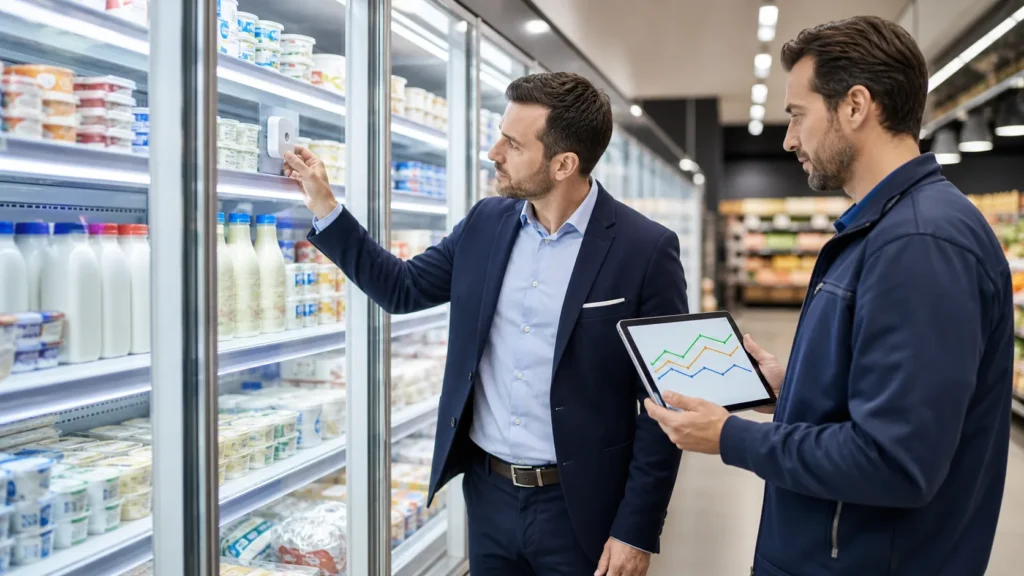
An automated monitoring solution adds eyes and ears where people cannot always be. In a grocery store refrigeration system, that usually means:
- Networked sensors on display cases, walk-ins, and freezers
- A central dashboard that shows all locations and units in one place
- Real-time alarms when temperatures drift out of range
- Secure data logging that cannot be edited with a pen stroke
With automation, you move from “snapshot” checks to continuous monitoring. Instead of knowing a temperature at three set times, you see what happens all day and all night. If a door is left open or a fan starts to fail, alerts can go to the right person right away, not hours later.
This brings direct benefits:
- Staff respond faster, so less product is lost
- Trends show slow changes, like icing or weak compressors, before they fail
- Temperature history is stored and ready for inspections or claims
For regulated and quality-focused grocers, this also supports HACCP plans and internal QA rules. Records are consistent, time-stamped, and standard across multiple stores. Corporate teams do not have to sort through piles of paper or guess if a reading is real.
Real-time data also helps with daily decisions. Before and after key holidays, when cases are packed and opened nonstop, you can use trends to adjust set points, stocking patterns, or defrost schedules so food stays safe and equipment is not pushed past its limits.
Cost, ROI, and Energy Savings Grocers Can Expect
It is easy to look at automation as “one more system,” but the real question is: what is manual monitoring already costing you?
Hidden costs often include:
- Staff time spent walking, reading, and writing temps
- Lost productivity when trained people are doing basic logging
- Product loss from missed or late detection of temperature issues
- Emergency service calls when equipment fails without warning
- Damage to reputation if any food safety issue reaches customers
An automated system is an investment, but it can be rolled out in smart steps. Many grocers start with higher-risk areas like:
- Meat and poultry
- Seafood and sushi
- Dairy and eggs
- Prepared foods and deli cases
From there, they expand into other coolers, freezers, and storage rooms as they see the value.
ROI often shows up through:
- Less food waste
- Fewer surprise breakdowns
- Better energy use because weak equipment is fixed before it drags down performance
- Stronger position with insurers and suppliers due to clear temperature history
Automation also supports sustainability goals. By keeping equipment tuned and catching problems early, stores can reduce both energy use and food thrown away, which matters to regulators and shoppers who care about environmental impact.
Choosing a Monitoring Partner You Can Trust
Once you decide to automate, the partner you choose matters as much as the hardware. Grocery operators should look for:
- Experience in regulated and quality-critical environments
- Clear support for installation, training, and ongoing service
- Proven calibration and validation processes
- Strong data security and audit trails
Compliance is a big part of this. The system should line up with food safety rules and your internal QA standards. You want clear, reliable records that hold up when inspectors or corporate teams ask hard questions.
Integration also counts. Monitoring works best when it fits into existing building systems and service workflows, with alerts going to:
- Store staff on the floor
- Facility teams
- Refrigeration contractors or service partners
At Qualified Controls, we focus on automated, compliant real-time monitoring for temperature, humidity, and other key conditions in regulated and quality-critical spaces. For grocery environments, that means thoughtful sensor placement on cases and in walk-ins, scalable designs that fit one store or many, and ongoing services that help keep your monitoring accurate and dependable all year, through heat waves, storms, and the busy holiday rush.
Turn Your Refrigeration From Vulnerability to Advantage
Grocery refrigeration touches almost every part of your business. It shapes food safety, shrink, compliance, and the trust your customers place in your brand. During high-traffic seasons, small gaps in monitoring can turn into big problems.
By moving from manual checks to automated, compliant real-time monitoring, a grocery store refrigeration system can shift from a quiet risk in the background to a clear advantage. With constant oversight, defensible records, and early warnings, you get more control, less guesswork, and a stronger foundation for both daily operations and long-term growth.
Get Started With Your Project Today
If you are planning or upgrading a grocery store refrigeration system, we can help you design a reliable, efficient solution tailored to your space and inventory needs. At Qualified Controls, our team focuses on performance, energy savings, and long-term dependability so your products stay protected. Reach out today so we can review your goals, answer your questions, and map out the next steps for your project.