Six guides.
One question
underneath all of them.
Choose a monitoring approach that fits your risks, your team and your budget. These six guides take you from the first comparison through provider selection and deployment.

Know your risks.
Match the system.
Scope the investment.
Choose your partner.
Six guides, written for the people who have to defend the decision
QA directors, compliance officers, validation engineers, and facility managers. Read them in order, or go straight to the decision in front of you.
Understand and diagnose
Guides 01 · 02 · 06
Data Loggers vs. Monitoring
Understand when a logger is enough and when a connected monitoring system adds value.
Read guide →
Compare Monitoring Systems
Compare the capabilities that matter for your facility and operating risks.
Read guide →
Avoid Common Mistakes
Spot gaps in placement, calibration, recordkeeping and escalation.
Read guide →Evaluate and plan
Guides 03 · 04 · 05
Choose Your Provider
Ask practical questions about installation, validation and ongoing support.
Read guide →
Understand Cloud Monitoring
Evaluate remote access, data protection and continuity when connections fail.
Read guide →
Plan Your Budget
Account for hardware, software, installation, validation and ongoing support.
Read guide →Data logger monitoring vs.
Regulated Environmental Monitoring
Both record temperature. Only one of them survives an inspection. The difference is not accuracy — it is everything that happens between the reading and the auditor.
Open the detailed comparison
| Dimension |
Standard data loggers
Device-level recording
|
Regulated Environmental Monitoring
Validated architecture
|
|---|---|---|
| Data capture | Readings stored on the device, retrieved manually by USB, dock, or handheld reader. | Continuous transmissionWireless uplink to a validated platform, with local buffering when the link drops. |
| Visibility | Retrospective. You learn about an excursion when someone downloads the file. | LiveEvery zone and parameter visible on one dashboard, at any moment, from anywhere. |
| Response | A local buzzer at best. No escalation, no acknowledgement trail, no proof anyone acted. | Escalated and documentedAlerts in seconds by zone, shift, and severity — and the acknowledgement is part of the record. |
| Record integrity | Exported spreadsheets that can be edited, re-saved, or lost. Attribution depends on trust. | Tamper-evidentTime-stamped, attributable logs with electronic signatures under 21 CFR Part 11 and ALCOA+. |
| Calibration | Facility-managed. Certificates live in a binder, disconnected from the data they qualify. | ProgrammaticScheduled NIST-traceable calibration, with certificates bound to the sensors and their data. |
| Validation | None. Placement is a judgement call; there is no IQ/OQ/PQ package to present. | DocumentedMapping study, qualified placement, and IQ/OQ/PQ delivered as part of the system. |
| Failure mode | Silent. A dead battery or full memory produces a gap nobody sees until the audit. | AnnouncedSensor loss, low battery, and communication faults are themselves alarm conditions. |
| What you own | A device. | Defensible controlOver every regulated environment in the facility, continuously. |
A logger answers "what was the temperature?" REM architecture answers "was this environment under control, who knew, what did they do, and can you prove none of it was altered?" Regulators ask the second question.
From measurements to a monitoring program.
Sensing, response, documentation and qualification work together. Explore the six REM objectives to see how each supports your operation.
Two questions, and the reading order sorts itself out
Most buyers arrive somewhere specific in the process. Tell us where, and we'll point at the guide that moves you forward.
Establishes the gap in language a quality unit and a CFO both accept — what a logger can prove, what it cannot, and where the exposure sits.
Then: Common Mistakes → Best Systems
Open the guideEvery path ends in the same place — a documented, defensible monitoring architecture.
The authority in Regulated Environmental Monitoring
Work with QC to define a deployment and service scope around your facility, process and monitoring needs.
Start with the facility
Use the site survey and risk profile to guide placement, networking and alarm response.
Define the evidence
Agree the mapping, calibration and qualification deliverables your project requires.
Plan ongoing support
Choose the support and recalibration arrangements that fit your team and service tier.
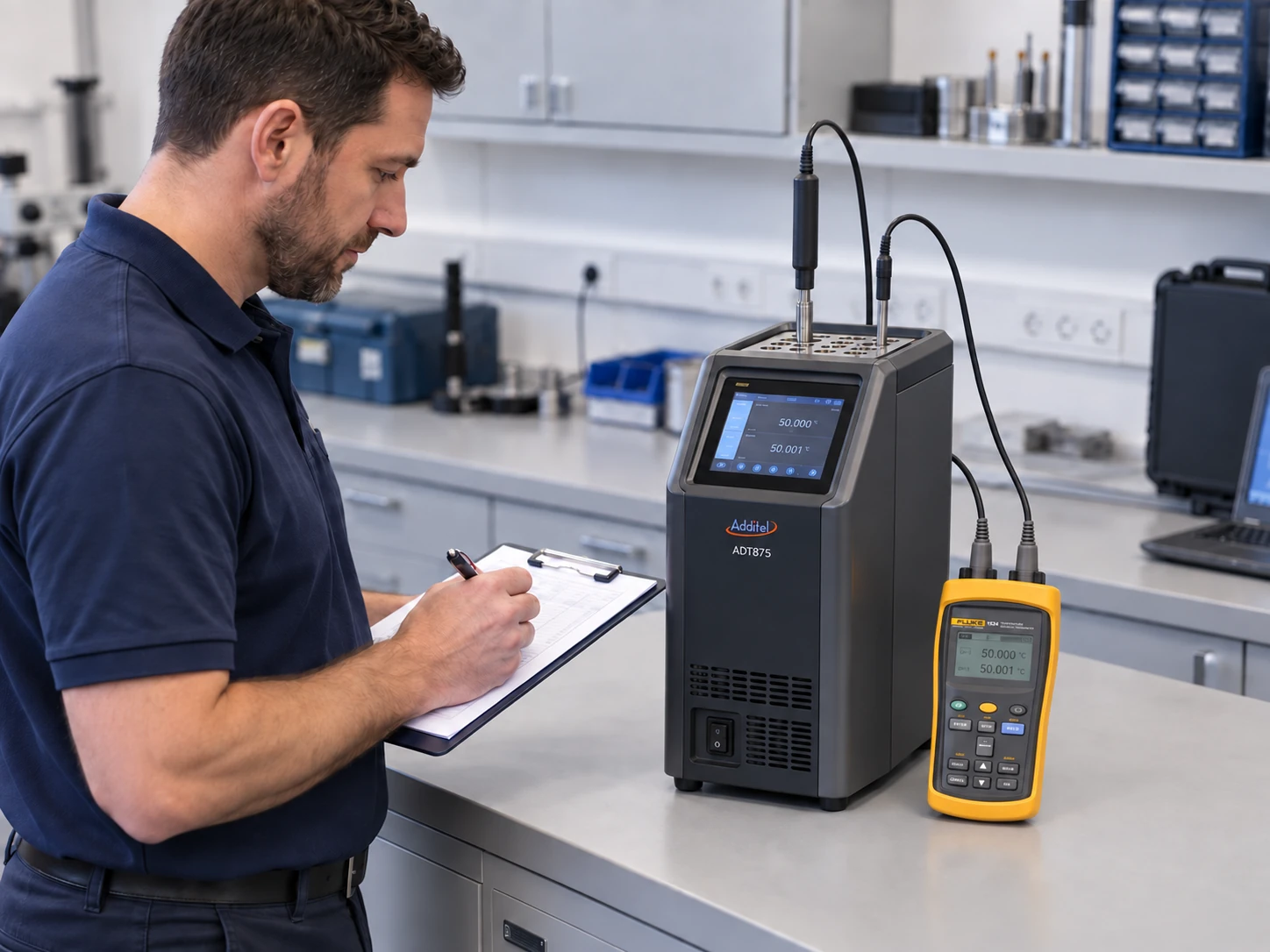
Expertise behind the measurement
Installation, validation and support — with the scope agreed for your project.
Explore validation services →Could you reconstruct a complete compliance narrative
for any event, in any environment, right now?
Before you read further
A data logger records readings to a device for later retrieval. Regulated Environmental Monitoring is a validated architecture: continuous sensing, real-time alerting with documented escalation, tamper-evident records under 21 CFR Part 11 and ALCOA+, NIST-traceable calibration, and IQ/OQ/PQ validation documentation. A logger tells you what a temperature was. REM demonstrates that the environment was under control the entire time, and proves it on demand.
Yes, in bounded roles. Loggers are appropriate for shipment and transit records, short-term studies, temporary storage, and redundant secondary verification. They are not appropriate as the primary record for a regulated storage environment, because they cannot alert in time to prevent loss and cannot produce a defensible, tamper-evident audit trail.
If you are still using loggers or manual logs, start with Data Loggers vs. Continuous Monitoring Systems. If you already know you need a system, start with Best Temperature Monitoring Systems, then move to How to Choose a Provider. If you are building a budget or a business case, start with the Cost guide.
Qualified Controls designs, validates, installs, and supports complete monitoring architectures rather than selling sensors alone. That includes system design against your risk profile, IQ/OQ/PQ validation documentation, NIST-traceable calibration programs, the MySirius platform for continuous logging and audit-ready reporting, and ongoing firmware and compliance support.
Yes. The same architecture applies wherever environmental conditions carry regulatory or product risk: hospital and retail pharmacy, clinical laboratories, blood banks, biotech and cell therapy, vaccine storage, and food manufacturing under cGMP and HACCP. What changes is thresholds, reporting formats, and the governing framework — not the architecture.
Related resources
Monitoring fundamentals
Definitions and requirements the buyer's guides build on.
By environment
How the architecture applies to specific regulated settings.
The platform underneath
The hardware and software that make the architecture real.
Start with where you actually stand.
Before comparing systems, establish the baseline. The REM Risk Assessment works backwards from what you are required to prove, and returns a scored profile with a recommended reading order.