Grow Room and Drying Room Temperature Monitoring Made Simple
Growing high-quality crops takes more than care and effort. Automated temperature and humidity monitoring tracks your grow and drying rooms nonstop, alerts you to problems right away, and creates clean records for state audits and license renewal.
The Regulatory Context
Regulated grow operations under state oversight must maintain logs for temperature, humidity, airflow, and other environmental parameters. Inspectors may request these records during audits or license renewal. Automated, time-stamped, tamper-resistant logs are significantly more defensible than manual binder records, which are prone to missing entries and inconsistency.
Private certifiers and third-party inspectors evaluating grow operations for quality or safety compliance expect documented environmental monitoring records. Qualified Controls builds setups that align with state agency compliance requirements, private certifier standards, and the kind of clean audit trail that survives seed-to-sale scrutiny and product recalls.
Grow facilities producing regulated cannabis or specialty agricultural products increasingly face GMP or GLP-aligned documentation expectations from state agencies, institutional buyers, and processors. Environmental monitoring that produces time-stamped, tamper-resistant, exportable records supports the kind of documentation these standards require. For broader compliance context, see our regulatory requirements overview.
How Grow Room Monitoring Works
Continuous Temp & Humidity Tracking
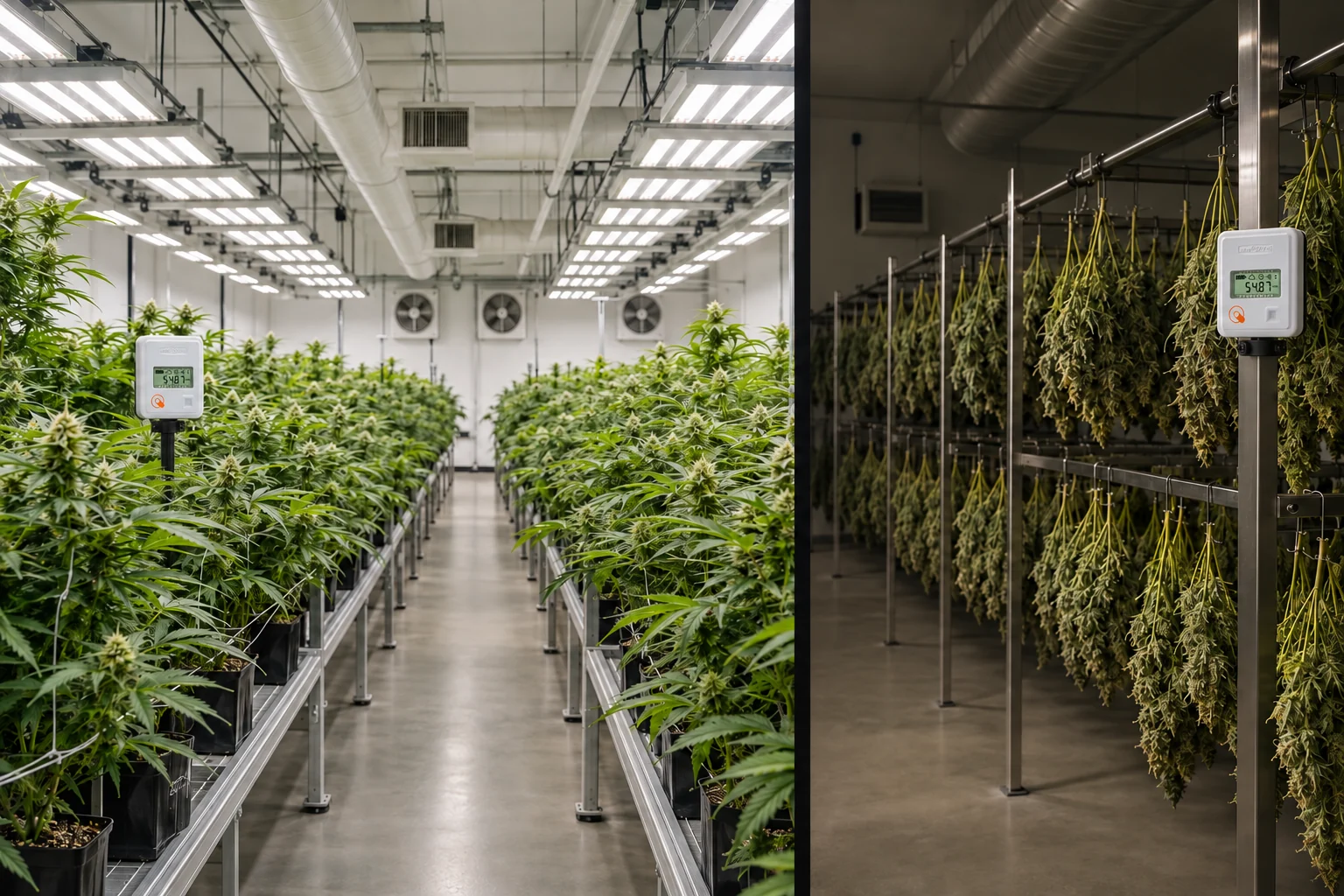
High-grade probe sensors check air for both temperature and humidity simultaneously, recording around the clock. Daytime temps in most grow rooms should fall between 70–85°F with relative humidity at 40–70%. Sensors placed in room zones, conduits, ducts, and grow trays capture the environment your plants actually experience—not averaged-out readings from a single point.
Instant Alerts Before Conditions Escalate
Without knowing what's going on in real time, you're more likely to lose crops or struggle with uneven growth. Alerts come through text, email, or live dashboard—whatever matches your workflow. When something changes, you get a warning before symptoms appear. That means action before leaf burn, rot, or mold has a chance to develop.
Drying & Curing Room Control
After harvest, drying and curing phases preserve quality, taste, smell, and shelf life. During drying, most growers target 60–70°F temperature and 50–60% humidity. If conditions spike or dip, product may dry too fast (locking in bitterness) or too slow (raising mold risk). Automated monitoring gives early warning when that difference begins to happen—before the batch is compromised.
Remote Access for Off-Site Management
Remote access lets you check data even when off-site. With cloud software, you can spot sudden humidity or temperature changes, review historical logs, compare values room to room, and make timely decisions before issues spread. This visibility helps keep drying, curing, and grow performance where it needs to be—without being tied to the room.
Compliance Logs Ready for Inspectors
Manual tracking creates messy records—notes get lost, entries get skipped, binders pile up. Automated systems produce time-stamped, tamper-resistant logs ready to export whenever needed. From court-ordered seed-to-sale tracking to product recalls and local inspections, clean documentation makes the difference between a quick pass and a protracted review.
Scalable Across Rooms, Buildings & Products
For operations spanning more than one space—or more than one building—central software lets you track all rooms from a single screen. Whether managing one tunnel or 12 pods, hydroponics or soil-based grows, the system expands without starting from scratch. Multi-zone setups include packaging, trimming, and storage areas with data isolated per zone, not averaged across the facility.
Environment Optimizer
Adjust temperature and humidity sliders to see whether your grow, drying, or curing room conditions fall within optimal ranges.
Why Is Temperature Monitoring Important for Grow Rooms?
In a grow room, even small temperature changes can matter. They affect photosynthesis, air circulation, nutrient uptake, and how your plants respond to stress. Without knowing what's going on in real time, you're more likely to lose crops or struggle with uneven growth. Temperature monitoring systems use precise sensors to read and record values around the clock—sending alerts when conditions shift too far from your settings, so you take action before symptoms like leaf burn or rot appear.
For regulated grow facilities, this isn't just about product quality. State agencies require documented environmental monitoring records, and the ability to produce clean, time-stamped logs on demand is increasingly a license compliance requirement. To understand the broader monitoring infrastructure that supports these goals, review what a temperature monitoring system does in regulated environments.
What Goes Wrong When Drying Room Conditions Swing?
Sharp changes in drying temperature throw off the whole production cycle. If things heat up too fast, the product may retain more chlorophyll, leaving the flavor scratchy. If it's too cool, moisture takes too long to leave and sets the stage for mold. Curing takes just as much care—poor airflow or rising humidity puts cords or containers at risk. That moisture loss needs to happen slow and steady.
Spoiled product doesn't just eat profit—it drains time and damages your brand's reliability. Monitoring builds a buffer by catching swings before they snowball. A strong system makes timing easier for staff and cuts reliance on daily checks. Paired with alerts and remote viewing, you keep pace with the growing curve without being tied to the room.
Can Monitoring Software Help Fix These Issues?
Whether you need to dial back the HVAC, boost equipment cooling, or adjust how airflow moves through the container, you make better decisions when you have the right data. Qualified Controls creates setups that work with your existing gear. For multi-facility operations or facilities adding new monitoring zones, see how multi-site monitoring brings all locations into a single dashboard without separate logins or systems. For questions about how your compliance records should be structured and retained, review our data retention and reporting guide.
Technical Specifications
How the System Connects
Grow room monitoring is built as a connected architecture—sensors in each zone feed a single platform that tracks conditions, fires alerts, and generates the documentation state agencies and auditors require.
Industries That Rely on Grow Room Monitoring
Licensed cannabis cultivators under state oversight require documented environmental monitoring for grow rooms, drying chambers, and curing areas—ready for state inspections, seed-to-sale audits, and license renewal.
Controlled-environment agriculture facilities and specialty food producers monitoring grow and drying conditions to meet food safety and quality documentation standards for buyers and certifiers.
Research facilities using controlled growing environments for botanical, agricultural, or biological R&D requiring GLP-aligned environmental monitoring records and peer-review-ready documentation.
Academic grow facilities and university agricultural research programs monitoring controlled-environment rooms for studies funded by public or private institutions with documentation requirements.
Act Now; Protect Your Product Before Conditions Shift
Too many growers lose product from small temperature slips, preventable spoilage, and missing logs. We design and install monitoring systems that let you dry, cure, and grow with confidence. Reach out today to start building your custom grow room monitoring setup.
Serving regulated grow operations across the United States — one room or full-scale operations