Turning Hidden Cold Chain Losses Into Measurable ROI
Real-time temperature monitoring can feel like just another project on a long list. But when you look closely at shrink from temperature problems, the numbers usually tell a different story. Behind every spoiled batch or quarantine notice, there is real money walking out the door.
Think about a hot summer weekend. A cooler drifts out of range Friday night. No one notices, because the last manual check was before closing. By Monday morning, the product is soft, discolored, or out of spec. It gets tossed. People shake their heads and call it “the cost of doing business,” then move on to the next crisis.
Those losses are not random. They can be modeled, tracked, and reduced. When we pair real-time temperature monitoring with clear loss modeling, we can turn vague stories about “summer spoilage” into hard numbers finance teams understand. That is the focus here: how to build a loss baseline, connect it to monitoring, and use simple payback math to make better decisions in regulated and mission-critical facilities.
At Qualified Controls, we focus on automated, compliance-grade wireless monitoring for temperature, humidity, and related conditions in life sciences, healthcare, food, and other critical storage. The ideas below come from what we see every day in real facilities facing real heat, especially as summer peaks and equipment is under stress.
Why Temperature-Related Shrink Is Bigger Than It Looks
Temperature-related shrink is any loss tied to conditions drifting out of range. It is not just a complete failure of a fridge or freezer. It also includes:
- Short excursions during loading or door openings
- Slow drift as compressors age in warmer months
- Long pulls to thaw or warm product before use
- Seasonal spikes in late spring and summer
These problems show up as clear spoilage, potency loss, or quality issues. But there are also quieter drivers that grow the total loss:
- Precautionary disposal when temperature logs are missing or incomplete
- Extra waste when no one can prove a short excursion was still within safe limits
- Undetected quality drift that shows up later as complaints or returns
- Regulatory-mandated destruction when documentation is not audit-ready
Then come the indirect costs that rarely sit in one place in the budget:
- Staff pulled away for emergency product transfers
- Rush shipments to refill stock that was just thrown out
- Extra production to replace lost batches
- Time spent on deviation investigations and CAPAs
- Brand and regulatory risk when temperature data looks weak
Most sites under-count these issues, because incidents live in many places, like paper logs, shift notes, ticketing systems, and email threads. Without structure, it is easy to shrug and move on. That is why a clear loss model is the first step in any serious ROI plan.
Building a Loss Baseline You Can Trust
To change the math, we first need to see the math. That means building a baseline of temperature-related loss before real-time monitoring is in place.
Start by pulling 12 to 24 months of information, if you can:
- Product write-offs and scrap related to temperature
- Quarantine events where temperature was a factor
- Deviations and complaints with any link to storage or transport conditions
Segment the data by season so you can see how loss behaves from roughly June through September, when heat usually puts the most pressure on your cold chain.
Next, sort each event into a few simple categories:
- Clear excursions: recorded out-of-range conditions, equipment failure, or open doors
- Suspected temperature issues: potency drift, quality failures, or spoilage that might be linked
- Precautionary disposals: product tossed because the temperature record was incomplete or missing
Then turn those events into dollars. For each category, look at:
- Average value per unit, pallet, or batch
- Labor to handle and dispose of the product
- Extra time spent on investigations and documentation
- Any known downstream effects like returns or lost sales
Put this into a simple model, often just a spreadsheet:
- Dollars lost per month
- Dollars lost per site or per storage unit
- Dollars lost per unit of volume, such as per pallet or cubic foot
The goal is not perfect precision. The goal is a baseline that operations, quality, and finance can all look at and say, “Yes, that feels reasonable.” When those teams agree, you now have a shared starting point for ROI talks.
How Real-Time Temperature Monitoring Changes the Math
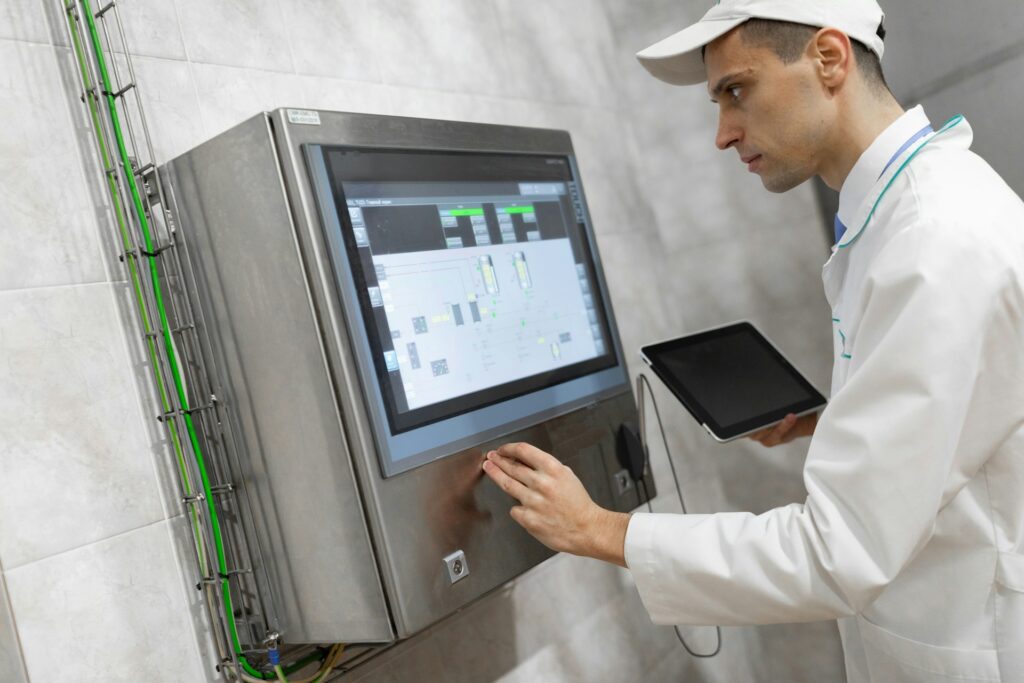
Real-time temperature monitoring means sensors are watching your storage conditions around the clock. Readings are collected automatically, sent over a wireless network, and stored in software that gives you alerts, trends, and audit-ready records. This is very different from clipboards or data loggers that someone checks hours later.
Once this goes in, daily operations start to shift:
- Staff get alerts when a unit drifts toward the edge of its range, not just after it crosses the line
- Repeated alerts show early signs of failing equipment, door seal issues, or airflow problems
- Time-stamped records are captured automatically, so there are no gaps in the log
This changes the loss curve in a few ways:
- Fewer excursions, because people act sooner
- Shorter excursions, because the alert shows up while the product can still be saved
- Fewer precautionary disposals, because you can prove exactly what happened and for how long
- Better root cause analysis, because you can see the temperature trend before and after each event
For regulated environments, complete temperature records also reduce the chance that an auditor will question your controls and push for product destruction or production holds. Instead of estimating how often things went wrong, you can track avoided events and see how summer excursions shift from “regular crisis” to rare exception.
From Avoided Loss to Payback
Once you have your baseline and your new monitoring process, you can build a simple ROI story.
The steps are straightforward:
- Start with your yearly baseline for temperature-related loss
- Decide on a conservative estimate for reduction from real-time monitoring, based on your processes and culture
- Multiply the baseline by that percentage to estimate yearly dollars saved
Next, list your project costs. For most sites this includes:
- Sensors, gateways, and any needed networking hardware
- Software to collect, store, and report on the data
- Installation work
- Validation or qualification activities for regulated spaces
- Internal training and procedure updates
Separate one-time costs from ongoing costs. That way, you can see the first-year payback period, and also the steady-state impact in later years.
To find the payback period, compare the upfront investment to the annual savings. Many facilities with high-value inventory or repeated summer problems find that the payback period is short once they stop guessing and start counting.
Around this core math, there are other benefits that are real, even if they sit outside the basic ROI model:
- Smoother audits, because records are clean and complete
- Less stress on staff during hot weather peaks
- Easier standardization across multiple locations
- Stronger confidence with customers and partners
The key is to keep measuring. Compare loss data before and after monitoring for at least one full seasonal cycle. Update your model as you learn more. Over time, this creates a clear story you can use for new sites and new projects.
Putting Real-Time Monitoring to Work in Your Facilities
The path is simple, even if the details take work. You quantify your current temperature-related shrink, build a baseline that finance and operations believe in, add real-time temperature monitoring, then measure how much loss drops, especially across the hottest months of the year.
A good way to start is with a focused pilot:
- Pick one or two high-value or high-risk units, like vaccine fridges, biologics freezers, or key food coolers
- Choose areas where summer excursions have caused real pain in the past
- Set clear success measures, such as fewer write-offs, shorter excursions, or faster investigations
Bring quality, operations, maintenance, and finance into the plan early. When those teams agree on what “success” means, it is much easier to compare pre and post results and decide how far to expand.
At Qualified Controls, we spend our time in regulated and mission-critical environments that cannot afford to guess about temperature. Our role is to help teams turn scattered stories about summer spoilage into a clear ROI picture, and to support them as they scale from a pilot to a standard way of working across sites and seasons.
Protect Your Inventory With Continuous, Compliant Temperature Insight
If you are ready to eliminate manual checks and guesswork, our team can help you deploy scalable real-time temperature monitoring tailored to every location you manage. At Qualified Controls, we design and configure systems that keep you informed of issues before they become costly product losses or compliance problems. We work with your existing processes and infrastructure so your staff can focus on operations instead of chasing readings. Reach out to explore a solution that gives you clear visibility and reliable data around the clock.