How Wireless Sensing Is Transforming Healthcare Safety
Continuous environmental monitoring used to mean clipboards, fridge thermometers, and hoping someone remembered to write things down. Now healthcare teams are shifting to smart, wireless systems that watch temperature and humidity around the clock and send alerts when something slips out of range. This change is not just about convenience; it is about protecting patients and high-value products in spaces that are more complex than ever.
Low-power, long-range wireless options make this possible across large hospitals, outpatient centers, and off-site storage. A LoRa temperature sensor can send data through walls, down hallways, and even from basements, without needing Wi-Fi in every corner. Because these devices use very little power and are simple to deploy, they scale well from a single clinic to a whole health system.
For many teams, that means moving beyond a few monitored refrigerators to a connected safety net across the entire organization. LoRa temperature sensors help support compliance, prevent product loss, and lower the risk of missed readings. With spring planning and budgeting in full swing, it is a smart time to look at new use cases that go beyond basic cold storage and start building a more complete monitoring strategy.
Protecting Vaccines and Biologics Across the Care Journey
Vaccines and modern biologics do not always stay in one pharmacy refrigerator anymore. They move between central pharmacies, satellite clinics, infusion areas, mobile units, and community vaccination events. Every handoff is a chance for temperature to drift out of range.
A connected network of LoRa temperature sensors can watch these products at every point, not just in one central room. That can include:
- Central and satellite pharmacies
- Infusion centers and specialty clinics
- Mobile vaccine units and outreach events
- Short-term storage areas near care spaces
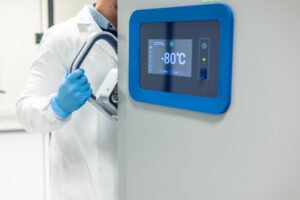
As more therapies need ultra-cold or very tight temperature control, seasonal surges can put even more stress on staff and equipment. Automated alerts by text or email help teams respond quickly when a door is left open or a unit starts to fail. Instead of flipping through paper logs, staff can pull up a cloud-based history for inspections and audits.
Digital records and automated excursion reports make it easier to support CDC, FDA, and Joint Commission expectations around vaccine and biologic handling. Turnkey systems, like the ones we provide at Qualified Controls, can tie together data from multiple buildings and locations so pharmacy and quality leaders see a single, clear picture of how products are being stored and handled.
Extending Temperature Monitoring to Patient Care Spaces
Temperature and humidity matter in patient care spaces too, not just in fridges and freezers. Operating rooms, ICUs, and isolation rooms often have strict environmental ranges that support comfort, healing, and infection control. When conditions drift, it can raise risk for patients and disrupt scheduled care.
LoRa temperature sensors can be placed in these rooms without running new network cable or adding more Wi-Fi access points. They help facilities and nursing leaders keep an eye on:
- Ambient temperature in ORs and procedure rooms
- Relative humidity in ICUs and isolation rooms
- Conditions in negative or positive pressure spaces
If the HVAC system slips, sensors can trigger alerts long before staff or patients start to feel uncomfortable. This helps prevent condensation, mold risks, and other issues that can build up quietly behind the scenes. Cloud-based dashboards make it simple for supervisors to watch trends during heat waves, cold snaps, or shoulder seasons when building systems work the hardest.
These same data streams can often be tied into existing building management systems, so facilities teams see both equipment status and real environmental results in one place. Our team at Qualified Controls often helps bridge that gap, so environmental data does not sit in a silo but supports broader facility operations and planning.
Securing Lab, Pharmacy, and Blood Bank Cold Chains
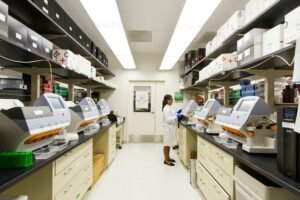
Labs, compounding pharmacies, and blood banks often live in tricky spots: basements, shielded rooms, and dense concrete spaces where Wi-Fi signals struggle. Yet those same areas hold blood products, reagents, and medications that must stay within tight temperature ranges.
Because LoRa signals travel long distances and pass through many building materials, a LoRa temperature sensor network can reach places that are hard for standard wireless. That makes it easier to cover:
- Walk-in coolers and freezers
- Basement and core lab areas
- Shielded or windowless storage rooms
LoRa-based monitoring can also act as a second line of defense when equipment alarms are missed, doors are propped open, or power disruptions occur. Automated alerts and continuous logging help teams investigate events and show regulators what actually happened, minute by minute.
Consistent, cloud-connected records support requirements from groups like CAP, CLIA, USP, and AABB around environmental monitoring and documentation. Spring is a good time for hospitals and labs to review where their cold chain is most fragile and plan upgrades before summer heat, storms, and power events push equipment to the limit.
Enabling Mobile, Home, and Remote Healthcare Programs
Healthcare is moving beyond the four walls of the hospital. Home infusion, specialty pharmacy delivery, and hospital at home programs are growing, and many of these services depend on temperature-sensitive therapies. Once products leave the main building, though, it becomes harder to know what they are exposed to.
Portable LoRa temperature sensors can travel with medications or specimens, tracking conditions during transport and once they reach the home. Low-power use allows sensors to run for long periods without frequent charging or battery changes.
This kind of monitoring supports:
- Home infusion and specialty drug delivery
- Mobile clinics and pop-up testing sites
- Rural health outposts and temporary vaccination centers
In many of these locations, strong Wi-Fi or wired internet is not available. LoRa connectivity can send small packets of data over long distances using gateways or local networks, then sync to a cloud platform when a signal is available. Systems like Qualified Controls can pull together data from mobile and remote sources, so pharmacy, logistics, and clinical quality teams see a unified view of temperature conditions.
As more care moves outside the hospital, payers and regulators are paying closer attention to how high-value, temperature-sensitive therapies are handled. Having clear traceability and documentation builds trust and supports these new care models.
How to Start Modernizing Environmental Monitoring Now
Upgrading environmental monitoring does not have to be overwhelming. A simple roadmap can help healthcare leaders move in a focused, low-risk way.
First, assess where you stand today:
- Areas still using manual logs
- High-value or high-risk products
- Hard-to-reach spaces with weak Wi-Fi
- Programs that extend outside the main campus
Next, choose one or two high-impact use cases to pilot LoRa temperature sensors, such as a vaccine storage area plus a hard-to-reach lab freezer. Starting small gives your teams time to adjust workflows, fine-tune alerts, and see the value in real time.
Working with a turnkey partner that understands regulated healthcare environments can smooth the process. At Qualified Controls, we bring together sensors, gateways, cloud software, installation support, and ongoing service to fit into existing compliance and facilities programs, not fight them.
Spring planning, upcoming audits, and summer risk reviews all create natural points to rethink how your organization is watching temperature and other key conditions. By moving from scattered manual checks to connected LoRa-based monitoring, healthcare teams can protect patients and products more reliably, while freeing staff to focus on direct care instead of clipboards.
Protect Every Location With Smarter, Always-On Temperature Monitoring
If you are ready to eliminate manual checks and blind spots across your facilities, we can help you design a monitoring strategy that fits your operations and compliance needs. Our LoRa temperature sensor solutions give you reliable, site-wide visibility so you can act before small issues become costly problems. At Qualified Controls, we work with you to tailor alert thresholds, reporting, and deployment for your specific environment. Reach out today so we can help you build a more resilient and scalable temperature monitoring system.