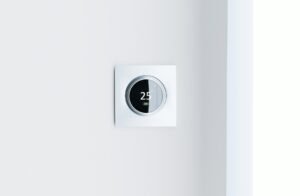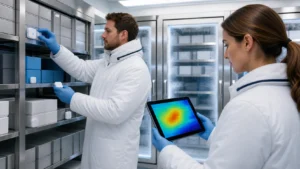
On many hospital construction projects, temperature monitoring gets attention late. The ceilings are closed, the HVAC is still being tuned, and then someone points out that the pharmacy refrigerators, blood bank and cleanrooms need continuous, documented monitoring before the first patient arrives. When monitoring is treated as an afterthought, sensors end up in the wrong spots, alarms do not reach the right staff, the data does not stand up to surveyor questions, and the last weeks before opening fill with stressful fixes.
This guide follows the order a real project runs, from requirements and design through validation, handover, renovation phasing and the work that continues after opening. It applies to new wings, remodels and renovations, and it is written for the facilities, pharmacy, lab and compliance leaders who will own the result.
Why does monitoring belong in the first design conversations?
Temperature and humidity should be discussed at the start of a project, right next to patient flow and power. Left until the end, it brings messy wiring and gaps in coverage that only show up once patients move in.
New spaces are also under extra stress when they open. The building envelope is still settling in, HVAC is being tuned, new equipment is coming online, and staff are learning new rooms and workflows. Many wings open as outside temperatures are warming up, so new equipment meets its first summer load just as the building fills with people. A warm operating room can stress staff and raise infection risk, and a pharmacy refrigerator that drifts out of range puts medications at risk.
Facilities should not carry this alone. The best plans come from a cross-functional group: facilities and HVAC, nursing and perioperative teams, pharmacy, lab, infection prevention, compliance, IT and clinical engineering. Together they define what acceptable looks like for each space type. Documented early, those expectations guide sensor placement, network planning and the scope of later validation. That planned, documented approach is the basis of our work in temperature and environmental monitoring for hospitals.
What needs to be monitored, where, and to which standard?
Start on paper, before drywall and ductwork go up, by listing every space where temperature or humidity really matters. Different spaces usually need different parameters:
- Patient rooms, ICUs, ORs and procedural suites: temperature and humidity. This includes neonatal, isolation and special care rooms.
- Cleanrooms and compounding pharmacies: temperature and differential pressure.
- Refrigerators, freezers, ultra-low freezers, blood and tissue banks, and vaccine storage: temperature.
- Labs, specimen storage and imaging suites: temperature and possibly humidity.
- Sterile storage and central supply: often tight humidity limits that matter as much as temperature.
- IT rooms and equipment closets: temperature, because overheating can shut down systems.
- Food storage, prep and serving areas: coolers and freezers.
Each of these carries its own expectations. Vaccine storage follows CDC guidance, compounding spaces follow USP standards, and blood storage aligns with AABB requirements. Pharmacy and lab spaces often must meet standards from groups like USP, CAP and Joint Commission. Joint Commission and CMS set survey expectations, ASHRAE guidelines cover healthcare HVAC conditions, and FDA expectations, state boards of pharmacy rules, and state and local building and health codes can all apply. Alarm limits, data retention periods and review routines should reflect that mix.
A risk-based approach keeps this manageable. Map all spaces by risk level: life safety, product safety or comfort. For each space type, list the required parameters and set alert thresholds based on codes, guidance and hospital policy. Then decide what has to be documented, how often, and for how long. A simple risk matrix that ranks each area by patient impact and regulatory risk works well.
Higher-risk zones, such as ORs, sterile compounding areas, blood banks, critical lab storage, and vaccine and medication storage units, may need more sensors, tighter alarm thresholds and backup monitoring for key units. Offices and waiting rooms can follow a lighter approach. For cold storage units, continuous refrigerator and freezer temperature monitoring replaces manual logging that eats up nursing and pharmacy time. Cleanrooms and buffer areas deserve their own review, because monitoring for pharmacy compounding spaces adds differential pressure to the list.
Wired, wireless or hybrid: what infrastructure does the project need to carry?
Planning with the architectural and MEP teams early is where future problems are avoided. Most hospitals compare three architectures:
- Wired: stable and often preferred for high-risk spaces, but more intrusive to install during remodels.
- Wireless: easier to retrofit and flexible for changing layouts, but it needs reliable network design and power planning.
- Hybrid: wired in the highest-risk or most permanent areas, wireless for support spaces and locations likely to change.
For many remodels a hybrid approach works well. New wings can often carry more wired infrastructure because walls and ceilings are open during construction. Either way, write clear monitoring requirements into the construction documents, including conduit and wiring paths, so there are no surprises later.
Sensor placement. Keep room sensors away from direct supply air, windows and heat sources. Choose sensors suited to each job: ultra-low freezers need different probes than standard medication refrigerators.
Wireless coverage. Hospital buildings are tough on wireless signals. Concrete, thick walls, metal doors and active equipment all get in the way. Plan for site surveys to spot dead zones and interference, deliberate placement of repeaters and gateways, and coverage for shielded rooms and basements.
Power and data resilience. Decide how sensors behave during outages, summer storms and planned shutdowns. Look for battery-backed sensors, local or offline data buffering so records stay intact when the network drops, and redundant gateways. Time-synced clocks support clean, traceable audit logs.
Integration. Monitoring may pull from or send data to the building management system, and it can often tie into nurse call for urgent clinical alarms and into email, SMS or on-call tools for escalation. Set clear rules about what each system controls, who owns which alarms and how those flows will be tested. Decide between cloud-based and on-premises software at the same time, and specify a unified platform that can scale across wings, clinics and future buildings.
Design for the worst-case summer day, not a mild morning during early commissioning. Our on-site installation and commissioning service is built around these points, and our guide to hospital temperature monitoring system installation covers the install stage in more detail.
How should alarms and escalation be set up so staff actually respond?
Poorly tuned alerts overwhelm staff and end up ignored. Before opening day, the project team needs clear answers to a few questions:
- Who gets the first alert for each area, and what counts as critical versus noncritical?
- Do alerts go to phones, computers, on-call pagers, or all three?
- What are the expected response times, and when does an alarm escalate to leadership or on-call teams?
- How do alerts escalate at night, on weekends and on holidays?
Define responsibilities by team: nursing for patient rooms and unit medication storage, pharmacy for cleanrooms and central storage, facilities for the central plant and mechanical spaces, and biomedical engineering for equipment-related alarms. Write this into simple SOPs during construction planning and make them part of opening-day training.
Then tune the alarm logic to cut nuisance alerts. Useful tools include short delay windows before an alarm fires, rate-of-change rules to catch rapid failures, and different thresholds during known events such as door openings or defrost cycles. Standardized response checklists help too. If a refrigerator goes high: check the door and gaskets, confirm product placement and air flow, move product if needed, and log the actions.
What validation and temperature mapping should happen before go-live?
Plan a formal validation cycle before opening, scaled to risk. The higher-risk spaces identified during planning call for deeper testing, while offices and low-risk support areas can follow a lighter approach.
Many hospitals follow the classic stages, or an equivalent process:
- Installation Qualification (IQ): confirming the right parts are installed in the right places and documented correctly.
- Operational Qualification (OQ): verifying that sensors, software, alarms and communications work across expected ranges, under normal and stressed conditions.
- Performance Qualification (PQ): proving the system performs under real conditions, with actual workflows and loads, over time.
Each step needs clear protocols and reports. Practical tests often include temperature mapping at different room loads, simulated power and network failures, alarm drills with on-call staff, and checks of escalation paths and documentation steps. Drills under summer-like conditions, such as high census, holiday staffing and heavy loading, show whether response times and escalation paths are realistic.
Timing matters. Validation should line up with construction milestones and HVAC balancing, and where possible with warmer seasons, so that testing reflects real operating conditions before patients arrive. Our team supports this stage through monitoring system validation services, so you can show that the system performs as expected.
What does commissioning and handover look like?
After requirements and design, most projects move through these steps:
- Vendor selection: choose hardware and software that match your risk map, your IT standards and your growth plans.
- Factory acceptance testing: confirm that core functions work as expected before equipment heads to the job site.
- Site acceptance testing: verify sensors, alarms and reports in the real space, with real network conditions.
- Software setup: user roles, alarm rules, standard reports, trend charts, alarm logs and electronic signatures.
- Staff training: make sure people know how to respond to alerts, review data and document actions.
Handover should leave the hospital with the evidence surveyors and auditors expect: system design documents and validated configuration records, calibration certificates and service records for sensors and probes, and SOPs for alarm response and follow-up actions. Every sensor should start with valid calibration documentation.
Nurses, pharmacy staff, lab techs and facilities teams all use the system differently, so dashboards built for each role help. Regular refreshers and simple job aids keep good practice in place when staff change.
How do you keep areas protected while a renovation is phased around them?
Renovations rarely happen in an empty space. HVAC zones get split, power is switched off to tie in new feeds, temporary HVAC units serve swing spaces, doors are propped open for contractors and carts, and dust control barriers block normal air paths. A room that used to hold steady can drift out of range because of a blocked vent or a new airflow pattern.
Vaccines, blood products, lab reagents and cultures are most exposed, and manual checks are easier to miss when staff are walking longer routes or working in temporary rooms.
Before the first wall comes down, map three groups of spaces: current spaces close to the construction zone, temporary locations that will be used as swing space, and new rooms and storage areas that will open in phases. Then design monitoring into the project scope:
- Choose wireless sensors that are easy to move as rooms shift.
- Plan network coverage so sensors stay connected behind temporary walls.
- Build in power and battery redundancy for planned outages and HVAC shutdowns.
- Schedule installation in line with the construction phases so crews are not working on top of each other.
Automated alerts as temperatures approach limits give staff time to move product to backup storage or call facilities before anything is out of range. Renovations also draw extra attention from regulators and accrediting bodies, who may focus on areas that changed function or opened in stages. A continuous, time-stamped record covering the full construction timeline answers those questions better than clipboards and loose printouts.
What keeps the system compliant after opening day?
Four habits keep a monitoring system credible after opening:
- Calibration: a clear recalibration schedule, tracking of due dates and reminders, and easy access to records during surveys.
- Change control: logs for changes to hardware, software and alarm settings, alongside the record of user actions.
- Requalification: seasonal shifts, HVAC changes and layout updates can all affect temperature and airflow. Periodic reviews and targeted re-testing keep the system aligned with them.
- Records: continuous time-stamped readings, alarm histories and auto-logged excursions with recovery data, instead of binders of paper logs.
Some hospitals add managed monitoring with 24/7 review, plus help with calibration, alarm tuning and reporting. The data is useful beyond compliance too. Facilities teams can spot zones that often drift out of range, fine-tune HVAC setpoints, and catch issues like stuck dampers or underperforming coils before they cause a failure.
Where should a project team start?
Designing and validating monitoring for a new wing or renovation is a safety project, not just a construction task. Build the cross-functional team, map critical environments by risk, write requirements into the construction documents, and draft the validation plan before ceilings are closed. Teams that do this open with fewer surprises and less rework.
Qualified Controls ties calibrated wireless sensors to cloud software and supports the design, installation, validation and ongoing service around them. If you have a wing, remodel or renovation in planning, start with a review of your spaces and storage equipment. Take the monitoring risk assessment to see where the gaps are before they are built in.