
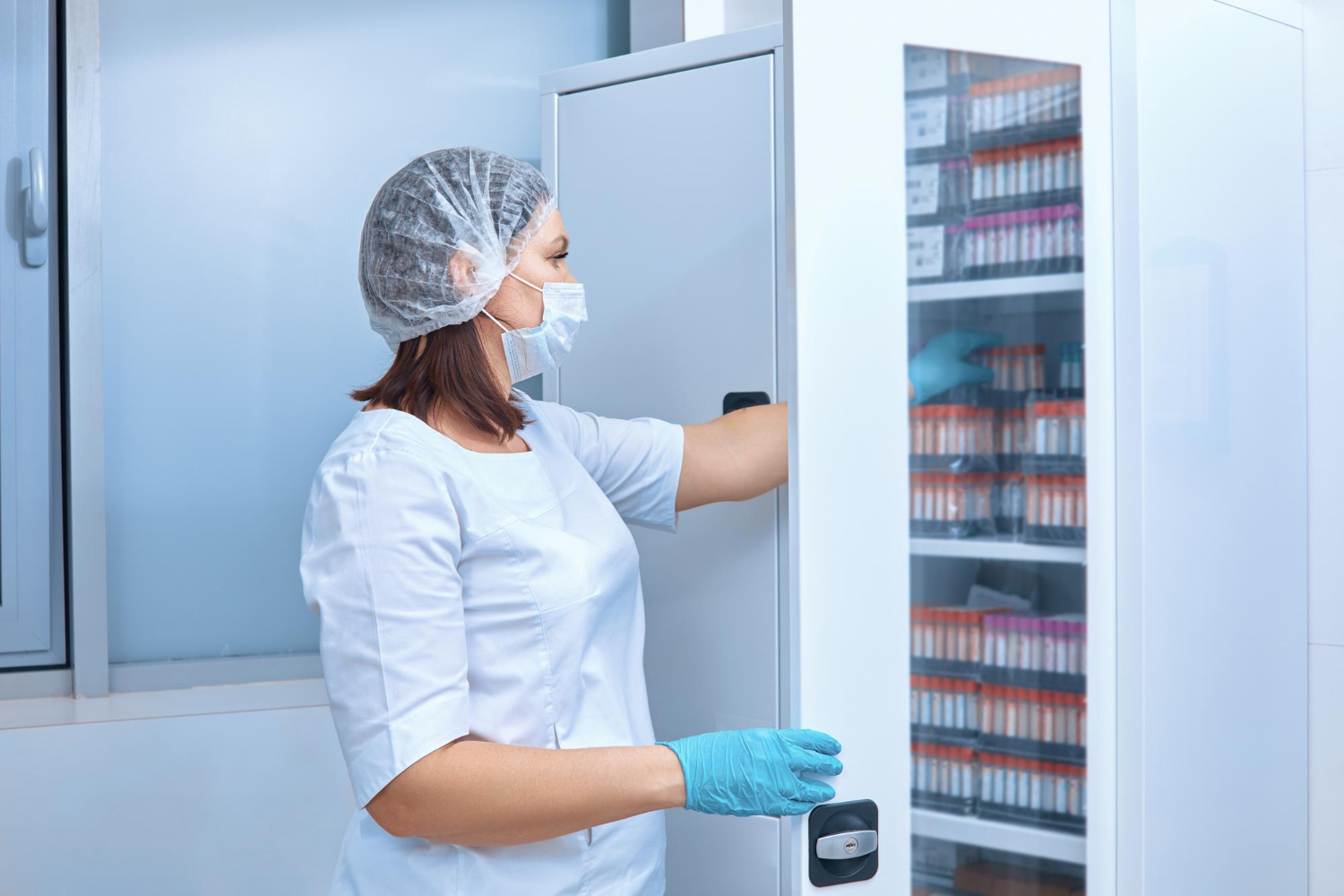
Optimize Every Freezer in Your Lab Monitoring Strategy
Managing a mixed freezer fleet is not simple. Upright, chest, and ULT units all behave differently, yet many labs still use the same alarm settings and probe setup for every freezer. That can work for a while, until late summer hits, the room heats up, and a weak compressor or a bad probe decision finally shows up in your data.
When the air is hotter and more humid, door openings hurt more, ice builds faster, and older units struggle to cool back down. If your lab temperature monitoring system treats every freezer the same, you can end up with a flood of nuisance alarms or, worse, missed excursions that only show up during an investigation. Here, we walk through how to tune probe placement, calibration, artifact filtering, and alarm thresholds to each freezer type so your monitoring becomes a true quality safeguard, not just a compliance checkbox.
Why Mixed Freezer Fleets Demand Tailored Monitoring
Upright, chest, and ULT freezers all move heat in different ways. That means the same temperature change can mean different things, depending on the unit.
For example:
- Upright freezers lose cold air quickly when the door opens, so the top and front warm first
- Chest freezers hold cold air better, but have strong vertical layering from top to bottom
- ULT freezers often have inner doors and tight airflow, so small leaks can take longer to show
These thermal patterns change how you read your data and where you put probes. A spike that is safe in a well-loaded chest freezer might be risky in a half-empty upright. A slow, steady rise in a ULT might mean a seal problem long before it hits a hard limit.
On top of that, regulated labs carry expectations from GxP, CAP/CLIA, ISO, and internal QA. Auditors want to see that:
- Every cold unit is monitored continuously
- Alarms are tested and documented
- Settings make sense for that specific unit and its contents
Using one-size-fits-all settings across your fleet can lead to:
- False alarms that staff start to ignore
- Real excursions hidden inside noisy data
- Confusing graphs during investigations
- Unclear decision making about product impact
The cost of product loss, repeated root-cause reviews, and weekend callouts is usually much higher than the effort to tune a lab temperature monitoring system properly.
Probe Placement and Calibration by Freezer Type
Getting probe placement right is one of the biggest wins for freezer performance and clean data.
For upright freezers, we like to think about where the product is most at risk. Good practices include:
- Avoid placing probes right by vents, coils, or walls
- Choose a location near the door and higher shelf, where warming shows up first
- Place the probe in a thermal buffer, like a vial or glycol bottle, to mimic product
In critical uprights, multi-probe layouts can help. One probe can sit near the worst-case area, with another in a central, stable zone. That gives QA and facilities a clearer view of trends and makes it easier to spot airflow or loading problems.
Chest freezers have their own rules. Cold air sinks, so the bottom is usually colder and slower to change. To get useful data:
- Place the probe at mid-depth, in the middle of where product actually sits
- Keep it away from the lid area, side walls, and any visible coils
- Use a buffer to smooth out brief lid openings
For large-volume or long-term storage, mapping the vertical layers can help you decide how deep that main probe should go. You want it where the slowest-to-warm product lives.
ULT freezers are a different story again. Inner doors, tight gaskets, and high setpoints for alarm logic make probe positioning more sensitive. Key tips are:
- Avoid direct airflow paths and the edge of inner doors
- Place the probe in a buffered container located near the most heat-sensitive load
- Keep wiring or wireless sensor housings away from frost-heavy spots
Calibration matters especially for ULTs. Traceable calibration at defined intervals, along with clear documentation of offsets and dates, makes QA and auditors much more comfortable with any borderline events you need to justify.
Filtering Defrost and Door-Open Artifacts Without Hiding Risk
Auto-defrost cycles, manual defrosts, and normal door use all create short, predictable temperature bumps. Without smart filtering, a lab temperature monitoring system may treat each one like a serious incident.
We want to separate true excursions from normal behavior, without hiding anything. Helpful tools include:
- Time-based filters, where brief spikes under a set duration are tagged as likely artifacts
- Pattern recognition, such as repeating defrost patterns that always look the same
- Rate-of-change checks, so fast jumps linked to a quick door opening are flagged differently
If the freezer has a door switch or if your system supports it, linking door status to temperature trends brings even more context. A spike that starts the moment a door opens and falls quickly once it closes is different from a slow climb with the door shut.
Audit-ready transparency is key here. Any filter or rule you use should be:
- Documented in a way QA can understand
- Validated against real events and test conditions
- Reviewable in the system, so an investigator can see what was filtered and why
You are not erasing data. You are marking benign events so staff can focus on real risk.
Alarm Thresholds and Escalation Tuned to Recovery Profiles
Every freezer has a recovery profile, which is how it behaves after a stress event like a door opening or power blip. To see this clearly, labs often run performance checks under normal load and typical room conditions, including those hotter late-summer days.
From that data, you can set:
- Warning and alarm thresholds that respect product limits
- Alarm delays that ignore brief, safe bumps but catch real failures
- Different rules for uprights, chests, and ULTs based on their unique curves
For example, you might allow a slightly longer alarm delay in a chest freezer that always recovers quickly after a lid opening, while using tighter thresholds in a lightly loaded upright that warms faster. Contents matter too. High-risk or irreplaceable material often calls for more conservative settings.
Cloud-based monitoring helps with escalation. Role-based alerts can route early warnings to on-call staff, with harder alarms going to facilities and QA if conditions do not improve within a set time. Some labs also adjust alarm behavior during peak heat seasons, when room conditions and power events are more likely to stress older compressors.
Turning Fleet Complexity Into a Monitoring Advantage
A mixed freezer fleet does not have to be a headache. When probe placement, calibration, artifact filtering, and alarm design all reflect how each unit actually behaves, you get fewer false alarms, faster response to real problems, and less time lost on messy investigations.
It is worth taking a freezer-by-freezer look at your current settings. Many labs find years of copy-paste alarm limits, generic probe spots, and outdated calibration intervals. Updating those choices, with the help of a modern lab temperature monitoring system and wireless sensors, turns your cold storage fleet into a strong support for quality instead of a constant worry.
At Qualified Controls, we focus on automated, compliant real-time monitoring for temperature, humidity, pressure, and other key conditions in regulated spaces. We support mapping studies, clear documentation, and validation so that every upright, chest, and ULT freezer in your facility pulls its weight in your quality program, even when summer heat is working against you.
Protect Your Research With Reliable Temperature Monitoring
Ensure your sensitive samples, reagents, and products stay within spec by partnering with Qualified Controls for a compliant, scalable lab temperature monitoring system. We design and implement solutions that provide continuous visibility, secure data logging, and timely alerts so you can focus on your work instead of worrying about equipment failures. Our team will work with you to understand your facility, regulatory needs, and budget, then recommend a system that fits. Reach out to our experts today to discuss your requirements and start building a more reliable lab environment.